具体描述
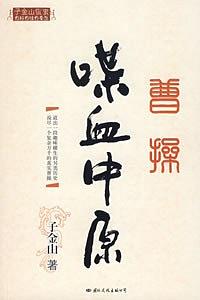
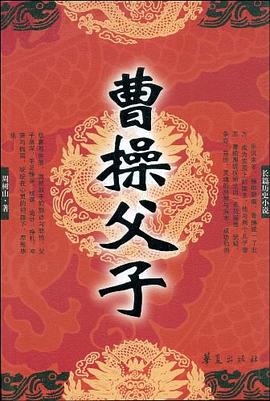
《曹操:喋血中原》子金山版的三国之战与众不同,既没有罗贯中那样的虚构,又没有陈寿那样的枯燥,子金山以其诙谐的语言,机活的“变脸”手法,将一幅幅惊心动魄而又波澜壮阔三国历史画卷拉到读者的面前。
官渡之战,让曹操一战成名,以2万弱旅PK袁绍10万精兵,强弱悬殊,鲜有胜算,曹操是如何取胜的呢?
曹操青州兵30万,官渡生死一战,为什么不用?三国好男儿关羽斩颜良究竟是在两军阵前还是单骑冲入阵中?携巨款旅游的曹操老爸是被陶谦下令诛杀,还是有人见 财起意?曹操为何一口咬定陶谦就是杀父仇人?真实的关羽是怎样千里走单骑的……一系列的三国历史谜团,且看子金山如何分解。
《曹操:喋血中原》 一、 turbulent times and the rise of a hegemon The late Eastern Han Dynasty was a period of unprecedented turmoil and upheaval. The imperial court was riddled with corruption, eunuchs wielded immense power, and the once-mighty empire began to crumble from within. Widespread peasant rebellions, like the Yellow Turban Uprising, further plunged the land into chaos, shattering the fragile peace and plunging the populace into despair. It was amidst this turbulent sea of strife and uncertainty that a figure of immense ambition and extraordinary capability emerged, a man destined to shape the fate of China for centuries to come: Cao Cao. Born into a less-than-illustrious family, Cao Cao's early life was marked by a keen intellect and an unconventional spirit. While others might have sought solace in scholarly pursuits or administrative service, Cao Cao possessed a warrior's heart and a strategist's mind. He recognized the decaying state of the empire and, rather than lamenting its decline, saw an opportunity for himself. He honed his military skills, studied the art of warfare, and cultivated a network of loyal followers, all while meticulously observing the political landscape and waiting for his moment to strike. His ascent was not a smooth, linear progression. It was a path fraught with peril, marked by daring raids, strategic alliances, and a willingness to confront powerful adversaries. From his early exploits as a minor official bravely suppressing rebellions, to his pivotal role in the coalition against the tyrannical Dong Zhuo, Cao Cao demonstrated a remarkable aptitude for leadership. He possessed a rare combination of ruthlessness and pragmatism, capable of inspiring fierce loyalty in his men while also being adept at exploiting the weaknesses of his enemies. 二、 the pragmatist and the visionary Cao Cao was not merely a brute force warrior; he was a keen political operator and a visionary leader. He understood that true power lay not only in military might but also in governing effectively and winning the hearts and minds of the people. While his contemporaries were often blinded by their adherence to outdated traditions and rigid ideologies, Cao Cao embraced pragmatism. He valued talent above all else, regardless of lineage or social standing. This open-mindedness allowed him to attract and retain some of the brightest minds of the era, including brilliant strategists, capable administrators, and devoted generals. His reforms were far-reaching and impactful. He implemented the Tuntian system, a land reclamation and agricultural program that not only fed his armies but also revitalized war-torn regions, bringing stability and prosperity to the common people. This practical approach to governance earned him the respect and support of many who had suffered under the misrule of others. He was also a patron of the arts and literature, fostering a cultural environment that would later flourish. Yet, this pragmatism was often overshadowed by his unyielding ambition. Cao Cao was a man driven by a singular purpose: to unify China under his banner. He was not afraid to make difficult decisions, even those that were morally ambiguous, if they served his ultimate goal. His military campaigns were characterized by bold strategies, swift maneuvers, and an unwavering determination to overcome any obstacle. He was a master of deception, often outthinking and outmaneuvering his rivals on the battlefield. 三、 the crucible of conflict: battles and betrayals The period of Cao Cao's rise was a relentless cycle of warfare. He faced formidable opponents, each with their own ambitions and legions. The Yellow Turban Rebellion, though eventually suppressed, had irrevocably weakened the Han Dynasty and created a power vacuum that warlords eagerly sought to fill. Cao Cao found himself in constant conflict with other ambitious figures, such as Yuan Shao, Yuan Shu, and the formidable Lü Bu, each vying for control of vast swathes of territory. The Battle of Guandu, a pivotal clash against the vastly superior forces of Yuan Shao, stands as a testament to Cao Cao's strategic genius and his ability to inspire his outnumbered troops to achieve an improbable victory. It was a turning point that solidified his dominance in the north and paved the way for his further expansion. Later, his campaigns against the southern warlords, particularly the legendary Battle of Red Cliffs, though ending in a tactical defeat for him, ultimately showcased his resilience and his ability to learn from setbacks. However, the path of power was not solely paved with victories. Cao Cao also had to navigate a treacherous landscape of political intrigue and betrayal. Allies could quickly turn into enemies, and the lines between loyalty and self-interest were often blurred. He had to be constantly vigilant, discerning friend from foe, and making calculated decisions about whom to trust. His consolidation of power was a complex dance of diplomacy, military might, and the strategic elimination of rivals. 四、 a legacy etched in iron and ink Cao Cao's impact on Chinese history is undeniable and multifaceted. He laid the foundation for the subsequent unification of China under the Jin Dynasty, effectively ending the turbulent Three Kingdoms period. His military innovations, his administrative reforms, and his pragmatic approach to governance left an indelible mark on the development of Chinese statecraft. His military treatises and his writings on warfare are still studied today, revealing a profound understanding of strategy and tactics. His poetry, often melancholic and introspective, offers a glimpse into the mind of a man wrestling with the immense pressures of leadership and the fleeting nature of power. While often portrayed in popular culture as a cunning villain, a closer examination of his life reveals a complex figure. He was a brilliant strategist, a capable administrator, and a man of immense ambition who rose from obscurity to become one of the most influential figures in Chinese history. He was a product of his time, a man who dared to seize control during an era of unprecedented chaos, and in doing so, forever altered the course of a civilization. His story is not simply one of conquest, but of a relentless drive to forge order from anarchy, to build a new future from the ashes of the old.