
具体描述
Amazon.com Review
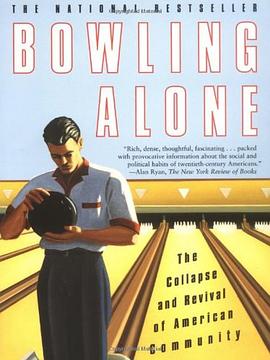
Few people outside certain scholarly circles had heard the name Robert D. Putnam before 1995. But then this self-described "obscure academic" hit a nerve with a journal article called "Bowling Alone." Suddenly he found himself invited to Camp David, his picture in People magazine, and his thesis at the center of a raging debate. In a nutshell, he argued that civil society was breaking down as Americans became more disconnected from their families, neighbors, communities, and the republic itself. The organizations that gave life to democracy were fraying. Bowling became his driving metaphor. Years ago, he wrote, thousands of people belonged to bowling leagues. Today, however, they're more likely to bowl alone:
Television, two-career families, suburban sprawl, generational changes in values--these and other changes in American society have meant that fewer and fewer of us find that the League of Women Voters, or the United Way, or the Shriners, or the monthly bridge club, or even a Sunday picnic with friends fits the way we have come to live. Our growing social-capital deficit threatens educational performance, safe neighborhoods, equitable tax collection, democratic responsiveness, everyday honesty, and even our health and happiness.
The conclusions reached in the book Bowling Alone rest on a mountain of data gathered by Putnam and a team of researchers since his original essay appeared. Its breadth of information is astounding--yes, he really has statistics showing people are less likely to take Sunday picnics nowadays. Dozens of charts and graphs track everything from trends in PTA participation to the number of times Americans say they give "the finger" to other drivers each year. If nothing else, Bowling Alone is a fascinating collection of factoids. Yet it does seem to provide an explanation for why "we tell pollsters that we wish we lived in a more civil, more trustworthy, more collectively caring community." What's more, writes Putnam, "Americans are right that the bonds of our communities have withered, and we are right to fear that this transformation has very real costs." Putnam takes a stab at suggesting how things might change, but the book's real strength is in its diagnosis rather than its proposed solutions. Bowling Alone won't make Putnam any less controversial, but it may come to be known as a path-breaking work of scholarship, one whose influence has a long reach into the 21st century. --John J. Miller --This text refers to an out of print or unavailable edition of this title.
From Publishers Weekly
"If you don't go to somebody's funeral, they won't come to yours," Yogi Berra once said, neatly articulating the value of social networks. In this alarming and important study, Putnam, a professor of sociology at Harvard, charts the grievous deterioration over the past two generations of the organized ways in which people relate to one another and partake in civil life in the U.S. For example, in 1960, 62.8% of Americans of voting age participated in the presidential election, whereas by 1996, the percentage had slipped to 48.9%. While most Americans still claim a serious "religious commitment," church attendance is down roughly 25%-50% from the 1950s, and the number of Americans who attended public meetings of any kind dropped 40% between 1973 and 1994. Even the once stable norm of community life has shifted: one in five Americans moves once a year, while two in five expect to move in five years. Putnam claims that this has created a U.S. population that is increasingly isolated and less empathetic toward its fellow citizens, that is often angrier and less willing to unite in communities or as a nation. Marshaling a plentiful array of facts, figures, charts and survey results, Putnam delivers his message with verve and clarity. He concludes his analysis with a concise set of potential solutions, such as educational programs, work-based initiatives and funded community-service programs, offering a ray of hope in what he perceives to be a dire situation. Agent, Rafe Sagalyn. 3-city tour; 20-city radio satellite tour. (June)
Copyright 2000 Reed Business Information, Inc. --This text refers to an out of print or unavailable edition of this title.
作者简介
罗伯特·D. 帕特南(Robert D. Putnam),当代西方著名政治学家,现任哈佛大学国际事务研究中心主任,肯尼迪政府学院公共政策马尔林讲座教授。他的主要研究领域是政治学、国际政治和公共政策,发表的著作包括《手拉手:西方七国峰会》、《独自打保龄:美国社会资本的衰减 》、《让民主运转起来》等。
目录信息
读后感
非常有名的一本书,不得不说作者的宏观数据搜集能力简直太强大,而且很多数据运用的背后有不少基于社会模型(分组)的定性控制,所以会让人觉得着实很全面(这点上比福山高明太多了)。但是这本书的缺点也很明显:作者并没有审查理论模型有没有问题,而是一个劲地用详细的...
这么有名的书,直到现在因为要引用,才总算借了读了。这本书其实读个一两百字的摘要就可以了,或者用一个副标题也能基本概括出来:美国社会里社会资本衰退的成因及后果。 我还是很喜欢Putnam的风格的,他写的东西结构层次很清楚,基本上就是三段论:成因、后果、解决,然后每一...
在同一个小区里连续居住了将近九年后,我和一些邻居终于开始渐渐地相互熟识起来——而这还是拜近年来的两件事所赐:首先是附近工地夜间施工扰民引发的业主听证会;其次是孩子的降生使我们开始有了一个很好的理由互相搭讪和询问。有几个邻居原先从来不和我们主动打招呼,现在看...
读《独自打保龄》有感 ——从“普遍互惠”角度浅谈中国社会资本问题 全书主要探讨社会资本对政治的影响、社会资本对政治的影响作用有多大、社会资本对政治的影响方式是怎样和面对社会资本对政治的影响我们该怎么做等问题,深入浅出、由表及里、细致入微并且通俗易懂,读完之后...
用户评价
《Bowling Alone》的意义,远不止于对当下社会问题的诊断。它更像是一面镜子,让我们能够更清晰地认识到我们自己以及我们所处的集体。作者的分析不仅仅局限于美国社会,他所提出的很多观点,都具有普适性,能够引起全球读者的共鸣。我反复思考书中关于“信任”的重要性,以及信任如何在社会资本的构建中扮演着核心角色。这种信任的侵蚀,对社会的稳定和发展,无疑是巨大的威胁。
对于任何一个关心社会现状和未来的人来说,《Bowling Alone》都是一本必读之作。它挑战了我们许多固有的认知,也为我们提供了一个全新的视角来审视我们所处的社会。我发现,许多在我看来独立的问题,在作者的分析框架下,都找到了内在的联系。他对不同社会阶层、不同族裔群体在公民参与度上的差异的探讨,也让我看到了问题背后更复杂的社会结构性因素。这本书让我开始思考,作为个体,我们能够做些什么来弥合社会裂痕,重建社区联系。
这本书最让我感到沉重,同时也最发人深省的地方,是它揭示的社会疏离感所带来的长远影响。作者并不回避讨论这些负面影响,比如政治冷漠、社会不公加剧,甚至个体幸福感的下降。他用冷静而客观的语言,分析了这些问题是如何相互关联、相互强化的。然而,即使在这样沉重的分析中,我依然能感受到作者对改变的渴望,以及他相信通过共同的努力,是可以扭转局面的。
《Bowling Alone》带给我的冲击,是全方位的。我发现作者在分析问题时,总是能触及到问题的根源,并将其与宏观的社会变迁联系起来。他并没有简单地将社会疏离的原因归咎于某个单一因素,而是细致地剖析了经济发展、技术进步、人口结构变化等多方面因素是如何共同作用,导致了公民参与度的下降。阅读过程中,我不断将书中的观点与我自己的生活经历进行对照,那些曾经让我感到困惑或疏离的社会现象,在作者的解释下,似乎都有了更清晰的逻辑。我开始理解,为什么有时候我们会感到孤独,即使身处人群之中,为什么社会凝聚力似乎在减弱。
在阅读《Bowling Alone》的过程中,我被作者对细节的关注所深深打动。他对于数据图表、历史文献的引用,都展现了他严谨的治学态度。然而,这些严谨的分析并没有让文本变得枯燥,反而增加了其说服力。他对于各种社会组织的演变和衰落的描述,生动地展现了社会活力的变迁。我开始留意身边那些曾经热闹非凡,如今却门可罗雀的场所,并思考它们背后的原因。这本书不仅仅是一本关于社会现象的书,更是一本关于社会“生命力”的书。
我必须承认,阅读《Bowling Alone》的过程,是一次充满挑战但也极具启发性的旅程。作者不仅仅是在陈述一个事实,更是在引导读者进行一次深刻的自我审视。他提出的“公民参与度”概念,远比我最初理解的要广泛和深刻。它不仅仅包括了投票、志愿服务等显性行为,更涵盖了那些隐性的、无形但至关重要的连接,比如信任、互助、以及共同的社会规范。书中关于各种协会、俱乐部、甚至宗教团体的衰落的分析,让我不禁思考,我们是否在不经意间,正在失去那些曾经将我们紧密联系在一起的纽带?作者的文字充满了对过去黄金时代的怀念,但也并非盲目怀旧,而是通过历史的对比,来凸显当下问题的紧迫性。
《Bowling Alone》的叙事方式也十分引人入胜。作者善于运用比喻和类比,将抽象的社会学概念变得通俗易懂。他对于“保龄球”这一意象的巧妙运用,更是贯穿全书,成为了理解社会孤立和公民参与退化的绝佳切入点。我开始仔细回想,在我们的生活中,有多少“独自打保龄球”的时刻?有多少我们原本可以与他人一同参与的活动,却因为种种原因而选择了独自进行?这种由小见大的叙事手法,让我在阅读过程中不断产生共鸣,也更深刻地理解了作者想要传达的核心信息。
初次翻开《Bowling Alone》,我便被它那宏大的视角和严谨的分析所吸引。作者深入探讨了现代社会中一个看似微不足道,实则关乎社会肌体的核心问题——公民参与度的衰退。我原以为这会是一本枯燥的社会学论文集,但事实证明,作者的文字极具感染力,他用大量翔实的数据和生动的案例,层层剥茧,将一个复杂而令人忧虑的社会现象展现在我们面前。书中对“社交资本”的深入阐释,让我重新审视了人与人之间关系的本质,以及这些关系如何构建起社会的支撑结构。我开始反思自己日常生活中那些看似平凡的社交活动,比如偶尔参加的社区活动,或是与邻居的简短交谈,它们在作者的笔下,都成为了衡量社会健康与否的重要指标。
这本书最让我印象深刻的一点,是作者在字里行间流露出的对社会的关怀和期盼。他并非一个冷漠的观察者,而是一个深切关注社会福祉的思考者。他用严谨的学术态度,揭示了一个潜在的危机,但同时,他并没有放弃希望。通过对历史的考察和对当前趋势的分析,他提出了许多关于如何重建社会资本、如何重拾公民参与的思路。这些思路并非空洞的理论,而是基于对社会运作机制的深刻理解,充满了实践的可行性。我感觉自己不再仅仅是一个被动接受信息的读者,而是被邀请加入到一场关于社会未来的思考和讨论中。
《Bowling Alone》是一本能够改变你看待世界方式的书。它不仅仅提供了丰富的知识和深刻的洞察,更重要的是,它激发了我对于社会责任和公民意识的思考。我开始更加积极地参与到一些社区活动中,也更加重视与身边人的交流。这本书让我明白,社会问题的解决,并非遥不可及,而是始于我们每个人微小的行动和改变。它是一份警醒,也是一份鼓励,敦促我们重新审视并积极参与到构建更强大、更互助的社会之中。
3/1-4/18/2020)基本是在每天的扎心的穴位按摩中读完的,不可谓不痛苦。讲的是在八九十年代的社会变革和娱乐方式给civic engagement and social capital带来的打击。中心思想:urban dwellers are collectively heterogeneous but individually homogeneous. 在家/外面,我们act in presence of others not with others的这种trend dampens community building. 还指出civic engagement isnt just about doing good for others, but with others.
was expecting a more rigorous analysis, but only found it disappointing and disturbing. The analysis is very crude and some conclusions Putnam drew are even wrong by simply looking into the figures. Moreover, many indicators that should have been separated are put together, which lead to somewhat superficial argument...
During 1980-1993, league bowling declined by 40% while the manner of individual bowlers rose by 10%. The number of people who trust the government has dropped. Poli.Sci. 305. Winter'09.
导师说“你没读过这本书?”
这是神棍的理论。。。