
具体描述
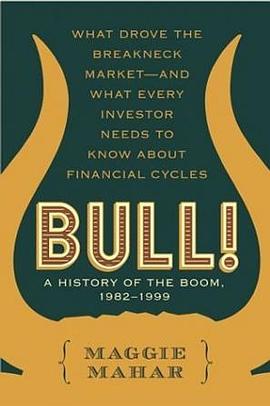
In Bull!, Maggie Mahar tells the sweeping tale of the Great Bull Market of 1982–1999, a legendary run-up that pulled the entire nation into its gravitational field.</p>
Mahar lays out the origins of the boom and takes the reader behind the scenes, on Wall Street, on Main Street, and in Washington, letting him see the story through the eyes of the fund managers, market gurus, analysts, politicians, business journalists, and 401(k) investors who, together, helped create the longest-running bull market in U.S. history. Some were touts; others were true believers. On the sidelines, a Greek Chorus of seasoned professionals tried, vainly, to describe the emperor's new clothes.</p>
Filled with colorful portraits of many of the central figures of the boom years -- Alan Greenspan, Henry Blodget, James Cramer, Abby Joseph Cohen -- Bull! draws together a complex cast of characters, illuminating the web of relationships that kept the market aloft.</p>
More than a financial history, Bull! is a lively, often witty social history of the stock market that became a part of popular culture. It is also the tale of individual investors, which chronicles the intimate stories of ordinary people -- housewives and college professors, salesmen and waitresses -- who got caught up in the excitement and then watched their life savings drain away.</p>
How did it happen that the very real risks of investing in stocks were forgotten? Mahar explodes the myth of "stocks for the long run," explaining how the market's promoters crunched the numbers to create the illusion that if an investor stays in the casino just a little longer, he is guaranteed to come out a winner. Casting Warren Buffett in a new light, she explains how a value investor is, in the end, a long-term market timer who understands that success depends on how much you pay when you get into the market -- and when you get out. By putting the bull market of 1982–1999 in a larger historical context, she shows how, over time, longtime bull markets beget longtime bear markets.</p>
The future defies prediction, but the history of financial markets makes one thing clear: markets always revert to a mean. Taken as a single story, Bull! is both an illuminating history and a cautionary tale about investing. Analyzing the economic and psychological forces that drive financial cycles, Mahar shows how an extraordinary influx of cash and credit, combined with the obsessive attention of a new financial media, created a cult of equities. Challenging the notion that stocks always outperform all other investments, she reveals why many of Wall Street's most experienced investors believe that the 21st-century investor needs to throw out the old rule book and make a new beginning as he plans for his financial future.</p>
No investor should keep his or her money in the stock market without first reading this book.</p>
作者简介
目录信息
读后感
用户评价
我必须承认,这本书的开头差点让我放弃,它的叙事视角非常跳跃,像是一系列破碎的闪回和梦境交织在一起,讲述了一个关于“遗忘与寻找归属”的故事。它似乎并不在乎传统小说的线性逻辑,而是更侧重于捕捉情感的碎片。故事的主角是一个患有罕见失忆症的音乐家,他只能记住最近几周发生的事情,因此,他的人生是一连串不断重置的“现在”。作者运用了大量的感官描写来弥补情节的跳跃性,比如通过音符的结构、气味的变化,甚至是触摸丝绸或粗麻布时的物理感受,来暗示过去与现在之间的微弱联系。这种写作方式非常考验读者的耐心,但一旦你适应了这种“非线性记忆”的节奏,你会发现其中蕴含着一种独特的诗意。书中有一段描写主角在一家旧书店里,闻到一本旧乐谱上的霉味,那一瞬间,他“感觉”到了一种从未有过的熟悉感,那种无法言喻的、跨越失忆鸿沟的情感共鸣,写得极其动人。这本书更像是一部散文诗,它探讨的不是“发生了什么”,而是“存在意味着什么”。风格上偏向于意识流,充满了对时间本质的哲学思辨。
最近读完了一本让我彻夜难眠的书,它讲述了一个在十九世纪末的伦敦街头挣扎求生的年轻画家,亚瑟的故事。这本书最引人入胜的地方在于它对人物心理细致入微的刻画。亚瑟并非那种传统意义上的英雄,他充满了矛盾与挣扎,对艺术的狂热与对生存的恐惧在他内心激烈碰撞。作者用一种近乎残酷的真实感,描绘了他如何在高昂的房租、拮据的画材和外界的冷眼旁观中,试图捕捉那些稍纵即逝的美丽瞬间。我特别欣赏书中对光影和色彩的描绘,仿佛能透过文字闻到泰晤士河畔潮湿的空气,看到煤气灯下街道的斑驳光晕。情节的推进不算迅猛,但每一步都像是精心布局的棋局,让人不得不去揣摩亚瑟下一步将如何应对命运的重拳。其中有一段描写亚瑟在贫民窟目睹一场突发的争执,他没有选择介入,而是迅速地用速写本记录下那瞬间的暴力与绝望,这种旁观者的抽离感,让人反思艺术与现实的边界究竟在哪里。这本书的叙事风格是古典而沉稳的,大量使用长句和复杂的从句结构,读起来需要极大的专注力,但一旦沉浸其中,那种十九世纪末的独特韵味便会牢牢抓住你,让你感受到那个时代独特的压抑与希望的微光。它不是一本轻松的读物,但绝对值得所有热爱文学和历史细节的读者细细品味。
这是一本令人耳目一新的历史小说,它避开了宏大的战争叙事或宫廷阴谋,而是将焦点聚集在一个被历史遗忘的小人物身上——一个为皇室绘制地图的制图师。故事发生在十五世纪的葡萄牙航海大发现时代,但视角非常独特,我们看到的是地图上的墨水如何变成远方的岛屿,以及制图师如何在政治压力和地理知识的局限之间小心翼翼地行走。作者对那个时代航海技术和制图工艺的考究达到了令人惊叹的程度,书中详尽地描述了如何校准星盘、如何处理羊皮纸的纹理、甚至是如何调配出最持久的墨水颜色。这种对“工艺”本身的尊重,赋予了整本书一种扎实可信的质感。人物的对话风格非常典雅、正式,充满了那个时代特有的敬语和克制的情感表达,这让主角内心的焦虑和对未知世界的敬畏显得更加深沉。我特别喜欢作者描绘的“地图的权力”——一张地图不仅仅是地理的记录,更是国家野心和知识分子的自我实现的载体。读完后,我对地理学和历史的交叉点产生了全新的认识,它让我意识到,每一个被绘制的线条背后,都可能隐藏着巨大的牺牲与发现。
这是一本让人读完后忍不住想立刻找人讨论,但又觉得语言匮乏,无法完全表达心中震撼的作品。它的核心似乎围绕着“信任的代价”展开,故事设置在一个架空的、极度依赖信息流动的现代都市。主角是一个顶尖的数据分析师,他意外发现自己过去数年依赖的“真相”——那些通过算法过滤和呈现给他的信息——其实是一场精心策划的谎言。作者的笔法非常锐利,充满了科技惊悚的冷峻感,节奏把握得极其精妙,紧张感像绷紧的弓弦,从第一章开始就让人喘不过气。我尤其赞赏作者对技术伦理困境的探讨,书中提出的很多问题,比如“当你的认知完全由外部系统塑造时,你如何定义自我?”这些都超越了一般的商业间谍小说的范畴。书中的对话简洁有力,充满了双关和暗喻,很多时候,角色没有把话说透,但那种潜台词带来的寒意比直接的威胁更具穿透力。如果你喜欢那种需要你动脑筋去拼凑线索、享受逻辑推理快感的读者,这本书绝对不容错过。它的结构设计得像一个精密的密码锁,你以为破解了一个部分,却发现那是通往更深层迷宫的入口。读完后,我甚至开始怀疑自己手机上的推送信息来源,这种后劲儿实在太强大了。
说实话,这本小说带给我的是一种久违的、纯粹的冒险感,但它不是那种充满爆炸和追逐的动作片式冒险,而是一种更贴近经典文学的、充满神秘色彩的探索之旅。它讲述了一群探险家深入南美洲未知的丛林,追寻一个失落文明的传说。这本书的魅力在于其对环境的细致描写和探险队内部的张力。作者仿佛是土生土长的丛林居民,他对植物、昆虫、甚至不同光照下泥土颜色的描述都栩栩如生,让人感觉自己仿佛能感受到湿热的空气和蚊虫的叮咬。探险队内部的冲突非常精彩,有科学的理性、宗教的狂热、以及纯粹的贪婪相互交织,这种人性的复杂性,往往比他们面对的自然环境更加险恶。叙事结构采用了一种日记体和旁白交替的方式,这使得信息传递既有亲历者的即时感,又有事后回忆的沉淀感。其中关于“时间感”的描述尤其深刻,在与世隔绝的丛林中,人们的日常被日出日落彻底支配,那种被自然规律缓慢裹挟的感觉,非常到位。总而言之,如果你想暂时逃离现代生活的喧嚣,沉浸在一场既有智力挑战又有道德考验的经典远征中,这本书会是绝佳的选择。