
具体描述
Contents
Preface V
Foreword To The Second Edition Xiii
About The Accompanying Cd-Rom Xiv
On The Bibliography, Internet Sources And Exercises Xv
Contents Xvii
Part A: The Issues 1
Chapter 1: Software Quality 3
1.1 External And Internal Factors 3
1.2 A Review Of External Factors 4
1.3 About Software Maintenance 17
1.4 Key Concepts Introduced In This Chapter 19
1.5 Bibliographical Notes 19
Chapter 2: Criteria Of Object Orientation 21
2.1 On The Criteria 21
2.2 Method And Language 22
2.3 Implementation And Environment 31
2.4 Libraries 33
2.5 For More Sneak Preview 34
2.6 Bibliographical Notes And Object Resources 34
Part B: The Road To Object Orientation 37
Chapter 3: Modularity 39
3.1 Five Criteria 40
3.2 Five Rules 46
3.3 Five Principles 53
3.4 Key Concepts Introduced In This Chapter 64
3.5 Bibliographical Notes 64
Exercises 65
Chapter 4: Approaches To Reusability 67
4.1 The Goals Of Reusability 68
4.2 What Should We Reuse? 70
4.3 Repetition In Software Development 74
4.4 Non-Technical Obstacles 74
4.5 The Technical Problem 81
4.6 Five Requirements On Module Structures 83
4.7 Traditional Modular Structures 89
4.8 Overloading And Genericity 93
4.9 Key Concepts Introduced In This Chapter 98
4.10 Bibliographical Notes 99
Chapter 5: Towards Object Technology 101
5.1 The Ingredients Of Computation 101
5.2 Functional Decomposition 103
5.3 Object-Based Decomposition 114
5.4 Object-Oriented Software Construction 116
5.5 Issues 117
5.6 Key Concepts Introduced In This Chapter 119
5.7 Bibliographical Notes 119
Chapter 6: Abstract Data Types 121
6.1 Criteria 122
6.2 Implementation Variations 122
6.3 Towards An Abstract View Of Objects 126
6.4 Formalizing The Specification 129
6.5 From Abstract Data Types To Classes 142
6.6 Beyond Software 147
6.7 Supplementary Topics 148
6.8 Key Concepts Introduced In This Chapter 159
6.9 Bibliographical Notes 160
Exercises 161
Part C: Object-Oriented Techniques 163
Chapter 7: The Static Structure: Classes 165
7.1 Objects Are Not The Subject 165
7.2 Avoiding The Standard Confusion 166
7.3 The Role Of Classes 169
7.4 A Uniform Type System 171
7.5 A Simple Class 172
7.6 Basic Conventions 177
7.7 The Object-Oriented Style Of Computation 181
7.8 Selective Exports And Information Hiding 191
7.9 Putting Everything Together 194
7.10 Discussion 203
7.11 Key Concepts Introduced In This Chapter 213
7.12 Bibliographical Notes 215
Exercises 216
Chapter 8: The Run-Time Structure: Objects 217
8.1 Objects 218
8.2 Objects As A Modeling Tool 228
8.3 Manipulating Objects And References 231
8.4 Creation Procedures 236
8.5 More On References 240
8.6 Operations On References 242
8.7 Composite Objects And Expanded Types 254
8.8 Attachment: Reference And Value Semantics 261
8.9 Dealing With References: Benefits And Dangers 265
8.10 Discussion 270
8.11 Key Concepts Introduced In This Chapter 276
8.12 Bibliographical Notes 277
Exercises 277
Chapter 9: Memory Management 279
9.1 What Happens To Objects 279
9.2 The Casual Approach 291
9.3 Reclaiming Memory: The Issues 293
9.4 Programmer-Controlled Deallocation 294
9.5 The Component-Level Approach 297
9.6 Automatic Memory Management 301
9.7 Reference Counting 302
9.8 Garbage Collection 304
9.9 Practical Issues Of Garbage Collection 309
9.10 An Environment With Memory Management 312
9.11 Key Concepts Introduced In This Chapter 315
9.12 Bibliographical Notes 315
Exercises 316
Chapter 10: Genericity 317
10.1 Horizontal And Vertical Type Generalization 317
10.2 The Need For Type Parameterization 318
10.3 Generic Classes 320
10.4 Arrays 325
10.5 The Cost Of Genericity 328
10.6 Discussion: Not Done Yet 329
10.7 Key Concepts Introduced In This Chapter 329
10.8 Bibliographical Notes 330
Exercises 330
Chapter 11: Design By Contract: Building Reliable Software 331
11.1 Basic Reliability Mechanisms 332
11.2 About Software Correctness 333
11.3 Expressing A Specification 334
11.4 Introducing Assertions Into Software Texts 337
11.5 Preconditions And Postconditions 338
11.6 Contracting For Software Reliability 341
11.7 Working With Assertions 348
11.8 Class Invariants 363
11.9 When Is A Class Correct? 369
11.10 The Adt Connection 373
11.11 An Assertion Instruction 378
11.12 Loop Invariants And Variants 380
11.13 Using Assertions 389
11.14 Discussion 398
11.15 Key Concepts Introduced In This Chapter 406
11.16 Bibliographical Notes 407
Exercises 408
Postscript: The Ariane 5 Failure 410
Chapter 12: When The Contract Is Broken: Exception Handling 411
12.1 Basic Concepts Of Exception Handling 411
12.2 Handling Exceptions 414
12.3 An Exception Mechanism 419
12.4 Exception Handling Examples 422
12.5 The Task Of A Rescue Clause 427
12.6 Advanced Exception Handling 431
12.7 Discussion 435
12.8 Key Concepts Introduced In This Chapter 437
12.9 Bibliographical Notes 438
Exercises 438
Chapter 13: Supporting Mechanisms 439
13.1 Interfacing With Non-O-O Software 439
13.2 Argument Passing 444
13.3 Instructions 447
13.4 Expressions 452
13.5 Strings 456
13.6 Input And Output 457
13.7 Lexical Conventions 457
13.8 Key Concepts Introduced In This Chapter 458
Exercises 458
Chapter 14: Introduction To Inheritance 459
14.1 Polygons And Rectangles 460
14.2 Polymorphism 467
14.3 Typing For Inheritance 472
14.4 Dynamic Binding 480
14.5 Deferred Features And Classes 482
14.6 Redeclaration Techniques 491
14.7 The Meaning Of Inheritance 494
14.8 The Role Of Deferred Classes 500
14.9 Discussion 507
14.10 Key Concepts Introduced In This Chapter 516
14.11 Bibliographical Notes 517
Exercises 517
Chapter 15: Multiple Inheritance 519
15.1 Examples Of Multiple Inheritance 519
15.2 Feature Renaming 535
15.3 Flattening The Structure 541
15.4 Repeated Inheritance 543
15.5 Discussion 563
15.6 Key Concepts Introduced In This Chapter 566
15.7 Bibliographical Notes 567
Exercises 567
Chapter 16: Inheritance Techniques 569
16.1 Inheritance And Assertions 569
16.2 The Global Inheritance Structure 580
16.3 Frozen Features 583
16.4 Constrained Genericity 585
16.5 Assignment Attempt 591
16.6 Typing And Redeclaration 595
16.7 Anchored Declaration 598
16.8 Inheritance And Information Hiding 605
16.9 Key Concepts Introduced In This Chapter 609
16.10 Bibliographical Note 610
Exercises 610
Chapter 17: Typing 611
17.1 The Typing Problem 611
17.2 Static Typing: Why And How 615
17.3 Covariance And Descendant Hiding 621
17.4 First Approaches To System Validity 628
17.5 Relying On Anchored Types 630
17.6 Global Analysis 633
17.7 Beware Of Polymorphic Catcalls! 636
17.8 An Assessment 639
17.9 The Perfect Fit 640
17.10 Key Concepts Studied In This Chapter 641
17.11 Bibliographical Notes 641
Chapter 18: Global Objects And Constants 643
18.1 Constants Of Basic Types 643
18.2 Use Of Constants 645
18.3 Constants Of Class Types 646
18.4 Applications Of Once Routines 648
18.5 Constants Of String Type 653
18.6 Unique Values 654
18.7 Discussion 656
18.8 Key Concepts Introduced In This Chapter 659
18.9 Bibliographical Notes 660
Exercises 660
Part D: Object-Oriented Methodology:
Applying The Method Well 661
Chapter 19: On Methodology 663
19.1 Software Methodology: Why And What 663
19.2 Devising Good Rules: Advice To The Advisors 664
19.3 On Using Metaphors 671
19.4 The Importance Of Being Humble 673
19.5 Bibliographical Notes 674
Exercises 674
Chapter 20: Design Pattern: Multi-Panel Interactive Systems 675
20.1 Multi-Panel Systems 675
20.2 A Simple-Minded Attempt 677
20.3 A Functional, Top-Down Solution 678
20.4 A Critique Of The Solution 682
20.5 An Object-Oriented Architecture 684
20.6 Discussion 693
20.7 Bibliographical Note 694
Chapter 21: Inheritance Case Study: “undo” In An Interactive
System 695
21.1 Perseverare Diabolicum 695
21.2 Finding The Abstractions 699
21.3 Multi-Level Undo-Redo 704
21.4 Implementation Aspects 707
21.5 A User Interface For Undoing And Redoing 711
21.6 Discussion 712
21.7 Bibliographical Notes 715
Exercises 715
Chapter 22: How To Find The Classes 719
22.1 Studying A Requirements Document 720
22.2 Danger Signals 726
22.3 General Heuristics For Finding Classes 731
22.4 Other Sources Of Classes 735
22.5 Reuse 740
22.6 The Method For Obtaining Classes 741
22.7 Key Concepts Introduced In This Chapter 743
22.8 Bibliographical Notes 744
Chapter 23: Principles Of Class Design 747
23.1 Side Effects In Functions 748
23.2 How Many Arguments For A Feature? 764
23.3 Class Size: The Shopping List Approach 770
23.4 Active Data Structures 774
23.5 Selective Exports 796
23.6 Dealing With Abnormal Cases 797
23.7 Class Evolution: The Obsolete Clause 802
23.8 Documenting A Class And A System 803
23.9 Key Concepts Introduced In This Chapter 806
23.10 Bibliographical Notes 806
Exercises 807
Chapter 24: Using Inheritance Well 809
24.1 How Not To Use Inheritance 809
24.2 Would You Rather Buy Or Inherit? 812
24.3 An Application: The Handle Technique 817
24.4 Taxomania 820
24.5 Using Inheritance: A Taxonomy Of Taxonomy 822
24.6 One Mechanism, Or More? 833
24.7 Subtype Inheritance And Descendant Hiding 835
24.8 Implementation Inheritance 844
24.9 Facility Inheritance 847
24.10 Multiple Criteria And View Inheritance 851
24.11 How To Develop Inheritance Structures 858
24.12 A Summary View: Using Inheritance Well 862
24.13 Key Concepts Introduced In This Chapter 863
24.14 Bibliographical Notes 863
24.15 Appendix: A History Of Taxonomy 864
Exercises 869
Chapter 25: Useful Techniques 871
25.1 Design Philosophy 871
25.2 Classes 872
25.3 Inheritance Techniques 873
Chapter 26: A Sense Of Style 875
26.1 Cosmetics Matters! 875
26.2 Choosing The Right Names 879
26.3 Using Constants 884
26.4 Header Comments And Indexing Clauses 886
26.5 Text Layout And Presentation 891
26.6 Fonts 900
26.7 Bibliographical Notes 901
Exercises 902
Chapter 27: Object-Oriented Analysis 903
27.1 The Goals Of Analysis 903
27.2 The Changing Nature Of Analysis 906
27.3 The Contribution Of Object Technology 907
27.4 Programming A Tv Station 907
27.5 Expressing The Analysis: Multiple Views 914
27.6 Analysis Methods 917
27.7 The Business Object Notation 919
27.8 Bibliography 922
Chapter 28: The Software Construction Process 923
28.1 Clusters 923
28.2 Concurrent Engineering 924
28.3 Steps And Tasks 926
28.4 The Cluster Model Of The Software Lifecycle 926
28.5 Generalization 928
28.6 Seamlessness And Reversibility 930
28.7 With Us, Everything Is The Face 933
28.8 Key Concepts Covered In This Chapter 934
28.9 Bibliographical Notes 934
Chapter 29: Teaching The Method 935
29.1 Industrial Training 935
29.2 Introductory Courses 937
29.3 Other Courses 941
29.4 Towards A New Software Pedagogy 942
29.5 An Object-Oriented Plan 946
29.6 Key Concepts Studied In This Chapter 948
29.7 Bibliographical Notes 948
Part E: Advanced Topics 949
Chapter 30: Concurrency, Distribution, Client-Server And
The Internet 951
30.1 A Sneak Preview 951
30.2 The Rise Of Concurrency 953
30.3 From Processes To Objects 956
30.4 Introducing Concurrent Execution 964
30.5 Synchronization Issues 977
30.6 Accessing Separate Objects 982
30.7 Wait Conditions 990
30.8 Requesting Special Service 998
30.9 Examples 1003
30.10 Towards A Proof Rule 1022
30.11 A Summary Of The Mechanism 1025
30.12 Discussion 1028
30.13 Key Concepts Introduced In This Chapter 1032
30.14 Bibliographical Notes 1033
Exercises 1035
Chapter 31: Object Persistence And Databases 1037
31.1 Persistence From The Language 1037
31.2 Beyond Persistence Closure 1039
31.3 Schema Evolution 1041
31.4 From Persistence To Databases 1047
31.5 Object-Relational Interoperability 1048
31.6 Object-Oriented Database Fundamentals 1050
31.7 O-O Database Systems: Examples 1055
31.8 Discussion: Beyond O-O Databases 1058
31.9 Key Concepts Studied In This Chapter 1060
31.10 Bibliographical Notes 1061
Exercises 1062
Chapter 32: Some O-O Techniques For Graphical Interactive
Applications 1063
32.1 Needed Tools 1064
32.2 Portability And Platform Adaptation 1066
32.3 Graphical Abstractions 1068
32.4 Interaction Mechanisms 1071
32.5 Handling The Events 1072
32.6 A Mathematical Model 1076
32.7 Bibliographical Notes 1076
Part F: Applying The Method In Various
Languages And Environments 1077
Chapter 33: O-O Programming And Ada 1079
33.1 A Bit Of Context 1079
33.2 Packages 1081
33.3 A Stack Implementation 1081
33.4 Hiding The Representation: The Private Story 1085
33.5 Exceptions 1088
33.6 Tasks 1091
33.7 From Ada To Ada 95 1092
33.8 Key Concepts Introduced In This Chapter 1097
33.9 Bibliographical Notes 1097
Exercises 1098
Chapter 34: Emulating Object Technology In Non-O-O
Environments 1099
34.1 Levels Of Language Support 1099
34.2 Object-Oriented Programming In Pascal? 1100
34.3 Fortran 1102
34.4 Object-Oriented Programming And C 1106
34.5 Bibliographical Notes 1112
Exercises 1112
Chapter 35: Simula To Java And Beyond: Major O-O Languages
And Environments 1113
35.1 Simula 1113
35.2 Smalltalk 1126
35.3 Lisp Extensions 1130
35.4 C Extensions 1131
35.5 Java 1136
35.6 Other O-O Languages 1137
35.7 Bibliographical Notes 1138
Exercises 1139
Part G: Doing It Right 1141
Chapter 36: An Object-Oriented Environment 1143
36.1 Components 1143
36.2 The Language 1144
36.3 The Compilation Technology 1144
36.4 Tools 1148
36.5 Libraries 1150
36.6 Interface Mechanisms 1152
36.7 Bibliographical Notes 1160
Epilogue, In Full Frankness Exposing The Language 1161
Part H: Appendices 1163
Appendix A: Extracts From The Base Libraries 1165
Appendix B: Genericity Versus Inheritance 1167
B.1 Genericity 1168
B.2 Inheritance 1173
B.3 Emulating Inheritance With Genericity 1175
B.4 Emulating Genericity With Inheritance 1176
B.5 Combining Genericity And Inheritance 1184
B.6 Key Concepts Introduced In This Appendix 1187
B.7 Bibliographical Notes 1188
Exercises 1188
Appendix C: Principles, Rules, Precepts And Definitions 1189
Appendix D: A Glossary Of Object Technology 1193
Appendix E: Bibliography 1203
E.1 Works By Other Authors 1203
E.2 Works By The Author Of The Present Book 1221
Index 1225
作者简介
Bertrand Meyer is Chief Architect of Eiffel Software (based in California, http://eiffel.com) and Professor of Software Engineering at ETH Zurich, the Swiss Federal Institute of Technology. He is also head of the Software Engineering Laboratory at ITMO University, Saint Petersburg.
He is the initial designer of the Eiffel method and language and has continued to participate in its evolution. He also directed the development of the EiffelStudio environment, compiler, tools and libraries through their successive versions.
His latest book, published in May 2014, is an irreverent, in-depth introduction to agile methods: "Agile! The Good, the Hype and the Ugly", the first book to take a critical look at agile development and sort out the productive and damaging ideas.
His previous book is an influential an introduction to programming, "Touch of Class: Learning to Program Well, Using Object Technology and Contracts", based on more than a decade of teaching introductory programming at ETH and now supported by a MOOC (http://se.ethz.ch/mooc/programming).
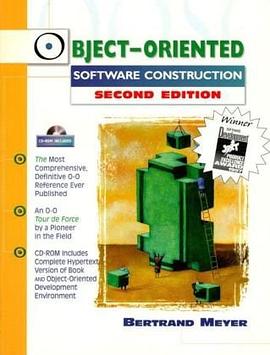
Earlier books include "Object-Oriented Software Construction" (a general presentation of object technology, winner of the 1998 Jolt Award); "Eiffel: The Language" (description of the Eiffel language); "Object Success" (a discussion of object technology for managers); "Reusable Software" (a discussion of reuse issues and solutions); "Introduction to the Theory of Programming Languages". He has also authored numerous articles (see publication list) and edited or co-edited several dozen conference proceedings, including the 2005 "Verified Software".
Other activities include: chair of the TOOLS conference series (running since 1989, hosted at ETH since 2007, next year session in Malaga, Spain); director of the LASER summer school on software engineering (taking place every year since 2003 in early September in Elba island, Italy); member, and chair since 2009, of the IFIP TC2 committee (Software technology); member of the IFIP Working Group 2.3 on Programming Methodology; member of the French Academy of Technologies. He is also active as a consultant (object-oriented system design, architectural reviews, technology assessment), trainer in object technology and other software topics, and conference speaker.
Awards include ACM Software System Award, IEEE Harlan D. Mills prize, Fellow of the ACM, Dahl-Nygaard Prize, and an honorary doctorate from ITMO University(Russia).
Prior to founding Eiffel Software in 1985, Meyer had a 9-year technical and managerial career at EDF, and was for three years on the faculty at the University of California. His experience with object technology through the Simula language, as well as early work on abstract data types and formal specification (including participation in the first versions of the Z specification language) provided some of the background for the development of Eiffel.
At ETH Zurich he pursues research on the construction of high-quality software (see Web site of the Chair of Software Engineering at http://se.ethz.ch).
目录信息
Preface V
Foreword To The Second Edition Xiii
About The Accompanying Cd-Rom Xiv
On The Bibliography, Internet Sources And Exer cises Xv
Contents Xvii
Part A: The Issues 1
Chapter 1: Software Quality 3
1.1 External And Internal Factors 3
1.2 A Review Of External Factors 4
1.3 About Software Maintenance 17
1.4 Key Concepts Introduced In This Chapter 19
1.5 Bibliographical Notes 19
Chapter 2: Criteria Of Object Orientation 21
2.1 On The Criteria 21
2.2 Method And Language 22
2.3 Implementation And Environment 31
2.4 Libraries 33
2.5 For More Sneak Preview 34
2.6 Bibliographical Notes And Object Resources 34
Part B: The Road To Object Orientation 37
Chapter 3: Modularity 39
3.1 Five Criteria 40
3.2 Five Rules 46
3.3 Five Principles 53
3.4 Key Concepts Introduced In This Chapter 64
3.5 Bibliographical Notes 64
Exercises 65
Chapter 4: Approaches To Reusability 67
4.1 The Goals Of Reusability 68
4.2 What Should We Reuse? 70
4.3 Repetition In Software Development 74
4.4 Non-Technical Obstacles 74
4.5 The Technical Problem 81
4.6 Five Requirements On Module Structures 83
4.7 Traditional Modular Structures 89
4.8 Overloading And Genericity 93
4.9 Key Concepts Introduced In This Chapter 98
4.10 Bibliographical Notes 99
Chapter 5: Towards Object Technology 101
5.1 The Ingredients Of Computation 101
5.2 Functional Decomposition 103
5.3 Object-Based Decomposition 114
5.4 Object-Oriented Software Construction 116
5.5 Issues 117
5.6 Key Concepts Introduced In This Chapter 119
5.7 Bibliographical Notes 119
Chapter 6: Abstract Data Types 121
6.1 Criteria 122
6.2 Implementation Variations 122
6.3 Towards An Abstract View Of Objects 126
6.4 Formalizing The Specification 129
6.5 From Abstract Data Types To Classes 142
6.6 Beyond Software 147
6.7 Supplementary Topics 148
6.8 Key Concepts Introduced In This Chapter 159
6.9 Bibliographical Notes 160
Exercises 161
Part C: Object-Oriented Techniques 163
Chapter 7: The Static Structure: Classes 165
7.1 Objects Are Not The Subject 165
7.2 Avoiding The Standard Confusion 166
7.3 The Role Of Classes 169
7.4 A Uniform Type System 171
7.5 A Simple Class 172
7.6 Basic Conventions 177
7.7 The Object-Oriented Style Of Computation 181
7.8 Selective Exports And Information Hiding 191
7.9 Putting Everything Together 194
7.10 Discussion 203
7.11 Key Concepts Introduced In This Chapter 213
7.12 Bibliographical Notes 215
Exercises 216
Chapter 8: The Run-Time Structure: Objects 217
8.1 Objects 218
8.2 Objects As A Modeling Tool 228
8.3 Manipulating Objects And References 231
8.4 Creation Procedures 236
8.5 More On References 240
8.6 Operations On References 242
8.7 Composite Objects And Expanded Types 254
8.8 Attachment: Reference And Value Semantics 261
8.9 Dealing With References: Benefits And Dangers 265
8.10 Discussion 270
8.11 Key Concepts Introduced In This Chapter 276
8.12 Bibliographical Notes 277
Exercises 277
Chapter 9: Memory Management 279
9.1 What Happens To Objects 279
9.2 The Casual Approach 291
9.3 Reclaiming Memory: The Issues 293
9.4 Programmer-Controlled Deallocation 294
9.5 The Component-Level Approach 297
9.6 Automatic Memory Management 301
9.7 Reference Counting 302
9.8 Garbage Collection 304
9.9 Practical Issues Of Garbage Collection 309
9.10 An Environment With Memory Management 312
9.11 Key Concepts Introduced In This Chapter 315
9.12 Bibliographical Notes 315
Exercises 316
Chapter 10: Genericity 317
10.1 Horizontal And Vertical Type Generalization 317
10.2 The Need For Type Parameterization 318
10.3 Generic Classes 320
10.4 Arrays 325
10.5 The Cost Of Genericity 328
10.6 Discussion: Not Done Yet 329
10.7 Key Concepts Introduced In This Chapter 329
10.8 Bibliographical Notes 330
Exercises 330
Chapter 11: Design By Contract: Building Reliable Software 331
11.1 Basic Reliability Mechanisms 332
11.2 About Software Correctness 333
11.3 Expressing A Specification 334
11.4 Introducing Assertions Into Software Texts 337
11.5 Preconditions And Postconditions 338
11.6 Contracting For Software Reliability 341
11.7 Working With Assertions 348
11.8 Class Invariants 363
11.9 When Is A Class Correct? 369
11.10 The Adt Connection 373
11.11 An Assertion Instruction 378
11.12 Loop Invariants And Variants 380
11.13 Using Assertions 389
11.14 Discussion 398
11.15 Key Concepts Introduced In This Chapter 406
11.16 Bibliographical Notes 407
Exercises 408
Postscript: The Ariane 5 Failure 410
Chapter 12: When The Contract Is Broken: Exception Handling 411
12.1 Basic Concepts Of Exception Handling 411
12.2 Handling Exceptions 414
12.3 An Exception Mechanism 419
12.4 Exception Handling Examples 422
12.5 The Task Of A Rescue Clause 427
12.6 Advanced Exception Handling 431
12.7 Discussion 435
12.8 Key Concepts Introduced In This Chapter 437
12.9 Bibliographical Notes 438
Exercises 438
Chapter 13: Supporting Mechanisms 439
13.1 Interfacing With Non-O-O Software 439
13.2 Argument Passing 444
13.3 Instructions 447
13.4 Expressions 452
13.5 Strings 456
13.6 Input And Output 457
13.7 Lexical Conventions 457
13.8 Key Concepts Introduced In This Chapter 458
Exercises 458
Chapter 14: Introduction To Inheritance 459
14.1 Polygons And Rectangles 460
14.2 Polymorphism 467
14.3 Typing For Inheritance 472
14.4 Dynamic Binding 480
14.5 Deferred Features And Classes 482
14.6 Redeclaration Techniques 491
14.7 The Meaning Of Inheritance 494
14.8 The Role Of Deferred Classes 500
14.9 Discussion 507
14.10 Key Concepts Introduced In This Chapter 516
14.11 Bibliographical Notes 517
Exercises 517
Chapter 15: Multiple Inheritance 519
15.1 Examples Of Multiple Inheritance 519
15.2 Feature Renaming 535
15.3 Flattening The Structure 541
15.4 Repeated Inheritance 543
15.5 Discussion 563
15.6 Key Concepts Introduced In This Chapter 566
15.7 Bibliographical Notes 567
Exercises 567
Chapter 16: Inheritance Techniques 569
16.1 Inheritance And Assertions 569
16.2 The Global Inheritance Structure 580
16.3 Frozen Features 583
16.4 Constrained Genericity 585
16.5 Assignment Attempt 591
16.6 Typing And Redeclaration 595
16.7 Anchored Declaration 598
16.8 Inheritance And Information Hiding 605
16.9 Key Concepts Introduced In This Chapter 609
16.10 Bibliographical Note 610
Exercises 610
Chapter 17: Typing 611
17.1 The Typing Problem 611
17.2 Static Typing: Why And How 615
17.3 Covariance And Descendant Hiding 621
17.4 First Approaches To System Validity 628
17.5 Relying On Anchored Types 630
17.6 Global Analysis 633
17.7 Beware Of Polymorphic Catcalls! 636
17.8 An Assessment 639
17.9 The Perfect Fit 640
17.10 Key Concepts Studied In This Chapter 641
17.11 Bibliographical Notes 641
Chapter 18: Global Objects And Constants 643
18.1 Constants Of Basic Types 643
18.2 Use Of Constants 645
18.3 Constants Of Class Types 646
18.4 Applications Of Once Routines 648
18.5 Constants Of String Type 653
18.6 Unique Values 654
18.7 Discussion 656
18.8 Key Concepts Introduced In This Chapter 659
18.9 Bibliographical Notes 660
Exercises 660
Part D: Object-Oriented Methodology:
Applying The Method Well 661
Chapter 19: On Methodology 663
19.1 Software Methodology: Why And What 663
19.2 Devising Good Rules: Advice To The Advisors 664
19.3 On Using Metaphors 671
19.4 The Importance Of Being Humble 673
19.5 Bibliographical Notes 674
Exercises 674
Chapter 20: Design Pattern: Multi-Panel Interactive Systems 675
20.1 Multi-Panel Systems 675
20.2 A Simple-Minded Attempt 677
20.3 A Functional, Top-Down Solution 678
20.4 A Critique Of The Solution 682
20.5 An Object-Oriented Architecture 684
20.6 Discussion 693
20.7 Bibliographical Note 694
Chapter 21: Inheritance Case Study: “undo” In An Interactive
System 695
21.1 Perseverare Diabolicum 695
21.2 Finding The Abstractions 699
21.3 Multi-Level Undo-Redo 704
21.4 Implementation Aspects 707
21.5 A User Interface For Undoing And Redoing 711
21.6 Discussion 712
21.7 Bibliographical Notes 715
Exercises 715
Chapter 22: How To Find The Classes 719
22.1 Studying A Requirements Document 720
22.2 Danger Signals 726
22.3 General Heuristics For Finding Classes 731
22.4 Other Sources Of Classes 735
22.5 Reuse 740
22.6 The Method For Obtaining Classes 741
22.7 Key Concepts Introduced In This Chapter 743
22.8 Bibliographical Notes 744
Chapter 23: Principles Of Class Design 747
23.1 Side Effects In Functions 748
23.2 How Many Arguments For A Feature? 764
23.3 Class Size: The Shopping List Approach 770
23.4 Active Data Structures 774
23.5 Selective Exports 796
23.6 Dealing With Abnormal Cases 797
23.7 Class Evolution: The Obsolete Clause 802
23.8 Documenting A Class And A System 803
23.9 Key Concepts Introduced In This Chapter 806
23.10 Bibliographical Notes 806
Exercises 807
Chapter 24: Using Inheritance Well 809
24.1 How Not To Use Inheritance 809
24.2 Would You Rather Buy Or Inherit? 812
24.3 An Application: The Handle Technique 817
24.4 Taxomania 820
24.5 Using Inheritance: A Taxonomy Of Taxonomy 822
24.6 One Mechanism, Or More? 833
24.7 Subtype Inheritance And Descendant Hiding 835
24.8 Implementation Inheritance 844
24.9 Facility Inheritance 847
24.10 Multiple Criteria And View Inheritance 851
24.11 How To Develop Inheritance Structures 858
24.12 A Summary View: Using Inheritance Well 862
24.13 Key Concepts Introduced In This Chapter 863
24.14 Bibliographical Notes 863
24.15 Appendix: A History Of Taxonomy 864
Exercises 869
Chapter 25: Useful Techniques 871
25.1 Design Philosophy 871
25.2 Classes 872
25.3 Inheritance Techniques 873
Chapter 26: A Sense Of Style 875
26.1 Cosmetics Matters! 875
26.2 Choosing The Right Names 879
26.3 Using Constants 884
26.4 Header Comments And Indexing Clauses 886
26.5 Text Layout And Presentation 891
26.6 Fonts 900
26.7 Bibliographical Notes 901
Exercises 902
Chapter 27: Object-Oriented Analysis 903
27.1 The Goals Of Analysis 903
27.2 The Changing Nature Of Analysis 906
27.3 The Contribution Of Object Technology 907
27.4 Programming A Tv Station 907
27.5 Expressing The Analysis: Multiple Views 914
27.6 Analysis Methods 917
27.7 The Business Object Notation 919
27.8 Bibliography 922
Chapter 28: The Software Construction Process 923
28.1 Clusters 923
28.2 Concurrent Engineering 924
28.3 Steps And Tasks 926
28.4 The Cluster Model Of The Software Lifecycle 926
28.5 Generalization 928
28.6 Seamlessness And Reversibility 930
28.7 With Us, Everything Is The Face 933
28.8 Key Concepts Covered In This Chapter 934
28.9 Bibliographical Notes 934
Chapter 29: Teaching The Method 935
29.1 Industrial Training 935
29.2 Introductory Courses 937
29.3 Other Courses 941
29.4 Towards A New Software Pedagogy 942
29.5 An Object-Oriented Plan 946
29.6 Key Concepts Studied In This Chapter 948
29.7 Bibliographical Notes 948
Part E: Advanced Topics 949
Chapter 30: Concurrency, Distribution, Client-Server And
The Internet 951
30.1 A Sneak Preview 951
30.2 The Rise Of Concurrency 953
30.3 From Processes To Objects 956
30.4 Introducing Concurrent Execution 964
30.5 Synchronization Issues 977
30.6 Accessing Separate Objects 982
30.7 Wait Conditions 990
30.8 Requesting Special Service 998
30.9 Examples 1003
30.10 Towards A Proof Rule 1022
30.11 A Summary Of The Mechanism 1025
30.12 Discussion 1028
30.13 Key Concepts Introduced In This Chapter 1032
30.14 Bibliographical Notes 1033
Exercises 1035
Chapter 31: Object Persistence And Databases 1037
31.1 Persistence From The Language 1037
31.2 Beyond Persistence Closure 1039
31.3 Schema Evolution 1041
31.4 From Persistence To Databases 1047
31.5 Object-Relational Interoperability 1048
31.6 Object-Oriented Database Fundamentals 1050
31.7 O-O Database Systems: Examples 1055
31.8 Discussion: Beyond O-O Databases 1058
31.9 Key Concepts Studied In This Chapter 1060
31.10 Bibliographical Notes 1061
Exercises 1062
Chapter 32: Some O-O Techniques For Graphical Interactive
Applications 1063
32.1 Needed Tools 1064
32.2 Portability And Platform Adaptation 1066
32.3 Graphical Abstractions 1068
32.4 Interaction Mechanisms 1071
32.5 Handling The Events 1072
32.6 A Mathematical Model 1076
32.7 Bibliographical Notes 1076
Part F: Applying The Method In Various
Languages And Environments 1077
Chapter 33: O-O Programming And Ada 1079
33.1 A Bit Of Context 1079
33.2 Packages 1081
33.3 A Stack Implementation 1081
33.4 Hiding The Representation: The Private Story 1085
33.5 Exceptions 1088
33.6 Tasks 1091
33.7 From Ada To Ada 95 1092
33.8 Key Concepts Introduced In This Chapter 1097
33.9 Bibliographical Notes 1097
Exercises 1098
Chapter 34: Emulating Object Technology In Non-O-O
Environments 1099
34.1 Levels Of Language Support 1099
34.2 Object-Oriented Programming In Pascal? 1100
34.3 Fortran 1102
34.4 Object-Oriented Programming And C 1106
34.5 Bibliographical Notes 1112
Exercises 1112
Chapter 35: Simula To Java And Beyond: Major O-O Languages
And Environments 1113
35.1 Simula 1113
35.2 Smalltalk 1126
35.3 Lisp Extensions 1130
35.4 C Extensions 1131
35.5 Java 1136
35.6 Other O-O Languages 1137
35.7 Bibliographical Notes 1138
Exercises 1139
Part G: Doing It Right 1141
Chapter 36: An Object-Oriented Environment 1143
36.1 Components 1143
36.2 The Language 1144
36.3 The Compilation Technology 1144
36.4 Tools 1148
36.5 Libraries 1150
36.6 Interface Mechanisms 1152
36.7 Bibliographical Notes 1160
Epilogue, In Full Frankness Exposing The Language 1161
Part H: Appendices 1163
Appendix A: Extracts From The Base Libraries 1165
Appendix B: Genericity Versus Inheritance 1167
B.1 Genericity 1168
B.2 Inheritance 1173
B.3 Emulating Inheritance With Genericity 1175
B.4 Emulating Genericity With Inheritance 1176
B.5 Combining Genericity And Inheritance 1184
B.6 Key Concepts Introduced In This Appendix 1187
B.7 Bibliographical Notes 1188
Exercises 1188
Appendix C: Principles, Rules, Precepts And Definitions 1189
Appendix D: A Glossary Of Object Technology 1193
Appendix E: Bibliography 1203
E.1 Works By Other Authors 1203
E.2 Works By The Author Of The Present Book 1221
Index 1225
· · · · · · (收起)
读后感
本书对OO理论进行了深入的介绍,与其它OO书籍不同的是本书特别强调软件质量。本书作者Meyer正是Design by Contract思想的提出者,个人认为Design by Contract会逐渐被主流的程序设计语言C#/Java等所支持,代表了未来的发展方向。
本书对OO理论进行了深入的介绍,与其它OO书籍不同的是本书特别强调软件质量。本书作者Meyer正是Design by Contract思想的提出者,个人认为Design by Contract会逐渐被主流的程序设计语言C#/Java等所支持,代表了未来的发展方向。
本书对OO理论进行了深入的介绍,与其它OO书籍不同的是本书特别强调软件质量。本书作者Meyer正是Design by Contract思想的提出者,个人认为Design by Contract会逐渐被主流的程序设计语言C#/Java等所支持,代表了未来的发展方向。
本书对OO理论进行了深入的介绍,与其它OO书籍不同的是本书特别强调软件质量。本书作者Meyer正是Design by Contract思想的提出者,个人认为Design by Contract会逐渐被主流的程序设计语言C#/Java等所支持,代表了未来的发展方向。
本书对OO理论进行了深入的介绍,与其它OO书籍不同的是本书特别强调软件质量。本书作者Meyer正是Design by Contract思想的提出者,个人认为Design by Contract会逐渐被主流的程序设计语言C#/Java等所支持,代表了未来的发展方向。
用户评价
坦白讲,第一次看到《面向对象软件构造》这个书名,我的第一反应是“又一本讲OO的书”。毕竟,在编程的求学路上,面向对象这个概念是绕不过去的坎,相关的书籍更是车载斗量。然而,让我犹豫着不敢轻易下手的,恰恰是它那份“沉甸甸”的重量,不仅是实体书的厚度,更是它似乎承载着某种“深度”的暗示。我不知道这本书的作者是否是某个领域的泰斗,但“构造”二字,在我看来,远比“设计”、“模式”或者“编程”这类词汇更具份量,它暗示着一种从无到有、将概念转化为现实的宏大工程。我期望这本书能够提供的是一种“内功心法”,而非“招式套路”。我不想只是学习如何使用某个库或者框架来快速搭建一个功能,我更渴望理解的是,为什么我们要做这些,以及在面临不同场景时,有哪些更根本的解决之道。我好奇作者会如何去界定“面向对象”的边界,它是否会触及一些我未曾深入思考过的关于对象生命周期、状态管理,乃至并发环境下对象交互的复杂问题。我甚至猜测,这本书可能会对一些普遍存在的、被大家习以为常的面向对象实践提出质疑,并给出自己的独特见解。我不是在寻找快速的解决方案,而是在寻求对软件本质的深刻洞察,一种能够让我即便在面对新兴技术时,也能保持清醒头脑、做出明智决策的能力。
当我看到《面向对象软件构造》这本书时,我的脑海中立刻浮现出一个画面:一位经验丰富的工匠,手持刻刀,一丝不苟地雕琢着一件精美的艺术品。这本书的名字就给人一种“建造”和“精心打磨”的感觉,这正是我在软件开发过程中所追求的。在如今这个快节奏的时代,许多开发者往往追求的是快速实现功能,而忽略了软件的长期可维护性和可扩展性。我希望这本书能够提供一种截然不同的视角,引导我更加注重软件的“构造”过程,强调代码的清晰度、模块化以及良好的设计。我不期待它会教我如何使用某种特定的编程语言的最新特性,或者如何快速集成某个热门的框架。相反,我希望它能够深入探讨面向对象编程的核心思想,例如如何有效地运用封装、继承和多态来构建灵活且易于理解的代码。我猜想,书中可能会包含一些关于软件架构、设计模式以及如何进行重构的深入讨论。作者的讲解方式,我希望能是严谨而富有洞察力的,能够帮助我理解为什么某些设计选择会比其他选择更好,以及在不同的场景下,如何做出最优化的决策。我渴望通过阅读这本书,能够提升我构建高质量、健壮且易于维护的软件系统的能力,真正成为一名“软件构造者”。
这本书的名字是《面向对象软件构造》,一本在我阅读列表里盘桓了很久的书。之所以一直没有下决心翻开它,很大程度上是源于它那略显“古老”的出版年代。在如今这个日新月异的软件开发世界里,许多曾经的“圣经”都可能很快被新的技术浪潮所淹没。然而,越是这样,我内心深处越是对它保持着一种复杂的好奇。我猜想,一本能够长久流传,并且被冠以“构造”如此沉甸甸的词语的书籍,必定有着其超越时间和技术的普适性价值。我期待它能给我带来一种“返璞归真”的智慧,一种能够帮助我理清那些被纷繁复杂的新框架、新语言所掩盖的软件设计本质。我不是在寻找最新最潮的语法糖,也不是在学习某个特定框架的API,而是希望能从更宏观、更基础的层面去理解“构造”的艺术。我希望这本书能够教会我如何构建健壮、可维护、易于理解的软件系统,而不仅仅是掌握一门工具。我设想,作者可能是一位经验丰富、沉淀深厚的老程序员,他将自己的毕生所学,用一种系统、严谨的方式呈现出来,就像建筑师在绘制精密的蓝图。他可能会通过深入浅出的讲解,剖析面向对象设计的核心原则,比如封装、继承、多态,以及如何将这些原则恰当地应用于实际的软件开发过程中。我不确定这本书是否会提供具体的代码示例,但即便有,我更看重的是这些示例所传递的设计思想,而非其语法细节。我更希望它能引导我形成一种“思考方式”,一种在面对复杂需求时,能够有条不紊地进行分解、抽象和建模的能力。
《面向对象软件构造》这本书,它的名字就像一个古老的地图,勾勒着一片我一直想要探索的软件大陆。虽然我不是它的第一个读者,甚至可能不是最早接触面向对象概念的开发者,但我仍然怀揣着一份对知识深耕的渴望。我听说这本书的风格可能比较严谨,甚至有些“学院派”的味道,但我恰恰喜欢这种扎实的讲解方式。我早已厌倦了那些浮于表面的“快速入门”或者“XX技巧大全”,我更希望能够从根本上理解事物的运作原理。我设想,作者一定是一位在软件工程领域有着深厚造诣的学者或资深专家,他将长年累月的实践经验和理论思考,凝练成这本书的内容。我期待它能够像一本教科书一样,系统地介绍面向对象软件构造的方方面面,从最基础的概念,到更高级的设计原则和模式。我希望它能帮助我建立起一套严谨的思维框架,让我能够清晰地分析问题,合理地设计解决方案,并且能够有效地组织和管理复杂的软件项目。我不是在寻找最新的编程语言教程,也不是在学习某个特定的框架,而是希望能够提升自己对软件“构造”这件事的理解深度,培养一种能够应对不断变化的技术环境的“内功”。我猜测,这本书可能会提供一些经典的案例分析,或者对一些常见的软件开发误区进行深入剖析,从而帮助我少走弯路,成为一个更优秀的软件工程师。
《面向对象软件构造》这个名字,对我来说,仿佛是一扇通往更深层次软件理解的大门。在接触过琳琅满目的编程书籍后,我越来越意识到,单纯掌握语法和API是远远不够的,真正关键的是理解“如何构造”出高质量的软件。我之所以对这本书产生浓厚的兴趣,是因为“构造”这个词语本身就蕴含着一种系统性、一种从零开始搭建的严谨与智慧。我猜想,这本书不会仅仅停留在理论层面,而是会结合实际的软件开发过程,深入浅出地讲解面向对象设计的精髓。我期待它能够提供一种“设计思维”,帮助我理解如何将复杂的需求分解成可管理的对象,如何利用面向对象的特性来提高代码的可重用性和可维护性。我不是在寻找某个特定技术的速成指南,而是希望能够获得一种能够指导我一生软件开发实践的“内功”。我设想,作者可能是一位在软件工程领域有着丰富经验的大家,他会将自己多年的实践心得和理论总结,以一种清晰、系统的方式呈现出来。我希望这本书能够让我明白,为什么我们需要遵循某些设计原则,以及这些原则在实际应用中是如何发挥作用的。我期待它能帮助我克服在软件开发过程中遇到的各种挑战,构建出更加优雅、健壮且易于演进的软件系统。
太学术。读着基本两种心情:1.你到底在讲啥?2.好吧我终于搞懂你在讲啥了,可讲了这个又有什么用呢?也许哪天得道后我会再回来打5分。
行文很顺,结构很严谨,好书!
毕设翻译。。
大厚书
太学术。读着基本两种心情:1.你到底在讲啥?2.好吧我终于搞懂你在讲啥了,可讲了这个又有什么用呢?也许哪天得道后我会再回来打5分。