
具体描述
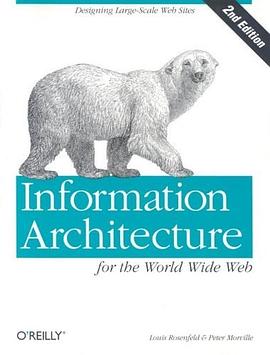
Today's web sites have moved far beyond "brochureware." They are larger and more complex, have great strategic value to their sponsors, and their users are busier and less forgiving. Designers, information architects, and web site managers are required to juggle vast amounts of information, frequent changes, new technologies, and sometimes even multiple objectives, making some web sites look like a fast-growing but poorly planned city-roads everywhere, but impossible to navigate. Well-planned information architecture has never been as essential as it is now. Information Architecture for the World Wide Web, 2nd Edition, shows you how to blend aesthetics and mechanics for distinctive, cohesive web sites that work. Most books on web development concentrate on either the graphics or the technical issues of a site. This book focuses on the framework that holds the two together. This edition contains more than 75% new material. You'll find updated chapters on organization, labeling, navigation, and searching; and a new chapter on thesauri, controlled vocabularies and metadata will help you understand the interconnectedness of these systems. The authors have expanded the methodology chapters to include a more interdisciplinary collection of tools and techniques. They've also complemented the top-down strategies of the first edition with bottom-up approaches that enable distributed, emergent solutions. A whole new section addresses the opportunities and challenges of practicing information architecture, while another section discusses how that work impacts and is influenced by the broader organizational context. New case studies provide models for creating enterprise intranet portals and online communities. Finally, you'll find pointers to a wealth of essential information architecture resources, many of which did not exist a few years ago. By applying the principles outlined in this completely updated classic, you'll build web sites and intranets that are easier to navigate and appealing to your users, as well as scalable and simple to maintain. Information Architecture for the World Wide Web, 2nd Edition is a treasure trove of ideas and practical advice for anyone involved in building or maintaining a large, complex web site or intranet.
作者简介
Louis Rosenfeld是独立信息架构顾问,也是Rosenfeld Media的创始人和出版商。他与其他人共同成立了信息架构协会、uxnet,并举办了AsIs&T信息架构系列高峰会。他最近的客户包括Accenture、Caterpillar、Ford、Microsoft,以及NCAA。他的博客地址是www.louisrosenfed.com。
目录信息
读后感
和期望差距较大,快速翻下来几乎没有什么收获,唯一有点印象的是“组织、标签、导航、搜索”四个分类。翻译不够顺畅,很多情况下是对字翻译。感觉可以做图书馆学的参考读物。
序言里就提一个井卦,唉,跟外国人比起来也传统文化功底不足。。。惭愧惭愧。。。 一看以为是水在石上,不对,下面不是艮,再想再猜,风在水下,搜索一下,井卦。 井。改邑不改井,无丧无得。往来井井。汔至亦未繘井,羸其瓶,凶。 象曰:木上有水,井。君子以劳民劝相 这个卦...
唉,跟外国人比起来也传统文化功底不足。。。惭愧惭愧。。。 一看以为是水在石上,不对,下面不是艮,再想再猜,风在水下,搜索一下,井卦。 井。改邑不改井,无丧无得。往来井井。汔至亦未繘井,羸其瓶,凶。 象曰:木上有水,井。君子以劳民劝相 这个卦辞的英译居然这么有味...
公司借的,只有2周,逼着我几天看完。 吸引我看的是他的标题,我以为看了这本书能对“架构”有浅显的了解,因为架构师换人了,想深入了解一些架构,以便更好的协作。但读了几章后,令我大吃一惊的是:原来这是写给产品经理的书。 书中最有价值的部分: 1.第二部——信息架构的...
其实互联网设计阅读推荐是读此书后,受启发完成的。因为我觉得想清楚了关键点,在各自不同角度深入下去,虽然得到的东西差不多,但思路千差万别。 也许这就是交集越大,协作越顺畅的必然。在产品实践中,我发现超过80%的问题都与信息架构有关,最容易引起争论的也是。书中有一...
用户评价
越写越烂啊!最后跳着看的
越写越烂啊!最后跳着看的
构架在很多学科里都有,整理有序也是一门很精深的学问。前面的内容还算能理解,后面的内容基本上无法消化,狼吞虎咽的过了一遍,希望以后有机会能在反复读一下。
how to organise the information, web design 背後其實很多理論
越写越烂啊!最后跳着看的