
具体描述
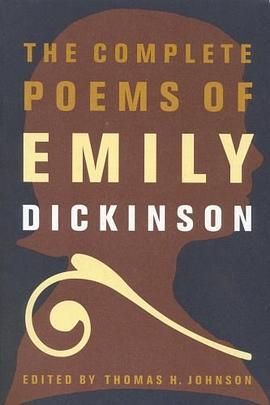
Emily Dickinson proved that brevity can be beautiful. Only now is her complete oeuvre--all 1,775 poems--available in its original form, uncorrupted by editorial revision, in one volume. Thomas H. Johnson, a longtime Dickinson scholar, arranged the poems in chronological order as far as could be ascertained (the dates for more than 100 are unknown). This organization allows a wide-angle view of Dickinson's poetic development, from the sometimes-clunky rhyme schemes of her juvenilia, including valentines she wrote in the early 1850s, to the gloomy, hell-obsessed writings from her last years. Quite a difference from requisite Dickinson entries in literary anthologies: "There's a certain Slant of light," "Wild Nights--Wild Nights!" and "I taste a liquor never brewed." The book was compiled from Thomas H. Johnson's hard-to-find variorum from 1955. While some explanatory notes would have been helpful, it's a prodigious collection, showcasing Dickinson's intractable obsession with nature, including death. Poem 1732, which alludes to the deaths of her father and a onetime suitor, illustrates her talent: My life closed twice before its close; It yet remains to see If Immortality unveil A third event to me, So huge, so hopeless to conceive As these that twice befell. Parting is all we know of heaven, And all we need of hell. The musicality of her punctuation and the outright elegance of her style--akin to Christina Rossetti's hymns, although not nearly so religious--rescue the poems from their occasional abstruseness. The Complete Poems is especially refreshing because Dickinson didn't write for publication; only 11 of her verses appeared in magazines during her lifetime, and she had long-resigned herself to anonymity, or a "Barefoot-Rank," as she phrased it. This is the perfect volume for readers wishing to explore the works of one of America's first poets.
作者简介
Emily Dickinson was an American poet who, despite the fact that less than a dozen of her nearly eighteen hundred poems were published during her lifetime, is widely considered one of the most original and influential poets of the 19th century.
Dickinson was born to a successful family with strong community ties, she lived a mostly introverted and reclusive life. After she studied at the Amherst Academy for seven years in her youth, she spent a short time at Mount Holyoke Female Seminary before returning to her family's house in Amherst. Thought of as an eccentric by the locals, she became known for her penchant for white clothing and her reluctance to greet guests or, later in life, even leave her room. Most of her friendships were therefore carried out by correspondence.
Although Dickinson was a prolific private poet, fewer than a dozen of her nearly eighteen hundred poems were published during her lifetime.The work that was published during her lifetime was usually altered significantly by the publishers to fit the conventional poetic rules of the time. Dickinson's poems are unique for the era in which she wrote; they contain short lines, typically lack titles, and often use slant rhyme as well as unconventional capitalization and punctuation.Many of her poems deal with themes of death and immortality, two recurring topics in letters to her friends.
Although most of her acquaintances were probably aware of Dickinson's writing, it was not until after her death in 1886—when Lavinia, Emily's younger sister, discovered her cache of poems—that the breadth of Dickinson's work became apparent. Her first collection of poetry was published in 1890 by personal acquaintances Thomas Wentworth Higginson and Mabel Loomis Todd, both of whom heavily edited the content.
A complete and mostly unaltered collection of her poetry became available for the first time in 1955 when The Poems of Emily Dickinson was published by scholar Thomas H. Johnson. Despite unfavorable reviews and skepticism of her literary prowess during the late 19th and early 20th century, critics now consider Dickinson to be a major American poet.
目录信息
读后感
My life has been too simple and too stern to embrass any.--Dickinson wrote so to describe her elusive and mysterious life experience. Yet in her lifetime, only 10 poems were published. I was wandering that maybe that's why she could deep in her soul and in...
I thought after courting trouble for a good week I was finally coming down with a fever. All day yesterday I sat in my office shivering, had to steady my voice every time before I spoke on a conference call. Then after a night of whisky and cigarette (the ...
My life has been too simple and too stern to embrass any.--Dickinson wrote so to describe her elusive and mysterious life experience. Yet in her lifetime, only 10 poems were published. I was wandering that maybe that's why she could deep in her soul and in...
I thought after courting trouble for a good week I was finally coming down with a fever. All day yesterday I sat in my office shivering, had to steady my voice every time before I spoke on a conference call. Then after a night of whisky and cigarette (the ...
I thought after courting trouble for a good week I was finally coming down with a fever. All day yesterday I sat in my office shivering, had to steady my voice every time before I spoke on a conference call. Then after a night of whisky and cigarette (the ...
用户评价
对于那些寻求传统抒情或浪漫主义慰藉的读者来说,这本书可能会带来一种冷峻的冲击。它的美不在于悦耳的韵脚,而在于其精神上的“硬度”和无可妥协的真实。我感觉自己像是被邀请进入了一个极其安静、几乎真空的环境中,在那里,思维的速度加快了,感官变得异常敏锐。特别是那些涉及“名声”和“不朽”的诗篇,其反思的深刻性令人警醒。她似乎已经提前预知了她未来会被如何评价,但对这些评价本身表现出一种超脱的漠视,她只忠实于内心涌现的必要性。诗歌中的意象常常是反常的组合:冰与火、喧嚣与寂静、存在与虚无并置,产生一种强烈的化学反应。这种对立统一的美学,使得她的作品具有一种超越时代的力量。读完之后,我感觉自己对“独处”的理解也发生了根本性的变化,它不再是缺陷,而是一种力量的源泉,是通往真正自我发现的唯一路径。这本书更像是一面镜子,映照出的不是我们想看到的华丽外表,而是我们不愿承认的内在纹理。
说实话,一开始接触这些作品时,我感到有些不知所措。那些看似简单的词汇组合在一起,却像一个精密的密码锁,需要反复尝试才能找到正确的开启方式。这本书的排版和印刷质量也为阅读体验增色不少,纸张的触感温润而不失坚韧,与诗歌本身的气质非常契合。我特别注意到她在处理“爱”与“失落”时那种近乎宗教般的虔诚。她的“爱”往往是内敛的、非世俗的,更像是一种对完美形式的向往,一旦这种形式被打破,随之而来的痛苦也是形而上的。那些关于“心”的隐喻层出不穷,心脏既是情感的中心,也是一座被围困的城堡,时而坚不可摧,时而又轻易失守。我花了很多时间去研究那些不寻常的标点符号,它们似乎是她情绪的呼吸点,没有它们,诗歌会失去那种内在的挣扎感和急促感。这不是那种会让你轻易落泪的诗歌,它的情感是内化的,是那种在深夜里独自与自己对话时产生的、难以言喻的激动。它更像是一份来自另一个时空的、极其私密的日记,我们有幸窥见了她灵魂最深处的角落,那里光影交错,复杂而迷人。
这份诗集最引人入胜的地方,在于它对“界限”的不断试探和逾越。她似乎对所有既定的概念——无论是社会规范、宗教教义还是客观现实——都抱有一种审慎的怀疑态度。这种质疑不是愤怒的控诉,而是一种冷静的、近乎科学的解剖。我被她那种将宏大主题浓缩到极致的笔力所震撼。例如,她谈论“永恒”,可能只用了短短几行,却比那些长篇哲学论著更有穿透力。她的语言风格非常个人化,充满了她自己创造的语法和词汇的变体,这使得翻译工作几乎成为一种不可能完成的任务,也正因如此,英文原版带来的冲击力是无可替代的。阅读过程中,我发现自己开始不自觉地模仿她的思维方式,去观察周围环境中那些被我们习惯性忽略的细节——比如光线穿过百叶窗投下的条纹,或者钟摆规律的摆动背后隐藏的虚无。这真是一部需要“慢读”的杰作,每一次呼吸,每一个词语,都值得被单独拎出来,放在显微镜下仔细端详。
这本书给我的感觉是,它更像是一系列精心打磨过的、关于“存在”的哲学碎片,而非传统意义上的抒情诗合集。我最欣赏的是她对抽象概念的具象化处理,这种能力堪称一绝。比如“死亡”,在她笔下不再是一个令人恐惧的终点,而是一个彬彬有礼的访客,甚至可能是一位绅士,这种拟人化的手法,瞬间消解了死亡的恐怖,将其转化为一种可以与之共处的日常现象。这种对禁忌主题的坦然面对,在那个时代是多么惊世骇俗啊。诗歌的节奏感尤其迷人,它似乎总是在即将达到某种平衡时,又故意打乱,用突兀的词语或跳跃的意象将读者拉回现实的碎片中。这迫使我必须积极地参与到文本的意义建构中去。我发现,每隔一段时间重读同一首诗,都会有全新的感悟,这表明她的作品具有极强的复读价值。有些诗句如同一把锋利的刀,直插人性的弱点,毫不留情地揭示了信仰的摇摆、自我认知的困境,以及身份的流失感。读完后,我感到的是一种深刻的清理,仿佛内心的尘埃被一股强劲的气流涤荡干净,留下的,是一种清醒的、略带苦涩的自由。
终于捧起了这本厚厚的诗集,沉甸甸的,仿佛握住了岁月的痕迹。初读便被那种独特的韵律和看似不加修饰的语言所吸引。那些短小精悍的诗行,如同从心灵深处迸发出的火花,带着一种近乎原始的坦诚。我尤其钟爱她对自然景物的描摹,那种细致入微的观察力,仿佛能将一朵花的开放、一片叶子的凋零都定格在永恒的瞬间。然而,这种美感并非总是温柔抚慰的,有时它带着尖锐的刺,直指人类存在的荒谬与孤独。比如她对“希望”的探讨,那种将其比喻为“有羽毛的东西”的意象,既轻盈又充满韧性,让人在反复咀嚼后,才体会到其中蕴含的巨大哲学重量。阅读的过程与其说是被动的接受,不如说是一场精神上的探险,我时常需要停下来,在脑海中构建她所营造的那个由“内陆”和“天堂”构成的宇宙。她的句法结构常常打破常规,冒号和破折号的运用,就像是呼吸之间的停顿与强调,为平淡的词语注入了戏剧性的张力。这本书需要的不是快速翻阅,而是需要像对待古老手稿一样,在微弱的光线下,用手指轻轻摩挲,才能真正感受到她那颗与世隔绝却又洞察一切的灵魂的跳动。我常常好奇,在那个时代,她是如何在那样一种相对封闭的环境中,构建出如此广阔而又精确的内心世界的。
i felt a funeral in my brain a box creak across my soul i dropped down and down and hit a world
这版很好
always my love
♚
读的第二本英文诗集