
具体描述
111111
作者简介
目录信息
part i two-dimensional cases
chapter 1 walsh matrices
1.1 walsh functions and matrices
1.1.1 definitions
1.1.2 ordering
1.2 orthogonality and completeness
1.2.1 orthogonality
1.2.2 completeness
1.3 walsh transforms and fast algorithms
1.3.1 walsh ordered walsh-hadamard transforms
1.3.2 hadamard ordered walsh-hadamard transforms
bibliography
chapter 2 hadamard matrices
2.1 definitions
2.1.1 hadamard matrices
2.1.2 hadamard designs
2.1.3 williamson matrices
2.2 construction
2.2.1 general constructions
.2.2.2 amicable hadamard matrices
2.2.3 skew hadamard matrices
2.2.4 symmetric hadamard matrices
2.3 existence
2.3.1 orthogonal designs and hadamard matrices
2.3.2 existence results
bibliography
part ii lower-dimensional cases
chapter 3 three-dimensional hadamard matrices
3.1 definitions and constructions
3.1.1 definitions
3.1.2 constructions based on direct multiplications
3.1.3 constructions based on 2-dimensional hadamard matrices
3.2 three-dimensional hadamard matrices of order 4k + 2
3.3 three-dimensional hadamard matrices of order 4k
3.3.1 recursive constructions of perfect binary arrays
3.3.2 quasi-perfect binary arrays
3.3.3 3-dimensional hadamard matrices based on pba(2m, 2m) and pba(3.2m, 3.2m)
3.4 three-dimensional walsh matrices
3.4.1 generalized 2-dimensional walsh matrices
3.4.2 3-dimensional walsh matrices
3.4.3 3-dimensional pan-walsh matrices
3.4.4 analytic representations
bibliography..
chapter 4 multi-dimensional walsh-hadamard transforms
4.1 conventional 2-dimensional walsh-hadamard transforms
4.1.1 2-dimensional walsh-hadamard transforms
4.1.2 definitions of 4-dimensional hadamard matrices
4.2 algebralcal theory of higher-dimensional matrices
4.3 multi-dimensional walsh-hadamard transforms
4.3.1 transforms based on 3-dimensional hadamard matrices
4.3.2 transforms based on 4-dimensional hadamard matrices
4.3.3 transforms based on 6-dimensional hadamard matrices
bibliography
part iii general higher-dimensional cases
chapter 5 n-dimensional hadamard matrices of order 2
5.1 constructions of 2n hadamard matrices
5.1.1 equivalence between 2n hadamard matrices and h-boolean functions
5.1.2 existence of h-boolean functions
5.1.3 constructions of h-boolean functions
5.2 enumeration of 2n hadamard matrices
5.2.1 classification of 24 hadamard matrices
5.2.2 enumeration of 25 hadamard matrices
5.2.3 enumeration of general 2n hadamard matrices
5.3 applications
5.3.1 strict avalanche criterion and h-boolean functions
5.3.2 bent functions and h-boolean functions
5.3.3 reed-muller codes and h-boolean functions
bibliography
chapter 6 general higher-dimensional hadamard matrices
6.1 definitions, existences and constructions
6.1.1 n-dimensional hadamard matrices of order 2k
6.1.2 proper and improper n-dimensional hadamard matrices
6.1.3 generalized higher-dimensional hadamard matrices
6.2 higher-dimensional hadamard matrices based on perfect binary arrays
6.2.1 n-dimensional hadamard matrices based on pbas
6.2.2 construction and existence of higher-dimensional pbas
6.2.3 generalized perfect arrays
6.3 higher-dimensional hadamard matrices based on orthogonal designs
6.3.1 definitions of orthogonality
6.3.2 higher-dimensional orthogonal designs
6.3.3 higher-dimensional hadamard matrices from orthogonal designs
bibliography
concluding questions
index...
· · · · · · (收起)
读后感
用户评价
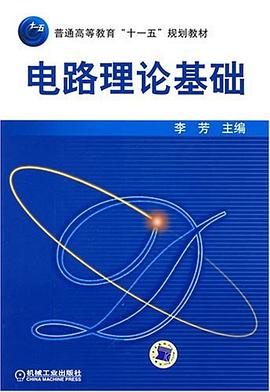
这本书的封面设计真是让人眼前一亮,那种深邃的蓝色调,配上简洁而有力的几何图形,立刻就给人一种专业、严谨的感觉。我抱着极大的期望翻开了第一页,想看看内容是否能与这封面一样引人入胜。初读之下,我对作者在梳理基础概念方面的功力深感佩服。那些原本在我脑海中模糊不清的定义和定理,被作者用一种近乎艺术家的笔触清晰地勾勒出来。特别是关于**特定类型的编码方案**的部分,作者并没有停留在枯燥的公式堆砌上,而是巧妙地引入了一些历史背景和实际应用场景,让抽象的数学理论变得触手可及。这种叙事方式极大地降低了初学者的入门门槛,使得那些原本需要反复揣摩才能领会的精髓,得以在第一次阅读时就扎根心底。我特别欣赏作者在章节过渡时所采用的平滑衔接技巧,使得整本书读起来一气呵成,仿佛在聆听一位经验丰富的导师循循善诱,而非面对一本冷冰冰的教科书。
这本书的排版和装帧质量也值得称赞。在如今电子阅读盛行的时代,一本纸质书的质感显得尤为重要。这本书的纸张厚实适中,墨迹清晰,长时间阅读下来眼睛的疲劳感明显减轻了不少。更让我感到惊喜的是,书中对**某些特定的序列结构**的分析部分,作者使用了独特的字体和格式来突出关键的数学结构,这在提升阅读体验的同时,也有效地帮助读者在海量信息中锁定核心信息点。我个人习惯于在书页上做大量的批注和折角标记,这本书的页边距设计得恰到好处,为我的这种“互动式阅读”提供了足够的空间。这本厚重的书籍,拿在手中沉甸甸的,反而给我带来了一种充实的满足感,仿佛手里握着的是一份沉淀了无数智慧的宝藏。
这本书的逻辑架构展现了作者深厚的学术功底和清晰的思维脉络。它并非简单地将知识点罗列在一起,而是构建了一个层层递进的知识体系。从最基础的构造原理出发,逐步深入到**复杂系统的建模**,再到针对特定约束条件的优化求解,每一步的推进都显得水到渠成,毫不突兀。我特别欣赏作者在处理**非标准正交基变换**时的论述方式,他没有采用那种先抛结论再强行解释的套路,而是通过一系列精心设计的思想实验,引导读者自己去发现现有方法的局限性,从而自然而然地引入更优的理论框架。这种“引导式教学”的方法,极大地激发了读者的主动探索欲,让学习过程充满了发现的乐趣,而不是被动接收知识的枯燥感。
对于那些希望将理论知识迅速转化为实际工程能力的读者来说,这本书提供了宝贵的资源。它不仅仅停留在理论探讨的象牙塔内,更关注如何解决现实世界中遇到的难题。比如,书中关于**在存在噪声环境下的信息恢复**这一专题的探讨,不仅给出了理论上最优的估计方法,还详细对比了不同算法在计算复杂度与抗噪性之间的权衡。这种对工程实用性的执着,使得这本书的价值远远超出了纯理论著作的范畴。我感觉,这本书更像是一位资深的工程师和一位严谨的数学家共同心血的结晶,它教会我的不仅仅是知识本身,更是一种面对复杂问题时,既要保持数学的严谨,又要兼顾工程的效率的综合思维方式。
坦率地说,这本书的深度和广度超出了我最初的预期。我原以为它会更侧重于理论推导的严密性,但事实证明,作者在理论与实践的平衡上做得极为出色。例如,在介绍**某些稀疏表示方法**时,作者没有回避那些繁复的代数证明,但紧接着就给出了如何在实际信号处理任务中应用这些理论的实例分析。这些案例的选择非常具有代表性,它们不仅仅是简单的数值代入,而是深入到了算法设计和性能评估的层面。读完相关章节,我感觉自己像是完成了一次系统性的升级,不仅理解了“是什么”,更明白了“为什么是这样”以及“如何更好地使用它”。书中穿插的图表和示意图也极大地辅助了理解,它们的设计考究,直观地揭示了复杂结构之间的内在联系,这一点对于需要经常与视觉化数据打交道的读者来说,无疑是一大福音。