
具体描述
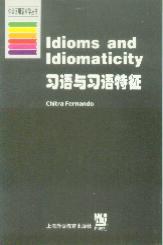
本书作者根据现实生活中的语言和英语语料库中的大量资料, 对习语的作用进行了
分析,并提出了对习语的新见解。作者运用了许多生动翔实、具有代表性的例子,将
习语置于语言环境中,阐述了习语作为一种约定俗成、简单而有效的语言形式在人们
语言交流中所起的作用——从单纯的表达意义的功能,到反映对话者之间关系的交际
功能,直至使文章通顺、流畅、连贯的联系功能。
作者简介
目录信息
The author and series editors
Foreword
Text data, its sources, and presentation
1 Review and setting
1.1 Introduction
1.2 Lexically and grammatically regular idioms
1.2.1 A. Makkai (1972)
1.2.2 U. Weinreich (1969)
1.2.3 B. Fraser (1970)
1.2.4 A.P. Cowie and R. Mackin (1975); A. P. Cowie,
R. Mackin, and I. R. McCaig (1983)
1.2.5 J. Strassler (1982)
1.2.6 Conclusions
1.3 Idiosyncratic idioms
1.3.1 M.H. Roberts (1944); L. P. Smith (1925);
O. Jespersen (1924); C. Fillmore, P. Kay, and
M. C. O'Connor (1988)
1.3.2 Conclusions
1.4 About this book
.2 Conventional ways of saying
2.1 The novel and the conventional in language
2.1.1 Introduction
2.1.2 Idioms and idiomaticity
2.1.3 Idioms, semi-idioms, literal idioms, and
habitual collocations
2.1.4 Conclusions
2.2 The lexicogrammar of idioms
2.2.1 Introduction
2.2.2 Compounds, phrases, semi-clauses, and clauses
2.3 Idioms and transformations
2.3.1 Introduction
2.3.2 Replacements or substitutions
2.3.3 Additions
2.3.4 Permutations
2.3.5 Deletions
2.3.6 Summary and conclusions on the
transformations in idioms
2.4 The collocability of idioms
2.5 The semantics of pure and semi-idioms
2.5.1 Semantic unity
2.5.2 Non-literalness
2.5.3 Summary and conclusions on the semantics
of idioms
2.6 Idioms: indicators of conventionality
2.6.1 Introduction
2.6.2 Conventionality and currency
2.6.3 Conventionality and frequency
2.7 Categorizing idioms
2.7.1 Lexicogrammatical categorizations
2.7.2 Functional categorizations
2.8 Conclusions on idioms
2.9 Idiomatic usage: an exercise in comparative usage
2.9.1 Introduction
2.9.2 English verb formations and bracketing in
relation to German
2.9.3 Sinhala: verb formations and deletion in
relation to English
2.9.4 Lankan English
2.9.5 Australian English
2.9.6 Conclusions
2.10 General conclusions: conventionalized ways of saying
3 Ideational idiomatic expressions: images
of the world
3.1 Vocabulary as an analogue of the world and its ways
3.1.1 Introduction
3.1.2 Images of the world: generalities
3.1.3 Images of the world: the vague
3.1.4 Images of the world: specificities
3.1.5 Conclusions
3.2 Images of the world: the politics of Jane and Joe Bloggs
3.2.1 Introduction
3.2.2 The politics of the Bloggs: the emperor's new
clothes
3.2.3 The politics of the Bloggs: red herrings
3.2.4 Conclusions
3.3 Images of the world: inside Jane and Joe Bloggs
3.3.1 Introduction
3.3.2 The heart and the head of the Bloggs
3.3.3 The states of the heart: joy
3.3.4 The states of the heart: grief
3.3.5 The states of the heart: anger
3.3.6 Conclusions
3.4 Men, women, manners, and morals: attitudinal
appraisals
3.4.1 Introduction
3.4.2 Attitudes in discourse
3.4.3 Appraisals of manners and morals
3.4.4 Conclusions
3.5 The world, language, and language-users
3.6 Conclusions
4 Interpersonal idiomatic expressions:
conviviality and conflict in verbal interactions
4.1 Interpersonal idiomatic expressions: vehicles of
participation and exchange
4.1.1 Introduction
4.1.2 Interpersonal idiomatic expressions as markers
of conviviality: politeness routines
4.1.3 Service encounters
4.1.4 Small talk
4.2 Institutionalized good wishes and sympathy
4.2.1 Introduction
4.2.2 Christmas and New Year greetings
4.2.3 Birthday greetings
4.2.4 Condolence, sympathy, and congratulations
4.3 Forums: information-oriented talk
4.3.1 Introduction
4.3.2 Endorsements
4.3.3 Mitigation
4.3.4 Generosity
4.3.5 Informing strategies
4.3.6 Conclusions
4.4 Interpersonal idiomatic expressions as markers of
conflict
4.4.1 Introduction
4.4.2 Conflict
4.4.3 Conclusions
4.5 General conclusions
5 Relational idiomatic expressions in exposition
and narrative
5.1 Relational idiomatic expressions: vehicles of
logical and temporal coherence
5.1.1 Introduction
5.1.2 Anaphoric and conjunctive idiomatic expressions
in action
5.1.3 Conclusions
5.2 Temporal idiomatic expressions in action
5.2.1 Introduction: public and personal time
5.2.2 Public time
5.2.3 Personal time
5.3 General conclusions
6 Idiomatic expressions as vocabulary resource:
interdependencies, interconnections, and
practicalities
6.1 What this chapter is about
6.2 The general and the specific reconsidered
6.3 Currency reconsidered
6.4 Topic-related collocations
6.5 Idioms, topic, theme: the role of vocabulary in getting
the message across
6.6 Practicalities
6.6.1 Introduction
6.6.2 The role of idioms in language learning
6.7 Interlocutor, thinker, and experiencer/reporter
6.8 Conclusions
Appendix
Glossary
Bibliography
Index
· · · · · · (收起)
读后感
用户评价
这本书的阅读体验非常独特,它更像是一次对母语深层结构的“考古之旅”,而不是枯燥的语法讲解。我向来对那些听起来很“老派”的说法感到抗拒,觉得它们与现代快节奏的生活格格不入。但是,这本书通过极其生动的叙事和类比,将这些古老的表达“现代化”了。作者仿佛是一位技艺高超的匠人,他没有试图把旧工具扔掉,而是展示了如何用这些工具雕刻出独一无二的表达。举个例子,书中关于“比喻链”的分析,让我意识到许多习语并非孤立存在,而是沿着一条清晰的认知路径不断衍生和演化的。读完后,我发现自己不再是机械地使用这些短语,而是开始有意识地去“调配”它们,让自己的表达更有层次感和画面感。对于那些希望提升自己口头表达说服力和文学性的读者来说,这本书的价值是难以估量的,它提供的不仅仅是知识,更是一种全新的语言感知力。
作为一名长期与文本打交道的编辑,我对语言的精确性和表达的多样性有着近乎苛刻的要求。以往市面上关于“固定表达”的参考资料,大多停留在词汇层面的堆砌,缺乏对语用学和社会语言学视角的整合。然而,这本书的深度和广度完全超出了我的预期。它清晰地勾勒出了习语在不同语境下的功能转移和意义漂移过程,尤其是在跨文化交流中,习语如何成为理解障碍而非桥梁这一点,分析得入木三分。书中引用了大量来自文学作品、民间谚语乃至网络流行语的实例,使得论证既有理论支撑,又不失鲜活的时代气息。我尤其欣赏作者在处理那些语义模糊、解释众说纷纭的习语时所展现出的审慎态度,没有武断地下结论,而是提供了多维度的解读可能性,这对于追求严谨的专业人士来说,无疑是一种巨大的慰藉。这本书不仅仅是关于“习语”的,它更是关于人类心智如何通过固化模式来高效传达复杂情感和集体记忆的精彩研究。
这本书绝对是语言学习者的福音!我之前在学习英语和中文时,常常被那些根深蒂固的固定表达搞得一头雾水。它们要么字面意思完全不通,要么就是突然冒出来一个我从未听过的说法。这本书的出现简直是雪中送炭,它没有生硬地罗列一堆需要死记硬背的短语,而是深入浅出地剖析了习语背后的文化土壤和思维定式。比如,书中对一些源自古代航海或农业活动的习语进行了详尽的追溯,让我恍然大悟,原来那些看似荒谬的表达背后,隐藏着先人为了生存而总结出的智慧结晶。更让我惊喜的是,它不仅关注“是什么”,更着重探讨了“为什么”会形成这样的表达习惯。作者的文笔极其流畅,学术性与可读性达到了一个完美的平衡点,即便是对语言学不甚了解的普通读者也能轻松领会其中的精妙之处。它让我开始用一种全新的视角去观察和欣赏日常交流中的那些“不走寻常路”的语言现象,极大地丰富了我对语言活力的认知。这本书简直是我的随身工具书,每次遇到一个让我卡壳的习语,翻开它总能找到令人信服的解释,让人茅塞顿开。
坦率地说,这本书的阅读门槛比我预期的要高一些,但一旦跨过初期的适应期,它带来的回报是巨大的。它的结构非常严谨,开篇对于习语的界定和分类就花了大量的篇幅,这对于习惯了碎片化阅读的现代人来说,可能需要一些耐心。然而,正是这种扎实的理论基础,支撑起了后面精彩的案例分析。作者在处理复杂概念时,展现了极高的驾驭能力,他巧妙地穿插了一些历史轶事和个人观察,避免了理论的空泛。特别让我印象深刻的是,书中探讨了习语的“情感负载”问题,即为什么某些习语总是带着一种特定的情绪色彩,而直译的表达却无法传递同样的情感强度。这本书不是那种可以轻松翻完就束之高阁的书籍,它更像是一份需要反复研读、时常在实践中印证的参考指南。它迫使我重新审视自己对“自然”表达的习惯性假设,开启了我对语言现象更深层次的求知欲。
我花了很长时间才消化完这本书的内容,因为它所探讨的深度远超我的想象。我原以为它会是一本解释“什么话该说什么话不该说”的实用手册,结果却发现自己被拉进了一个关于“语言的惰性与创新”的哲学思辨场域。书中对于“习语的生命周期”的划分,特别是对那些正在消亡和新生的表达现象的捕捉,极具前瞻性。作者不仅关注那些流传已久的经典,还敏锐地捕捉到了当代社会中新涌现出的、带有强烈时代烙印的隐喻结构。这种对语言动态变化的关注,让我意识到语言并非僵死的规则集,而是一个不断自我更迭的有机体。阅读过程中,我经常停下来,思考自己日常使用的那些约定俗成的说法,是不是也正处于某个生命周期的节点上。这本书的行文逻辑非常清晰,层层递进,像是在引导读者共同完成一次精密的探险。对于希望深入理解语言哲学和认知科学交叉领域的读者,这是一本不容错过的经典之作。
全英文的
全英文的
全英文的
全英文的
全英文的