
具体描述
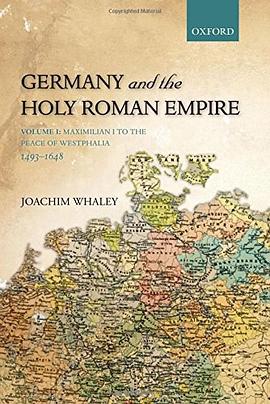
Germany and the Holy Roman Empire offers a new interpretation of the development of German-speaking central Europe and the Holy Roman Empire or German Reich, from the great reforms of 1495-1500 to its dissolution in 1806 after the turmoil of the French Revolutionary and Napoleonic Wars. Going against the notion that this was a long period of decline, Joachim Whaley shows how imperial institutions developed in response to the crises of the sixteenth and seventeenth centuries, notably the Reformation and Thirty Years War, and assesses the impact of international developments on the Reich. Central themes are the tension between Habsburg aspirations to create a German monarchy and the desire of the German princes and cities to maintain their traditional rights, and how the Reich developed the functions of a state during this period. The first single-author account of German history from the Reformation to the early nineteenth century since Hajo Holborn's study written in the 1950s, it also illuminates the development of the German territories subordinate to the Reich. Whaley explores the implications of the Reformation and subsequent religious reform movements, both Protestant and Catholic, and the Enlightenment for the government of both secular and ecclesiastical principalities, the minor territories of counts and knights and the cities. The Reich and the territories formed a coherent and workable system and, as a polity, the Reich developed its own distinctive political culture and traditions of German patriotism over the early modern period. Whaley explains the development of the Holy Roman Empire as an early modern polity and illuminates the evolution of the several hundred German territories within it. He gives a rich account of topics such as the Reformation, the Thirty Years War, Pietism and baroque Catholicism, the Aufklarung or German Enlightenment and the impact on the Empire and its territories of the French Revolution and Napoleon. It includes consideration of language, cultural aspects and religious and intellectual movements. Germany and the Holy Roman Empire engages with all the major debates among both German and English-speaking historians about early modern German history over the last sixty years and offers a striking new interpretation of this important period. Volume I extends from the late fifteenth century through to the Thirty Years War.
作者简介
目录信息
读后感
用户评价
我得说,这本书的学术深度令人叹服,但阅读门槛也着实不低。它更像是一部**田野调查式的历史编纂**,而非面向大众的通俗读物。书中大量运用了第一手史料的引述和交叉比对,对于**帝国行政机构的细节,尤其是财政和军事动员机制**的论述,简直到了吹毛求疵的地步。坦白讲,初读时我感觉自己像一个初学徒在啃硬骨头,很多拉丁文和德语的术语需要频繁查阅脚注。然而,一旦穿过最初的那些密集的细节描述,你会发现作者构建的**历史图景无比坚实和宏大**。他巧妙地将宏观的历史趋势,比如宗教改革带来的结构性冲击,与微观的宫廷政治博弈联系起来,展现了帝国在面对外部压力(如奥斯曼土耳其的威胁)时,内部**整合的滞后性与挣扎**。这本书的价值在于其**无可置疑的扎实性**,它不讨好读者,但它忠实于历史的复杂性,像一把精密的刻刀,雕刻出这个“不存在的帝国”真实而矛盾的面貌。
这本书的封面设计就很有年代感,那种厚重的质感,仿佛能从中嗅到旧日欧洲的尘埃与荣光。我拿到手的时候,首先被它那详实的索引和地图集吸引住了。作者在引言中就表明了立场,他无意于重述每一个帝王的名字和每一次战役的日期,而是致力于梳理出神圣罗马帝国这个复杂有机体**内部的运作逻辑与张力**。书中对不同时期帝国体制的演变,比如选帝侯制度的权力固化、邦国林立的**碎片化现实**,以及教会与世俗权力之间永恒的拉锯战,都有着极其细腻的描摹。特别是他分析查理五世时期帝国权力结构的那几章,简直是精彩绝伦,深入剖析了**“普世帝国”理想与“有限主权”现实**之间的巨大鸿沟。阅读体验非常流畅,虽然内容专业,但作者的行文非常注重**叙事性和画面感**,仿佛领着读者亲身走进了16世纪的帝国议会,感受着那些雄辩家们唇枪舌剑的火药味。对于任何想要理解中欧历史核心矛盾的人来说,这绝对是一本不容错过的基石性著作,它没有提供简单的答案,而是提供了一套观察历史的**复杂透镜**。
坦率地说,对于想快速了解神圣罗马帝国历史脉络的入门级读者,这本书的叙事节奏可能会让人感到有些**晦涩和缓慢**。它更像是**一部专业的历史学论文集**,而非流畅的小说。作者似乎对那种“史诗般激昂”的叙事不屑一顾,而是专注于**历史的“微观结构分析”**。比如,他详细分析了不同时期**“帝国贵族头衔的通货膨胀”**现象,以及这种制度变化如何反过来削弱了皇帝的绝对权威——这种层层递进的因果链条,需要读者保持高度的专注力才能跟上。书中对**巴伐利亚选侯与萨克森维廷家族之间复杂的联姻与继承权纠葛**的论述,即便放在历史的宏大背景下也显得异常繁复,但正是这些细节,构成了帝国政治的日常肌理。总而言之,这是一本需要**坐下来、泡杯咖啡、做足笔记才能消化的书**,但它所给予的历史洞察力是物超所值的。
这本书给我最大的启示是,它彻底颠覆了我对**“帝国衰亡”**这一概念的理解。作者并非简单地将1806年的解体视为一个突然的终结,而是将其视为一个**漫长、渐进、多层次的“权限下放”和“权力转移”过程**。他没有将焦点集中在拿破仑的军事压力上,而是着重分析了诸侯国在**17世纪后半叶如何通过一系列条约和内部行政改革,有效地“私有化”了本应属于帝国的关键权力(如征兵权和外交权)**。这种从内部开始的“权力空心化”,比任何外部打击都更具决定性。全书对**帝国“法律主义”的探讨**也极为深刻,展现了尽管政治上四分五裂,但法律和共同的“帝国宪法概念”却在某些层面成为了**最后的粘合剂**。这本书的视角非常独特,它让我们看到,一个政治实体并非“轰然倒塌”,而是**在日复一日的实践中,慢慢地,被自己的组成部分所溶解**。读完之后,对于理解现代欧洲各国主权国家的形成,都有了更深远的联想。
这本书最让我耳目一新的是它对**“认同”与“地方性”**的探讨。传统史学往往倾向于用“德意志民族国家”的视角去审视这个帝国,但作者却花了大量篇幅去解构这种统一性叙事。他通过细致考察巴伐利亚公国、勃兰登堡选侯国以及莱茵河沿岸自由城市的**地方性法律、文化习俗乃至语言变异**,生动地揭示了帝国在**“地方的海洋中漂浮”**的本质。每一次中央权力(无论是皇帝还是帝国议会)试图推行统一法令时,地方诸侯和城市自治体的抵制和扭曲过程,都被描绘得淋漓尽致,简直就是一部**“去中心化权力运作指南”**。我特别喜欢其中对比**“帝国荣耀的文学想象”**与**“邦国政治的残酷现实”**的那一节,那种强烈的反差感,让人深思,究竟是什么维系着这个看似松散却又顽强存在了上千年的政治实体。读完后,我对“国家”的定义都有了新的理解,它不再是一个简单的地理概念,而是一团**不断协商和妥协的权力烟云**。