
具体描述
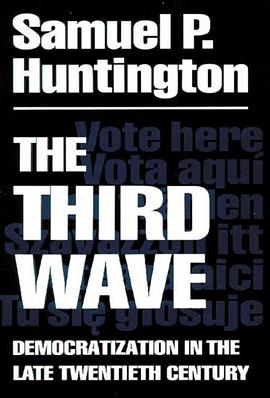
Between 1974 and 1990 more than thirty countries in southern Europe, Latin America, East Asia, and Eastern Europe shifted from authoritarian to democratic systems of government. This global democratic revolution is probably the most important political trend in the late twentieth century. In The Third Wave, Samuel P. Huntington analyzes the causes and nature of these democratic transitions, evaluates the prospects for stability of the new democracies, and explores the possibility of more countries becoming democratic. The recent transitions, he argues, are the third major wave of democratization in the modem world. Each of the two previous waves was followed by a reverse wave in which some countries shifted back to authoritarian government. Using concrete examples, empirical evidence, and insightful analysis, Huntington provides neither a theory nor a history of the third wave, but an explanation of why and how it occurred.
Factors responsible for the democratic trend include the legitimacy dilemmas of authoritarian regimes; economic and social development; the changed role of the Catholic Church; the impact of the United States, the European Community, and the Soviet Union; and the "snowballing" phenomenon: change in one country stimulating change in others. Five key elite groups within and outside the nondemocratic regime played roles in shaping the various ways democratization occurred. Compromise was key to all democratizations, and elections and nonviolent tactics also were central. New democracies must deal with the "torturer problem" and the "praetorian problem" and attempt to develop democratic values and processes. Disillusionment with democracy, Huntington argues, is necessary to consolidating democracy. He concludes the book with an analysis of the political, economic, and cultural factors that will decide whether or not the third wave continues.
Several "Guidelines for Democratizers" offer specific, practical suggestions for initiating and carrying out reform. Huntington's emphasis on practical application makes this book a valuable tool for anyone engaged in the democratization process. At this volatile time in history, Huntington's assessment of the processes of democratization is indispensable to understanding the future of democracy in the world.
作者简介
Samuel Phillips Huntington (April 18, 1927 – December 24, 2008) was an influential political scientist from the United States of America whose works covered multiple sub-fields of political science. He gained wider prominence through his Clash of Civilizations (1993, 1996) thesis of a post-Cold War new world order.
He was a member of Harvard's department of government from 1950 until he was denied tenure in 1959.From 1959 to 1962 he was an associate professor of government at Columbia University where he was also Deputy Director of The Institute for War and Peace Studies. Huntington was invited to return to Harvard with tenure in 1963 and remained there until his death. He was elected a Fellow of the American Academy of Arts and Sciences in 1965.Huntington and Warren Demian Manshel co-founded and co-edited Foreign Policy. Huntington stayed as co-editor until 1977.
目录信息
Carl B. Albert
Preface
1. What?
The Start of the Third Wave
The Meaning of Democracy
The Waves of Democratization
The Issues of Democratization
2. Why?
Explaining Waves
Explaining Democratization Waves
Explaining the Third Wave
Declining Legitimacy and the Performance
Dilemma
Economic Development and Economic Crises
Religious Changes
New Policies of External Actors
Demonstration Effects or Snowballing
From Causes to Causers
3. How? Processes of Democratization
Authoritarian Regimes
Transition Processes
Transformations
Guidelines for Democratizers 1: Reforming Authoritarian Systems
Replacements
Guidelines for Democratizers 2: Overthrowing Authoritarian Regimes
Transplacements
Guidelines for Democratizers 3:
Negotiating Regime Changes
4. How? Characteristics of Democratization
The Third Wave Democratization Syndrome
Compromise and the Participation/Moderation Trade-off
Elections: Stunning and Otherwise
Low Levels of Violence
5. How Long?
Consolidation and Its Problems
The Torturer Problem: Prosecute and Punish
vs. Forgive and Forget
Guidelines for Democratizers 4: Dealing
with Authoritarian Crimes
The Praetorian Problem: Rebellious and
Powerful Militaries
Guidelines for Democratizers 5: Curbing
Military Power, Promoting Military Professionalism
Contextual Problems, Disillusionment, and Authoritarian Nostalgia
Developing a Democratic Political Culture
Institutionalizing Democratic Political Behavior
Conditions Favoring Consolidation of New
Democracies
6. Whither?
Third Wave Causes: Continuing, Weakening,
Changing?
A Third Reverse Wave?
Further Democratization: Obstacles and Opportunities
Economic Development and Political
Leadership
Notes
Index
· · · · · · (收起)
读后感
《第三波:20世纪后期民主化浪潮》 亨廷顿的书的特色就是论证是薄弱的,也没有鲜明的、可靠的结论,但是观点往往很新颖,这些似是而非的结论也被证明有很高的预测作用和指导意义。亨廷顿的经验主义者和实用主义者。最伟大的自然科学家往往靠的是直觉,比如拉瓦西、拉马努金、费...
自从产生政治以后就逐渐出现了民主、专制等各种政治体制,现在很难说人类社会政治生活最早采取的形式到底是哪一种,尽管现今主流观点就是原始社会政治模式就是民主的。实际上在当今世界各国政治体制研究中,专制政体已经基本上被排除了,当然不能否认现在仍有个别国家还采用专...
二十世纪后期一项重要的,也是最重要的全球性政治发展:即大约有30个 国家由非民主政治体制过渡到民主政治体制。这本书试图解释发生在1974――1990年间这一 波民主化的原因、方式及其直接后果。本书横跨理论和历史两个领域,但是它既不是一部理 论著作,也不是一部史书。它位于...
亨廷顿:《第三波:20世纪后期民主化浪潮》 A写作目的 试图对1974—1990年间的民主化浪潮发生的原因、方式、特征等加以分析阐释,并对民主化前景做出预测。 B研究方法 一套关于关键变项间关系的概括和理论,诸如政治权力与军事职业制,政治参与与政治制度化、政治思想与政治行...
《第三波:20世纪后期民主化浪潮》 亨廷顿的书的特色就是论证是薄弱的,也没有鲜明的、可靠的结论,但是观点往往很新颖,这些似是而非的结论也被证明有很高的预测作用和指导意义。亨廷顿的经验主义者和实用主义者。最伟大的自然科学家往往靠的是直觉,比如拉瓦西、拉马努金、费...
用户评价
说实话,这本书的阅读体验就像是在攀登一座信息量巨大的冰山,每一页都覆盖着一层厚厚的、需要用力才能凿开的学术冰霜。语言的密度极高,句子结构复杂到需要反复回溯才能理清主谓宾之间的逻辑关系。我必须承认,我跳过了一些关于早期社会结构模型推演的部分,因为那些数学化的论证对于我目前的理解能力来说,确实有些超纲了。但即便如此,其核心论点——关于人类社会范式转移的必然性和不可逆性——依然强有力地穿透了那些晦涩的文字。作者似乎对技术乐观主义保持着一种警惕的怀疑态度,他并不盲目地歌颂进步,反而深入挖掘了每一次技术飞跃背后所隐藏的权力结构转移和伦理真空地带。他笔下的未来图景,与其说是乌托邦,不如说是一个充满矛盾和张力的“中途站”。我特别着迷于他对“意义的稀释”这一现象的描述,即在信息爆炸的时代,个体如何努力地将自己的存在价值重新“锚定”在快速变化的现实中。这本书的价值在于,它迫使你直面那些我们通常会选择性忽略的、关于生存的根本性困境。对于那些习惯于快速阅读和即时满足的读者来说,这本书无疑是一场严峻的考验,但对于愿意投入时间进行深度思考的人来说,它提供的回馈是巨大的,是那种能改变你看待世界的基本视角的震撼。
我得说,这本书的行文风格极其个人化,充满了强烈的作者烙印,读起来与其说是学习知识,不如说是一场与一位学识渊博但略显偏执的导师的深度对谈。它的结构松散,跳跃性很大,前一章还在探讨某种哲学流派对个体能动性的限制,下一章可能就拐到了对某个小众亚文化的细致田野调查上。这使得阅读过程充满惊喜,但也要求读者具备极高的专注度和耐心。我尤其欣赏作者在描述那些抽象概念时,总能巧妙地植入一些非常接地气的案例——比如某次公共集会上的口号演变,或是某个新兴网络社区的内部语言习惯。这些细节的处理,让那些原本可能高高在上的理论拥有了鲜活的生命力。我被它成功地拽入了一个全新的认知场域,那里充满了对既有范式的解构和重建的渴望。有那么几个夜晚,我几乎是抱着这本书入睡的,醒来时脑海中仍在嗡嗡作响,那是思维被高速运转后的余热。它不是那种读完就能立刻总结出三点要论的工具书,而是一部需要时间来“发酵”的作品。读完之后,我发现自己对很多新闻事件的解读角度都变得不一样了,仿佛多了一层过滤镜,能看到信息流背后的更深层的动力学机制。这本册子带来的改变是潜移默化的,它教会我如何去“提问”,而不是急于寻找“答案”。
这本厚厚的书摆在我的书架上已经有一段时间了,我一直被它封面上那种略带未来感的排版和那些深奥的标题所吸引,却又有点望而却步。终于鼓起勇气翻开之后,我发现它讲述的不是那种耳熟能详的宏大叙事,而更像是一次深入骨髓的社会肌理的剖析。作者似乎拥有一种近乎于先知般的洞察力,他没有过多渲染末世的恐慌,而是冷静地描绘了我们当前所处的这个转折点——一个由技术、文化和价值观的剧烈碰撞所定义的时代。阅读过程中,我经常需要停下来,对照着自己日常生活的点滴经验去消化那些复杂的理论框架。特别是关于“去中心化”和“身份重塑”的论述,简直像是一记重锤,敲碎了我过去对许多社会结构固若金汤的信念。那种感觉很奇妙,既有被挑战的焦虑,又有一种拨云见日般的清醒。书里对“连接”的定义尤其耐人寻味,它不再是简单的物理接触或信息交换,而是一种深层次的、几乎是精神层面的共振。我花了很长时间思考,我们是否真的在向一个更加扁平化、更具流动性的世界迈进?如果答案是肯定的,那么我们现有的规则和机构将如何适应这种近乎液态的社会形态?这本书没有给我一个确切的答案,但它提供了最精妙的工具箱,让我能够自己去构建理解世界的框架。它更像是一份详尽的地图,标记出我们脚下土地的潜在断层和未来河流的可能走向,让人在阅读的间隙,忍不住抬头看看窗外的世界,试图从中捕捉到那些微小但决定性的变化信号。
我必须强调,这是一部需要被“体验”而非仅仅是“阅读”的书籍。它的影响不是通过说服你接受某个观点来实现的,而是通过持续不断地在你脑海中植入新的思考模型,让你对既有的思维定势产生慢性排异反应。作者在讨论“信任的重建”这一议题时,给出了一个非常反直觉的观点:真正的社会粘合剂可能不再是自上而下的权威,而是碎片化、基于共同兴趣的、可随时退出的小型社群间的互相验证。这种对传统社会契约的颠覆性重构,让我对未来社区的形态有了全新的想象。这本书的叙述口吻带着一种克制的紧迫感,仿佛在对读者发出一个严肃的警告:我们正在加速驶向一个充满不确定性的未知水域,而旧的航海图已经失效了。它成功地将宏观的历史趋势与微观的个体选择联系起来,让人意识到自己的每一个微小决定,都可能在那个更大的棋盘上产生不可预知的连锁反应。对于那些厌倦了浅尝辄止的流行读物,渴望寻找能真正挑战智力边界的作品的读者来说,这本书无疑是一座需要耗费体力去攀登的高峰。它的回报,是重新校准你对“进步”、“秩序”以及“人类未来”的定义。
这本书的编排方式简直是一场视觉和概念上的冒险。它的大部分篇幅都致力于构建一种宏大的时间轴叙事,但这种叙事并非线性的,而是螺旋上升、互相嵌套的。作者大量运用类比和隐喻,将看似毫不相关的现象——比如古代的贸易路线变迁与现代的数字货币流动——巧妙地串联起来,揭示出隐藏在表象之下的统一规律。我最喜欢的部分是其中关于“记忆的数字化迁移”的讨论。它没有停留于科幻层面的想象,而是探讨了当我们的集体和个人记忆不再依赖于生物载体,而是存储于易于修改和重构的数字平台时,历史的权威性将如何被侵蚀。这种对“真实性”根基的动摇,让我感到既兴奋又不安。读完此书,我不再把当下的任何社会动荡视为孤立事件,而是将其看作是更大历史进程中的必然阵痛。它提供了一个俯瞰全局的视角,让你能退后一步,用一种更具历史深度的眼光去审视那些令人心烦意乱的日常新闻。这本书的语言是凝练的,几乎没有废话,每一个段落都仿佛经过了千锤百炼的打磨,密度极高,迫使你必须逐字逐句地去品味,去消化其中蕴含的深层含义。
comparative politics 巨擘
冷战式比较政治学的最后辉煌。先树立西方民主典范与终极目标,再横跨五大洲,以精巧分类学爬梳各国,通过大规模定性比较试图总结此波民主化不同模式。不一定科学严谨却足够详细耐心。对许多地区、尤其是儒家和伊斯兰提出的问题均为日后历史所证实,也指向了最终的文明冲突论。虽不提出大一统理论,却不掩饰为民主人士出谋划策之目的。具体而言威权政体崩溃或改变因素非常多样,自我耗散合法性经常发生,经济发展、教育普及、中产集团、前代民主经验、基督教文化、国际因素等皆为可能之结构因素或可利用之资源。重视政治过程,缺口一打开,政治家手腕对于推动民主进程极为重要,中产阶级更为关键因素:不必为民主运动发起者,但在关键时刻其态度可决定民主化成 败走向。也区分了民主创生与民主巩固问题。最棘手问题仍然是对旧政权集团是否清算及文武
给四星并不就说明这书很好,且看华府智囊亨廷顿如何教人玩弄权术。
manual for democratization, extremely inspiring, prophetic but still incomplete
comparative politics 巨擘