
具体描述
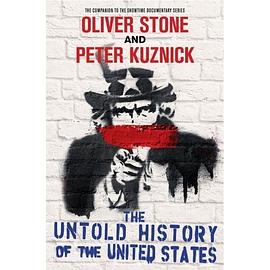
The Untold History of the United States is filmmaker Oliver Stone and historian Peter Kuznick's riveting landmark account of the rise and decline of the American empire - the most powerful and dominant nation the world has ever seen. Probing the dark corners of the administrations of 17 presidents, from Woodrow Wilson to Barack Obama, they dare to ask just how far the US has drifted from its founding democratic ideals.
Beginning with the bloody suppression of the Filipino struggle for independence and spanning the two World Wars, it documents how US administrations have repeatedly intervened in conflicts on foreign soil, taking part in covert operations and wars in Latin American, Asia and the Middle East. At various times it has overthrown elected leaders in favour of right-wing dictators, for both economic and political gain.
Examining America's atomic history, Stone and Kuznick argue that the bombings of Hiroshima and Nagasaki were militarily unnecessary and morally indefensible. They show how the United States has repeatedly brandished nuclear threats and come terrifyingly close to nuclear war. They expose how US presidents have trampled on the US constitution and international law and lay bare the recent transformation of United States into a national security state.
Using the latest research and recently declassified records, The Untold History builds a meticulously documented and shocking picture of the American empire, showing how it has determined the course of world events for the interests of the few across the twentieth century and beyond.
作者简介
Peter Kuznick, Professor of History at American University, is the author of "Beyond the Laboratory: Scientists As Political Activists in 1930s America" (University of Chicago Press) and the co-editor with James Gilbert of "Rethinking Cold War Culture" (Smithsonian Institution Press). A New York native, Kuznick received his Ph.D. from Rutgers University in 1984. He was active in the Civil Rights and anti-Vietnam War movements and remains active in antiwar and nuclear abolition efforts. A critic of the U.S. decision to use atomic bombs in World War II, he publishes and speaks frequently on that topic, other aspects of nuclear history, and 20th Century U.S. history in general.
In 1995, he founded American University's Nuclear Studies Institute, which he directs. That year, on the 50th anniversary of the atomic bombings, the Institute and the cities of Hiroshima and Nagasaki coordinated a major exhibit at American University. Every summer since 1995, he takes Institute students to study abroad in Kyoto, Hiroshima, and Nagasaki. The Institute was named the most creative and innovative summer program in North America by the North American Association of Summer Sessions.
In 2003, Kuznick organized a group of scholars, writers, artists, clergy, and activists to protest the Smithsonian's display of the Enola Gay in a celebratory fashion devoid of historical context or information about the victims of the atomic bombings. As part of this effort, he confounded the Committee for a National Discussion of Nuclear History and Current Policy. He subsequently cofounded the Nuclear Education Project along with Hiroshima Mayor Tadatoshi Akiba and professors Mark Selden (Cornell University) and John Dower (Massachusetts Institute of Technology).
Kuznick's recent projects include a book on scientists and the Vietnam War, and another that flows from his Journal of Genocide Research article. The book examines how the evolving understanding that nuclear war could lead to annihilation of all life on the planet has shaped the behavior and views of military strategists, policymakers, and the public.
He is currently serving his second three-year term as Organization of American Historians Distinguished Lecturer and regularly provides commentary for U.S. and international media, including the Washington Post, the Philadelphia Inquirer, the New York Times, CBS Sunday Morning, Entertainment Tonight, C-SPAN, Fox News Channel, CNN, Al Jazeera, Chile's El Mercurio, Iran's Fars News, Radio Free Europe, Reuters, and Voice of America, as well as many Japanese newspapers and television stations.
Peter is married and has one daughter and two stepdaughters.
目录信息
读后感
用户评价
读完这本书后,我产生了一种强烈的“历史责任感”。它不仅仅是一部学术著作,更像是一种对当下现状的深刻反思和警示。作者并没有简单地将历史的错误归咎于某个“坏人”或“特定时代”,而是着重分析了那些看似无害的制度惯性是如何一代代积累,最终铸就了我们今天必须面对的困境。书中对于某种长期存在的社会矛盾如何在不同历史时期被“重新包装”和“延迟解决”的分析,尤为精辟。这让我意识到,我们对历史的理解,直接决定了我们解决现实问题的视野和决心。这本书的语言风格是高度精致且富有哲理性的,它引导你思考的不是“发生了什么”,而是“为什么会这样发生”,以及更重要的——“我们能做些什么来避免重蹈覆辙”。这是一部能彻底改变你理解世界框架的力作。
这本书最让我印象深刻的是其叙事节奏的掌控力。它并非平均用力地讲述历史,而是在关键的冲突点上,突然将视角聚焦得极近,那种沉浸式的细节描写,仿佛能让人闻到那个时代尘土的味道,感受到决策者在巨大压力下的呼吸声。而在宏观背景的交代上,作者又迅速拉回,以一种近乎天穹俯瞰的视角,展示了事件的长期影响和结构性意义。这种高低起伏的节奏,使得原本可能枯燥的制度演变过程,读起来竟有了史诗般的跌宕起伏感。特别是其中对于几位关键人物心路历程的刻画,绝非简单的道德审判,而是深入探讨了他们的选择在特定历史轨道下的必然性与偶然性,充满了深刻的人性洞察。它让人明白,历史的洪流是由无数个看似渺小却又关键的“人”的选择共同推动的。
这本书真是让人醍醐灌顶,它以一种我从未想象过的方式解构了那些被教科书刻意淡化的历史片段。阅读过程中,我反复被一种强烈的“原来如此”感所击中,作者的叙事如同抽丝剥茧,将那些宏大叙事下的微小、却至关重要的权力运作和个体挣扎一一呈现出来。尤其是在描述特定历史转折点时,那种深入到档案深处、挖掘出第一手证言的扎实功底,令人肃然起敬。它不是那种贩卖阴谋论的快餐读物,而是那种需要你放下预设、静下心来与其进行深度对话的严肃作品。每一次翻页,都像是在推倒一堵关于“我们是谁”的心理围墙。读完之后,再看新闻或者回顾某些社会现象时,那种多了一层历史厚度的视角,简直让人无法回头。作者的笔触精准而冷静,既不煽情,也不回避那些令人不安的真相,而是以一种近乎外科手术的精准,剖析了权力如何渗透和塑造了我们今天所见的社会结构。
坦率地说,这本书的观点极具颠覆性,如果你抱着寻找“英雄史诗”的心态来阅读,很可能会感到不适甚至愤怒。它毫不留情地剥离了许多民族神话的外衣,将那些被奉为圭臬的“建国原则”置于显微镜下,探讨它们在实际推行过程中是如何被扭曲、被工具化,以服务于特定的阶级或利益集团。这种毫不妥协的批判精神,是这本书最宝贵的价值所在。它迫使读者重新审视自己对“正义”和“进步”的定义。作者在论证过程中,巧妙地穿插了一些鲜为人知的口述史料和私人信件,这些零散的、带着温度的个体声音,极大地增强了文本的说服力,让冰冷的政治分析瞬间变得有血有肉,充满了现实的重量和紧迫感。
我必须承认,这本书的阅读体验是**极其费力但回报丰厚**的。它的信息密度高得惊人,每句话似乎都承载着丰富的历史重量和细微的语境考量。初读时,我甚至需要频繁停下来查阅一些背景知识,生怕错过作者精心铺设的某一处历史参照点。但正是这种挑战性,让最终理解的成果显得尤为珍贵。它不同于那种为了迎合大众口味而刻意简化的历史书,它直面了历史的复杂性、灰色地带以及那些互相矛盾的证据链。作者的分析逻辑严密,引用来源广泛且极具说服力,我能感受到作者在构建这个历史图景时所倾注的心血——那种跨越数十年、深入不同地理区域的田野调查和案头工作的痕迹,清晰可见。这本书真正做到了“史家之笔”,它描绘的不是一个线性的、光明的进步史诗,而是一幅充满张力、悖论和未竟之事的动态画面。
巨八卦!巨中意!
算是历史意义上的重口味了,缺点是太过于挖黑幕而缺乏整体归纳了,不过确实蛮有料的。
巨八卦!巨中意!
算是历史意义上的重口味了,缺点是太过于挖黑幕而缺乏整体归纳了,不过确实蛮有料的。
算是历史意义上的重口味了,缺点是太过于挖黑幕而缺乏整体归纳了,不过确实蛮有料的。