
具体描述
During the early 1980s China embarked on what can be seen as one of the world’s largest social experiments ever. Decollectivization meant much more than the reorganization of agricultural production into family based farming. It signalled significant changes to rural social relations, when privatization, marketization and increased geographical mobility started tearing apart the economic and social institutions that had structured collective village life under Mao.
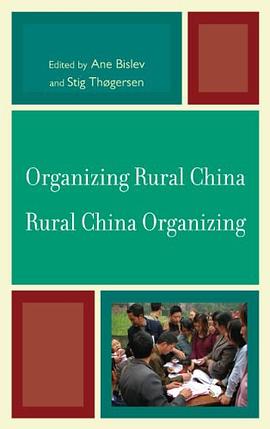
The focus of this book is on how rural society has been reorganized in the 21st century. The first chapters outline the basic organizational structure of rural China and can be used as an introduction to the topic in a classroom setting. They show how the state and its social scientists draw up plans to overcome the perceived lack of rural social organization, and discuss the often problem-ridden implementation of their ideas. The second section presents case studies of institutions that organize key aspects of rural life: Boarding schools where rural children learn to accept organizational hierarchies; lineage organizations carving out new roles for themselves; “dragonhead enterprises” expected to organize agricultural production and support rural development, and several others. The book is of theoretical interest because of its focus on the re-embedding, or reintegration, of individuals into new types of collectivities, which are less predetermined by tradition and habit and more a matter of, at least perceived, individual choice. Most chapters are based on extensive fieldwork and contain vivid examples from daily life, which will make the book attractive to anyone who wants to understand how Chinese villagers experience the extraordinary social changes they are going through.
作者简介
Stig Thøgersen is professor of China studies at Aarhus University. He is the author of A County of Culture – Twentieth century China seen from the village schools of Zouping, Shandong (University of Michigan Press, 2002) and Doing Fieldwork in China (ed. with Maria Heimer, NIAS Press 2006). He has published several articles on social, political and cultural change in rural China in journals such as China Quarterly, China Journal, and Journal of Contemporary China. Besides rural organizations and rural reconstruction his main present research interest is in the life histories of Chinese overseas students.
Ane Bislev is a postdoctoral fellow at the Department of Culture and Society at Aarhus University. She did her PhD on microcredit and social capital in Yunnan and Guizhou and is currently working on a project on the informal credit markets in rural China. She is the author of The Need for Capital: Social Capital and Microcredit in Southwest China (2010).
目录信息
Chapter 1: Introduction, by Ane Bislev and Stig Thøgersen
Imagining Rural China: Policies, Discourses, Ideals
Chapter 2: Continuity and Change in Rural China’s Organization, by Jonathan Unger
Chapter 3: Organizing Rural China: Political and Academic Discourses, by Stig Thøgersen
Chapter 4: Government Propaganda and the Organization of Rural China, by Christian Göbel
Chapter 5: Stitching it All Back Up: The Role of Sent-Down Cadres in Rural Community Building?, by Unn Målfrid Rolandsen
Chapter 6: Reconstructing Rural China from the Bottom: A Discussion of Some Recent Chinese Experiments, by Xu Yong and Ma Hua
Chapter 7: Governing China’s Failed Villages: Between a “Weak State” and a Fragmented Society, by Liu Yiqiang
Organizing Rural China: Actors and Local Practices
Chapter 8: Life in a Rural Boarding School: Learning to Organize and to Be Organized, by Mette Halskov Hansen
Chapter 9: Organizing Rural Health Care, by Mikkel Bunkenborg
Chapter 10: Lineages and the State: Re-inventing Lineages and Ancestor Ceremonies as Cultural Heritage, by Marina Svensson
Chapter 11: Native Place in Cyberspace: The Civic Enagement of an Internet Community, by Pang Cuiming
Chapter 12: Embedded Microcredit—Creating Village Cohesion on the Basis of Existing Social Networks, by Ane Bislev
Chapter 13: A Value Chain Gone Awry: Implications of the “Tainted Milk Scandal” in 2008 for Political and Social Organization in Rural China, by Jørgen Delman and Yang Minghong
Reflections
Chapter 14: Modern/Rural China: State Institutions and Village Values, by Vivienne Shue
Index
About the Editors
· · · · · · (收起)
读后感
用户评价
坦率地说,这本书的论述风格显得极为沉稳且学术性强,它摒弃了许多流行的、哗众取宠的叙事方式,转而专注于对现象进行精密的结构性解构。作者在构建理论框架时,显然汲取了诸多经典社会学和社会人类学的养分,试图建立一套能够解释当前中国特殊情境的分析工具。阅读过程中,我时常被其对“地方性知识”的重视所折服,那些被主流宏大叙事所忽略的细枝末节,在作者笔下成为了理解整体运作逻辑的切入点。比如,它对于宗族关系在现代产权界定中的角色变化所做的论述,就非常具有启发性,既没有过度美化传统的纽带力量,也没有简单地将其斥为落后的残余。全书的逻辑链条非常严密,仿佛在进行一场严谨的辩论,每一步推导都建立在前文扎实的经验观察之上。对于任何希望超越表面现象,探究中国乡村治理复杂机制的严肃读者而言,这本书无疑提供了一个极其坚实且富有洞察力的分析平台。
这部作品最令人印象深刻的一点,或许在于它所流露出的那种深沉的同理心,尽管其外表是冷峻的学术分析。作者在呈现乡村社会内部的冲突与矛盾时,没有采取居高临下的批判姿态,而是以一种近乎倾听的姿态去捕捉那些被主流话语边缘化的声音和生存策略。例如,在讨论集体土地制度改革时,他细致地展示了不同群体(如留守老人、返乡青年、地方官员)基于自身利益和认知结构所产生的不同“合理性”叙事。这种对多元主体经验的尊重和细致描摹,使得整部作品的张力来自于现实自身的内在矛盾,而非作者强加的外部批判。它提供了一种反思我们自身认知预设的契机,让我们意识到,理解中国乡村的复杂性,要求我们暂时放下预设的答案,真正沉浸到他们如何‘组织’自身生存的日常性努力之中去。
这本书的叙事节奏掌控得相当到位,从开篇的宏观背景设定,到中间各个主题模块的层层深入,再到最后的总结升华,都给人一种循序渐进、水到渠成的阅读体验。我特别注意到作者在处理时间维度上的高超技巧——他能够将历史的厚重感与当下的紧迫性巧妙地编织在一起。这不是一本静态的照片集,而是一部不断演进的纪录片。在描述基层干部的日常工作时,那种兼具效率压力与人情约束的矛盾状态被刻画得入木三分,让人深刻体会到他们在执行自上而下的命令与应对复杂的人际网络压力时所承受的巨大张力。这种对“在场性”的深刻理解,使得书中的许多论断不仅仅停留在理论层面,而是带有强烈的现实呼吸感。它成功地避开了将乡村视为一个铁板一块的客体,而是将其展现为一个充满流动性、不断在自我协商中定义自身边界的有机生命体。
这部著作以其广博的视野和扎实的田野调查,为我们描绘了一幅幅生动而复杂的中国乡村图景。作者显然投入了巨大的心力去理解那些驱动乡村社会变迁的核心力量,从宏观的政策引导到微观的日常生活实践,都有着细致入微的捕捉。我尤其欣赏它没有采用那种过于简化或二元对立的视角来审视“组织”这一概念。相反,它深入探讨了在去中心化的过程中,地方精英、基层政府、以及非正式社群网络是如何共同协商、甚至相互角力的,从而构建出一种动态的、充满张力的治理秩序。那些关于资源分配不均、集体行动困境的案例分析,读起来让人深思,它们揭示了看似整齐划一的“乡村振兴”口号背后,地方主体性的复杂挣扎。这本书不仅仅是在记录变化,更是在剖析变革的深层逻辑,让读者得以一窥中国社会现代化进程中,底层结构如何被重塑的真实面貌。其对制度间隙的捕捉尤其精彩,那种在正式规范与非正式惯例之间游走的微妙平衡,才是理解当代中国乡村活力的关键所在。
如果要用一个词来形容这本书给我的感受,那一定是“脉络清晰”。作者的写作技巧非常老练,即使面对高度复杂且跨越地域的案例,他总能找到一个核心的线索贯穿始终,让读者不至于在信息的洪流中迷失方向。这种清晰度尤其体现在其概念的界定时,他并未将“组织”简单地等同于正式的机构设置,而是将其理解为一种社会行动的模式、一种权力的运作方式、一种意义的生产过程。这种对核心概念的反复打磨和精确界定,为后续的分析提供了坚实的基础。每当引入一个新的案例或新的理论视角时,都能看到作者如何小心翼翼地将其锚定在之前建立起来的分析框架之中,展现出高度的结构性自觉。对于初次接触这一研究领域的读者来说,它提供了一个极佳的入门路径,因为它既有深度,又不失引导性。