
具体描述
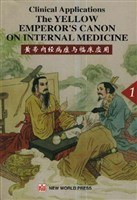
《黄帝内经》病症与临床应用(外感病证部分),ISBN:9787800054440,作者:王洪图著
作者简介
目录信息
Editor's Note
Foreword
Introduction: Prmciples, methods and dietary
regulation in treating diseases
according to The Internal Canon
Section one: Treatment Principles
Chapter 1: Characteristics ofthe treatment
principles included in The Intemal Canon
1. Deciding treatment according to time
2. Deciding treatment according to geographical location
3. Deciding treatment according to individual condition
(1) Age and constitution
(2) Diet, strain, stress, and spirit
Chapter 2: Treatment principles introduced in The Internal Canon
1. Guiding a matter along its course ofdevelopment
(1) Conducting treatment according to the location of the pathogens
(2) Conducting treatment according to the rise and fall ofthe pathogens
2. Treating diseases by seeking the primary root cause
3. Reinforcing deficiencies and reducing excesses
4. Syndromes ofcold, heat, warm and cool
5. Prevention and early treatment
Section two: Treatment Methods
Chapter 1: Acupuncture treatments
1. Depth ofneedle insertion and time ofneedle retention
2. Reinforcing and reducing needling techniques
(1) Reinforcing and reducing on the basis ofrespiration
(2) Reinforcing and reducing by opening and closing the needle punctures
(3) Reinforcing and reducing along and against the circulation in the meridian
(4) Reinforcing and reducing by Ji-swifl and Xu-slow needle insertion
3. Acupuncture techniques
(1) Nine needling techniques
(2) Twelve needling techniques
(3) Five needling techniques
(4) Five variant needling techniques
(5) Miuci - contralateral needling
(6) Buji Zhuoci - puncturing with needles wrapped in thread
4. Number ofmoxa cones and the reinforcing and reducing achieved by moxibustion
(1) Moxa cones and number ofmoxa cones
(2) Reinforcing and reducing achieved by moxibustion
Chapter 2: Herbal Therapy
1. The Qi-nature, Wei-flavot, and functions ofthe herbs
2. Tropism ofthe five flavors
3. Contra-indication ofthe five tlavors
(1) Prohibition against herbal overdose
(2) Prohibition ofcertain herbs according to the disease
4. Methods ofselecting herbs
(1) Examples ofusing herbs to treat diseases due to six exogenous pathogens
(2) Examples ofusing herbs to treat five Zang disorders
Chapter 3: Other Therapies
1. An Qiao and Dao Yin therapies
2. Emotional Therapy
(1) Using interacted emotions to treat diseases
(2) Analyzing the cause ofthe disease
(3) Giving verbal advice
(4) Other emotional therapies
3. Surgical therapies
4. Binding fingers and traction therapies
5. Additional therapies
Section Three: Nursing Care and Regulation
Chapter 1: Dietary nursing care and regulation
1. Selection ofthe five food flavors
2. Dietary selection and quantity control
3. Regulation ofcold and hot foods
Chapter 2: Regulation ofheat and cold and exercising the limbs
Chapter 3: Regulation ofspirit and emotion SectionFour: Clinical Applications: TheExog- enous Diseases and Syndromes
Chapter 4: Wind Diseases and Syndromes
1. Pathogenic Wind on Superficial Parts ofthe Body
(1) Aversion to Wind
(2) Aversion to Wind with Sweating
(3) Aversion to Wind with Sweating and Headache
(4) Chills and Shivering with Headache and Heaviness in the Body, but No Sweating
2. Pathogenic Wind on Meridians
(1) Pathogenic Wind on Taiyang Meridian
(2) Pathogenic Wind on Yangming Meridian
3. Pathogenic Wind on the Exterior and Interior of the Body
(1) Wind Reverse Syndrome
(2) Exterior and Interior Excess Syndromes
4. Pathogenic Wind on Acupuncture Points
(1) Alcohol Wind
(2) Brain Wind Syndrome
(3) Head Wind
(4) Intemal Wind
5. Pathogenic Wind on Zang Fu Organs
(1) Stomach Wind Syndrome
(2) Intestine Wind Syndrome
(3) Liver Wind
(4) Heart Wind
(5) Spleen Wind
(6) Lung Wind
(7) Kidney Wind (Including Acute Nephritis)
6. Other Wind Diseases
(1) Pestilence Wind (Including Leprosy)
(2) Tiredness Wind Syndrome (Including Bronchiectasis and Pulmonary Abscess)
(3) Latent Urticaria (Including Urticaria and Psoriasis)
Chapter 2: Cold Diseases and Syndromes
1. Pathogenic Cold on the Exterior ofthe Body
(1) The Syndrome Manifested by Chills, Anhydrosis, No Fever, Abdominal Distention, Stuffiness and Agitation
(2) The Syndrome Manifested by Fever, Chills, Anhydrosis Asthmatic Breathing and Superficial, Tense Pulse
(3) The Syndrome Manifested by Fever, Chills, Anhydrosis, Coughing
or Asthmatic Breathing, Retching, Diarrhea, Dysuria, Fullness in
the Lower Abdomen, and Discomfort ofthe Throat or Thirst
2. Impairment ofthe Exterior and Interior by Pathogenic Factors
(1) The Syndrome Induced by Cold Combined with Damp
(2) Pathogenic Cold Combined with Wind Attacking the Exterior or Interior ofthe Body
3. Cold Impairing the Four Limbs and Brain
(1) Cold Attacking the Four Extremities(Including Raynaud's Syndrome)
(2) Cold Attacking the Brain Causing Headaches(Including Angioneurotic Headaches)
4. Pathogenic Cold Injury to the Zang Fu Organs
(1) Cold Attacking the Lungs
(2) Cold Attacking the Spleen
(3) Cold Attacking the Kidneys
(4) Cold Attacking the Liver
(5) Cold Attacking the Stomach
Chapter 3: Summer Heat Diseases and Syndromes
1. Summer Heat in Combination with Cold
(1) The Attack of Summer-heat in Combination with Cold
(2) The Attack ofSummer-heat and Cold Extemally and Intemal Damp Retention Syndrome
2. Sununer Heat in Combination with Damp
(1) Syndrome Manifested by Fever, Sweating, Thirst and Heaviness ofthe Body
(2) Syndrome Manifested by Headache, Restlessness Thirst, Abdominal Pain, Vomiting, Diarrhea,
and Dysuria with a Deep-Yellow Complexion
3. Summer Heat Extemally with Interior Heat
4. Summer Heat on Lungs
5. Summer Heat on Yangming Meridian
6. Summer Heat Injury to Qi and Yin
7. Summer Heat on Heart
Section Five: Dampness Diseases and Syndromes
Chapter 1: Damp Pathogen on the Surface ofthe Body
1. Common Cold Due to Dampness
2. Common Cold Due to Mildew and Dampness
3. Damp Pathogen on Superior ofBody
4. Acne and Miliaria
Chapter 2: Damp Pathogen on Limbs and Meridians
1. Damp Bi Syndromes
(1) Simple Damp Bi Syndrome
(2) Dampness and Cold Bi Syndrome
(3) Dampness and Heat Bi Syndrome
2. Constriction, Spasm, Atrophy and Weakness
3. Kidney Bi Syndrome
4. Damp Pathogen on Extenor and intenor
5. Jaundice
Chapter 3: Damp Pathogen on the Sanjiao Zang Fu Organs
1. Retention ofDampness in Middle Energizer
2. Retention ofDampness in Triple Energizer
3. Damp Pathogen on Lungs
4. Damp Pathogen on the Spleen
(1) Treating by driving out water
(2) Combination ofreinforcing and reducing treatment
5. Damp Pathogen on the Kidney
6. Damp Pathogen on the Spleen and Kidney
7. Damp Pathogen on the Large Intestine
Section Six: Dryness Diseases and Syndromes
Chapter 1: Dryness induced exterior syndromes
1. Cold-dryness induced exterior syndrome
2. Wann-dryness induced exterior syndrome
Chapter 2: Dryness impairing the configuration and orifices
1. Diyness impairing the skin
2. Dryness impairing the orifices
3. Dryness impairmg the tendons and meridians
(1) Dryness and fire impairing the Qi system
(2) Dryness impairing the Ym blood
Chapter 3: Dryness damaging the lungs
1. Dry-heat injuring the lungs
2. Dryness with phlegm
Chapter 4: Dryness impairing the stomach and intestines
1. Dry-heat damaging the stomach
2. Dryness in the intestines with constipation
Chapter 5: Dryness impairing the liver
Chapter 6: Dryness impairing the kidneys
Section Seven: Fire and Heat Syndromes
Chapter 1: Points manipulated to treat heat syndromes
1. Fifty-nine points from Plain Questions and their appllication
(1) Twenty-five points used to expel heat from Yang meridians
(2) Eight points for clearing heat from the chest (as the four points
below are bilateral, they total eight actual manipulation points)
(3) Eight points for clearing heat from the stomach (as the four points
below are bilateral, they total eight actual manipulation points)
(4) Eight points for clearing heat from the four limbs (as the four points
below are bilateral, they total eight actual manipulation points)
(5) Ten points for clearing heat from the Five Zang Organs (as the five points
below are bilateral, they total ten actual manipulation points)
2. Fifty-nine points from Miraculous Pivot: Heat Syndromes
(1) Twenty-eight points on hand and foot
(2) Thirty-one points on the head, face and neck
Chapter 2: Treatment is given by differentiating heat in six meridians
1. Heat in Taiyang
2. Heat in Yangming
3. Heat in Shaoyang
4. Heat in Taiyin
5. Heat in Shaoyin
6. Heat in Jueyin
Chapter 3: Treatment offebrile diseases according to initial symptoms
1. Skin pain, stuffy nose, small rashes appearing on the nose and puffiness ofthe face.
2. Pain in the chest and hypochondrium and restlessness of the hands and feet
3. Pain in arms
4. Headache and distention ofthe head
5. Pain in the lower leg and foot
6. Heavy sensation ofthe body, bone pain, deafness, drowsiness
7. Dizziness and fullness ofthe chest and hypochondrium
8. Diet in treating febrile diseases
Chapter 4: Treatment offebrile diseases according to the pulse
1. Febrile diseases after 3 days with the Cunkou pulse calm and the Renying pulse restless
2. Febrile diseases after 7 or 8 days with the Cunkou
pulse is rapid and asthmatic breathing
Chapter 5: Treatment according to the primary associated symptoms
1. Stiflhess and discomfort ofthe body, irritability, dry throat and dry lips
2. Headache, bluish complexion, restlessness ofhands
and feet, or inability to walk due to flaccidity
oflower limbs, profuse tears
3. Reoccurring epilepsy, convulsions ofhands and feet,
manic behavior, or hair loss
4. Headache, twltching and pain ofthe temple region and
around the eyes, and epistaxis
5. Heaviness ofthe body and heat in the intestines
6. Spasm and pain around the umbilicus, fullness
ofthe chest and distention ofthe hypochondrium
Chapter 6: Differentiation and treatment ofthe febrile diseases ofthe five intemal organs
1. Heat induced liver diseases
2. Heat induced heart disorders
3. Heat-induced spleen disorders
4. Heat induced lung disorders
5. Heat induced kidney disorders
Chapter 7: Heat induced Six Fu Organ disorders and the syndrome ofheat entering the uterus
1. Heat induced gallbladder disorder
2. Heat induced stomach disorder
3. Heat induced disorder ofthe small intestine
4. Heat induced disorder ofthe large intestine
5. Heat induced triple energizer disorder
6. Heat induced bladder disorder
7. Heat on the uterus (the chamber ofblood)
Appendix One: Simple Formulas for Febrile Diseases Epilogue
Index ofAcupuncture Point Illustrations by Groupings
Index ofAcupuncture Point Illustrations by Alphabetical Order
Text in Chinese
· · · · · · (收起)
读后感
用户评价
如果让我用一个词来形容这本书带给我的整体感受,那便是“敬畏中的创新”。它没有因为《黄帝内经》的崇高地位而选择束之高阁,也没有因为要面向国际读者而轻易地对其进行过度简化或迎合式的改编。相反,它以一种非常谦卑的姿态,去解构、去重组、去阐释这部传世之作的内在逻辑和临床价值。阅读过程中,我能清晰地感受到译者团队对原典的深厚理解和发自内心的尊敬,这种情感是通过他们精心选择的每一个英文词汇传递出来的。特别是书中关于“天人相应”与气候变化对人体健康影响的章节,那些古老的智慧在现代语境下被重新审视时,展现出了令人惊叹的生命力。它鼓励读者不仅要学习“是什么”,更要深究“为什么”,并最终思考“如何运用”。这本书成功地将一个来自数千年前的医学体系,打磨成了一个可以在当代全球化医疗环境中被理解、被讨论、并最终被实践的知识体系,这本身就是一项了不起的成就,让传统经典焕发出新的时代光芒。
读完前几章后,我最大的感受是,这本书的“应用”二字绝非虚名,它在探讨如何将古老的医学思想应用到具体的病患身上时,展现出了一种令人信服的洞察力。很多经典解读本往往停留在对“道”的阐释,强调的是哲学层面的高屋建瓴,但这本书显然更注重“术”的落地。它似乎在尝试解答一个核心问题:如果一位现代医生,受过西医训练,但希望采纳《内经》的理念来辅助诊断和治疗,他应该如何操作?书中对一些具体病症的分析,例如关于“痹证”或“虚劳”的论述,并没有仅仅停留在对症状的描述上,而是深入剖析了其在不同季节、不同体质下可能出现的细微差别,以及针对这些差别应采取的微调策略。这种对个体化治疗的强调,完美契合了中医的精髓。我甚至开始思考,或许未来的中西医结合,需要的不是机械的对等替换,而是像这本书这样,通过对经典在应用层面进行深入挖掘和现代化转译,从而真正实现智慧的融合与互补。它提供了一种非常务实的视角,即便是再高深的理论,也终究是要落实在每一个病人的具体情况上的。
这本书的翻译语言风格,可以说是非常“克制”且“学术化”的,这对于严肃的科研人员来说是一个巨大的加分项。我翻阅过一些将中医典籍翻译得过于“诗意化”或“文学化”的版本,虽然读起来很优美,但在进行学术引用或撰写论文时,往往会因为其措辞的模糊性而感到力不从心。但《黄帝内经病症与临床应用》的英文表达,精准而规范,用词严谨到近乎于一种科学报告的语调。这让它在国际学术交流中具有极高的可靠性。我可以放心地将书中的某些观点或术语解释作为引用的依据,因为译者似乎始终在努力避免任何可能引起歧义的主观诠释。更让我欣赏的是,在处理那些难以用现代医学直接对应的词汇时,译者没有回避,而是采用了清晰的释义后紧跟原文音译的做法,确保了信息的完整性和可追溯性。这种对翻译准确性的不懈追求,使得这本书不仅仅是一本供人阅读的读物,更是一份具有文献价值的参考工具书,是构建未来国际中医标准话语体系的重要基石。
我最近淘到一本关于中医经典的译本,名叫《黄帝内经病症与临床应用:英文版》。坦白说,我之前对古籍的英文翻译一直抱持着一种谨慎的态度,总担心那种晦涩的古文一旦被翻译成现代语言,会丢失掉原有的韵味和精髓。但这本书的呈现方式,可以说完全超出了我的预期。首先,从装帧设计上就能感受到出版方的用心,那种雅致又不失学术气息的封面设计,让人一上手就觉得它不是那种随便应付的教材。我尤其欣赏的是它在术语处理上的细致入微。要知道,《黄帝内经》中很多概念,比如“阴阳”、“五行”、“藏象”等,本身就带有深厚的哲学背景,如果只是简单地逐字翻译,恐怕会令初学者感到更加困惑。这本书的译者显然花了不少功夫,他们似乎并没有急于给出一个唯一的、绝对的中文对应词,而是提供了一系列可能的解释,甚至在脚注中加入了对不同学派观点的梳理。这种多维度、更具开放性的翻译策略,极大地降低了理解门槛,让一个土生土长的中医学习者也能从中窥见不同文化背景下对同一概念的解读路径。这种严谨性,让我在阅读时感到非常踏实,仿佛手边同时放着一本原典和一本详尽的导读手册。它不仅仅是翻译,更像是一次跨文化的文化对话。
这本书的结构安排,简直是为临床实操者量身定制的。我过去阅读古代医书时,最大的痛点就是理论和实践之间常常存在一道无形的鸿沟,读完一堆理论反而更不知道在面对病人时该如何下手。然而,这本《黄帝内经病症与临床应用》在组织内容时,似乎很聪明地将经典的条文与现代医学的认知框架进行了一定程度的嫁接与对比。它并不是简单地罗列病名,而是围绕着“病机-症状-治法”这一核心逻辑展开的。比如,在探讨某一类疾病的论述时,它会先引用原文的描述,然后紧接着用清晰、简洁的英文对病理机制进行阐述,最后才会引出相应的方剂或针灸策略。这种“层层递进”的编排,极大地提高了阅读效率。我发现,当我遇到一些难以理解的古文描述时,可以迅速在现代化的阐释部分找到切入点,从而反过来加深对原文的理解,形成一个良性循环。特别是对于非中文母语的读者来说,这种清晰的脉络梳理无疑是至关重要的导航图,避免了在浩瀚的古籍中迷失方向。它成功地搭建了一座从古代智慧通往现代临床的坚实桥梁。