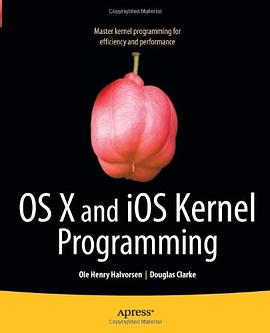

具体描述
OS X and iOS Kernel Programming combines essential operating system and kernel architecture knowledge with a highly practical approach that will help you write effective kernel-level code. You’ll learn fundamental concepts such as memory management and thread synchronization, as well as the I/O Kit framework. You’ll also learn how to write your own kernel-level extensions, such as device drivers for USB and Thunderbolt devices, including networking, storage and audio drivers.
OS X and iOS Kernel Programming provides an incisive and complete introduction to the XNU kernel, which runs iPhones, iPads, iPods, and Mac OS X servers and clients. Then, you’ll expand your horizons to examine Mac OS X and iOS system architecture. Understanding Apple’s operating systems will allow you to write efficient device drivers, such as those covered in the book, using I/O Kit.
With OS X and iOS Kernel Programming, you’ll:
Discover classical kernel architecture topics such as memory management and thread synchronization
Become well-versed in the intricacies of the kernel development process by applying kernel debugging and profiling tools
Learn how to deploy your kernel-level projects and how to successfully package them
Write code that interacts with hardware devices
Examine easy to understand example code that can also be used in your own projects
Create network filters
Whether you’re a hobbyist, student, or professional engineer, turn to OS X andiOS Kernel Programming and find the knowledge you need to start developing
What you’ll learn
OS X and iOS common core architecture
How to write extremely efficient code by exploiting kernel details
Coding kernel-level extensions
How to write device drivers
How to program the I/O Kit framework
Key mobile device topics like power management drivers and video capture modules
To understand OS X memory management and threads
To parse kernel debug messages and package projects ready for deployment
Who this book is for
This book is suited for:
Intermediate and advanced iPhone and OS X programmers ready for the next step
Kernel-level programmers interested in how OS X and iOS function
Open source programmers with a background in Linux or BSD, OS X and iOS
Programmers interested in application performance
System administrators running OS X clusters
作者简介
目录信息
读后感
OS X and iOS Kernel Programming combines essential operating system and kernel architecture knowledge with a highly practical approach that will help you write effective kernel-level code. You’ll learn fundamental concepts such as memory management and thr...
OS X and iOS Kernel Programming combines essential operating system and kernel architecture knowledge with a highly practical approach that will help you write effective kernel-level code. You’ll learn fundamental concepts such as memory management and thr...
OS X and iOS Kernel Programming combines essential operating system and kernel architecture knowledge with a highly practical approach that will help you write effective kernel-level code. You’ll learn fundamental concepts such as memory management and thr...
OS X and iOS Kernel Programming combines essential operating system and kernel architecture knowledge with a highly practical approach that will help you write effective kernel-level code. You’ll learn fundamental concepts such as memory management and thr...
OS X and iOS Kernel Programming combines essential operating system and kernel architecture knowledge with a highly practical approach that will help you write effective kernel-level code. You’ll learn fundamental concepts such as memory management and thr...
用户评价
我周围不少同事都对这本书望而却步,他们觉得内容过于晦涩,更倾向于依赖更高层的框架文档。但我恰恰欣赏这本书在讲解复杂概念时所展现出的那种近乎“冷酷”的客观性。它没有任何多余的修辞或煽动性的语言,完全是以教科书的标准来构建知识体系的。比如,在讨论XNU(Darwin内核)与BSD层的交互时,作者没有采用对比或类比的方式来软化概念,而是直接呈现了结构体定义、函数原型以及它们在内核空间中的内存布局。这种直接的、不加修饰的呈现方式,对于我这种追求技术细节精确性的读者来说,简直是福音。它就像是一份完美的工程蓝图,每一个螺栓和焊点都有其明确的规格和作用。我特别喜欢其中关于Power Management(电源管理)那部分的处理,它清晰地展示了硬件状态请求是如何通过内核调度层层上传和下达到各个设备驱动中的,这种对系统资源竞争和状态同步的深刻洞察,极大地提升了我对移动设备电池效率问题的认识深度。
坦率地说,这本书的装帧和排版,尽管清晰,但与市面上那些商业畅销书相比,在视觉吸引力上确实略逊一筹。它更像是一份为特定领域专业人士编写的内部参考手册,而非面向大众的科普读物。然而,一旦你沉下心来,开始跟随作者的思路深入探索,你会发现隐藏在朴素文字背后的巨大知识密度。我个人认为,这本书最核心的价值在于它对“系统边界”的界定和突破。它清晰地描绘了用户空间与内核空间之间的那道“防火墙”是如何构建的,以及我们如何在合规(或不那么合规)的边界内进行编程。例如,关于System Calls的实现路径和参数传递机制的剖析,精确到了寄存器级别的操作,这对于调试那些跨越用户/内核模式边界的复杂交互至关重要。对于任何从事高性能计算、安全研究或者系统级调试的专业人士来说,这本书与其说是一本工具书,不如说是一张前往系统心脏部位的、极其详细的地图,它需要的耐心和专注度,绝对是最高的。
说实话,这本书的阅读体验与其说是“阅读”,不如说是“啃噬”。我并不是说内容组织得不好,恰恰相反,它的逻辑严密得像是数学证明,环环相扣,几乎没有冗余的叙述。但它对读者的预设知识要求极高,如果你对C语言的指针操作、基本的操作系统原理(如进程间通信、线程同步)没有扎实的功底,那么读起来会非常吃力。我记得我尝试用它来指导我重构一个复杂的网络扩展模块时,当我翻到关于KEXT(Kernel Extension)加载和卸载生命周期的那几页时,我停下来足足思考了半个小时。作者对错误处理和边界条件的描述极其详尽,他没有回避那些在实际内核编程中极易导致系统panic的陷阱,反而将它们作为重点案例进行剖析,这体现了作者在实际内核开发中积累的深厚经验。这本书的价值恰恰在于,它教会你“为什么”会崩溃,而不是仅仅告诉你“如何”避免某个API调用。这种由内而外的理解,对于任何想要真正深入定制macOS或iOS系统行为的人来说,都是无价之宝,虽然过程确实伴随着不少的挫败感,但收获是革命性的。
购买这本书之前,我曾寄希望于它能提供大量可以直接复制粘贴的代码示例,帮助我快速实现某个功能。然而,这本书给我的却是远超预期的东西——它提供了理解的“钥匙”。代码示例是存在的,但它们更像是用来印证理论模型的教学工具,而不是即插即用的解决方案。我发现,读完这本书后,我很少再去搜索具体的API用法了,因为我已经能从内核的设计哲学出发,推导出大多数情况下正确的调用路径和潜在的副作用。举个例子,关于并发控制的部分,作者并未简单地介绍自旋锁或互斥锁,而是深入到硬件级别的内存屏障(Memory Barriers)对不同CPU架构的影响,解释了为什么在某些特定场景下,标准的锁机制可能会失效或效率低下。这种对底层硬件约束的细致考量,使得这本书的适用性超越了单一的操作系统版本,具有更强的长期参考价值。它培养的不是一个API使用者,而是一个系统架构的思考者。
这本《OS X and iOS Kernel Programming》的书籍,说实话,我是在一个技术论坛上被一位资深开发者强烈推荐后才购入的。当时我正在为我接手的一个遗留项目头疼,那个项目深度依赖于macOS的底层服务,而我对这些底层机制的理解还停留在用户态API调用的层面。拿到书的最初印象是,它的封面设计虽然简洁,却透露出一种厚重的专业感,不是那种哗众取宠的畅销书风格。我花了整整一个周末的时间翻阅了前几章,立刻意识到这本书的门槛确实不低。它并没有花大量篇幅去介绍Objective-C或者Swift的语法细节,而是直奔主题,开篇就深入探讨了Mach内核的结构和启动流程。那种感觉就像是直接被领进了一栋宏伟大厦的地下室,告诉你真正的承重结构在哪里。特别是关于I/O Kit驱动模型的讲解,作者的处理方式非常系统化,他没有仅仅停留在API层面的介绍,而是结合实际的内核数据结构和调度机制,用非常清晰的流程图和代码片段来阐释一个请求是如何穿过多个层级最终到达硬件控制器的。这对于习惯于“黑箱操作”的开发者来说,无疑是一次彻底的“洗礼”。我必须承认,有些关于内存管理和虚拟内存映射的部分,我需要反复阅读,甚至需要查阅Apple官方的一些老旧文档才能完全消化,但正是这种深度,让我在理解系统崩溃日志时,从前的迷雾一扫而空。
主要讲了驱动开发跟我想的 Kernel 不同。
驱动
驱动
主要讲了驱动开发跟我想的 Kernel 不同。
驱动