
具体描述
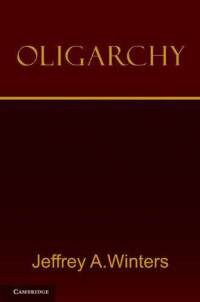
For centuries, oligarchs were viewed as empowered by wealth, an idea muddled by elite theory early in the twentieth century. The common thread for oligarchs across history is that wealth defines them, empowers them, and inherently exposes them to threats. The existential motive of all oligarchs is wealth defense. How they respond varies with the threats they confront, including how directly involved they are in supplying the coercion underlying all property claims, and whether they act separately or collectively. These variations yield four types of oligarchy: warring, ruling, sultanistic, and civil. Oligarchy is not displaced by democracy but rather is fused with it. Moreover, the rule of law problem in many societies is a matter of taming oligarchs. Cases studied in this book include the United States, ancient Athens and Rome, Indonesia, the Philippines, Singapore, medieval Venice and Siena, mafia commissions in the United States and Italy, feuding Appalachian families, and early chiefs cum oligarchs dating from 2300 BCE.
作者简介
Associate Professor and Honors Program Director at Northwestern University
PhD, Yale University
Professor Winters specializes on oligarchs and elites spanning a range of historical and contemporary cases, including ancient Athens and Rome, medieval Europe, the United States, as well as Indonesia, Singapore, and the Philippines. His new book, entitled Oligarchy, was published by Cambridge University Press in 2011. His research, publications, and teaching focus on the areas of comparative and international political economy, as well as comparative politics generally. Important themes in his work in addition to oligarchy include state-capital relations, capital mobility and the structural power of investors, the International Monetary Fund, the World Trade Organization, and the World Bank, human rights, authoritarianism, and democratic transitions in post-colonial states. He has conducted extensive research in the region of Southeast Asia.
His first book, Power in Motion: Capital Mobility and the Indonesian State (Cornell University Press, 1996), explores the highly undemocratic structural power of those who control the investment resources everyone else depends upon for their survival. With Jonathan Pincus, he co-edited Reinventing the World Bank (Cornell University Press, 2002), a wide-ranging critique of the Bank's structure and operation. In this volume Winters explores the problem of "criminal debt," especially in the Indonesian context. Both books were translated into Indonesian and published in Jakarta. He has also published two other books in Indonesian: in 1999, Dosa-Dosa Politik Orde Baru [Political Sins of Suharto's New Order], the best-selling book in Indonesia that year, and, in 2004, Orba Jatuh, Orba Bertahan? [Indonesia's "New Order" Falls or Endures?]. With co-author Prof. Ben Page, he wrote "Oligarchy in the United States?" which appeared in Perspectives on Politics in 2009.
目录信息
Part I: Preface
Part II. The Material Foundations of Oligarchy:
1. Toward a theory of oligarchy
2. Power resources
3. Wealth defense
4. Oligarchy and the elite detour
5. Types of oligarchies
Conclusions
Part III. Warring Oligarchies:
6. Chiefs, warlords, and warring oligarchs
7. Warring oligarchs in medieval Europe
8. Appalachian feuds
Conclusions
Part IV. Ruling Oligarchies:
9. Mafia commissions
10. Greco-Roman oligarchies
11. Athens
12. Rome
13. Italian city-states of Venice and Siena
Part V. Sultanistic Oligarchies:
13. Indonesia
14. Untamed ruling oligarchy in Indonesia
15. The Philippines
Conclusions
Part VI. Civil Oligarchies:
16. The United States
17. Singapore
Conclusions
Part VII. Conclusions:
18. Other cases and comparisons
19. Oligarchy and other debates.
· · · · · · (收起)
读后感
政治学上经典的政体分类,往往以亚里士多德的“人数多寡+以公利/私利为本进行统治”为标准进行;在这种分类中,寡头制被认为是“少数人以私利为本”而进行统治的政体。但Jeffrey Winters在此书中提出了一种大胆的重新定义:寡头是以高度财富集中为权力基础、以保卫财富为主要政...
政治学上经典的政体分类,往往以亚里士多德的“人数多寡+以公利/私利为本进行统治”为标准进行;在这种分类中,寡头制被认为是“少数人以私利为本”而进行统治的政体。但Jeffrey Winters在此书中提出了一种大胆的重新定义:寡头是以高度财富集中为权力基础、以保卫财富为主要政...
政治学上经典的政体分类,往往以亚里士多德的“人数多寡+以公利/私利为本进行统治”为标准进行;在这种分类中,寡头制被认为是“少数人以私利为本”而进行统治的政体。但Jeffrey Winters在此书中提出了一种大胆的重新定义:寡头是以高度财富集中为权力基础、以保卫财富为主要政...
政治学上经典的政体分类,往往以亚里士多德的“人数多寡+以公利/私利为本进行统治”为标准进行;在这种分类中,寡头制被认为是“少数人以私利为本”而进行统治的政体。但Jeffrey Winters在此书中提出了一种大胆的重新定义:寡头是以高度财富集中为权力基础、以保卫财富为主要政...
政治学上经典的政体分类,往往以亚里士多德的“人数多寡+以公利/私利为本进行统治”为标准进行;在这种分类中,寡头制被认为是“少数人以私利为本”而进行统治的政体。但Jeffrey Winters在此书中提出了一种大胆的重新定义:寡头是以高度财富集中为权力基础、以保卫财富为主要政...
用户评价
这本书的结构设计简直是鬼斧神工。作者似乎非常擅长使用非线性叙事,通过穿插的文献摘录、日记片段和口述历史,构建了一个多层次的叙事迷宫。起初,我需要花一点时间适应这种跳跃感,但一旦适应了,那种探索真相的感觉就极其迷人,仿佛我就是那个试图拼凑完整历史碎片的侦探。书中对于权力运作机制的剖析,达到了近乎病态的精准。它揭示了那些看似最光明正大的机构背后,往往隐藏着最精密的利益输送网络和信息控制手段。这种对“幕后黑手”的揭示,不是廉价的阴谋论,而是基于对历史规律深刻洞察的理性推演。我特别欣赏作者在处理复杂的人物关系时所展现的克制,避免了戏剧化的冲突,转而专注于更深层的心理博弈。
这是一部值得反复阅读的鸿篇巨制,它的文字密度极高,初读时可能会漏掉很多精妙之处。我建议读者准备好笔和便签纸,因为你将频繁地停下来,查阅一些历史背景资料,或者仅仅是为了消化作者抛出的某个极富洞察力的论断。作者对历史的敬畏感,体现在他对每一个时代选择的谨慎措辞上,没有丝毫的轻佻或武断。他成功地描绘了精英阶层如何通过文化和教育的垄断来巩固其地位,这与我们当下社会许多现象有着惊人的共鸣。全书洋溢着一种古典主义的悲剧色彩,即使在看似胜利的高光时刻,也潜藏着不可避免的衰落的种子。这部作品的影响力在于,它不仅讲述了一个过去的故事,更像是在为一个尚未完全发生的未来投下警示的阴影。
坦白说,我一开始是被这本书的书名吸引的,但阅读过程远超我的预期。作者的文笔有一种冷峻而克制的美感,如同冰冷的雕塑,每一个词语都经过了精心的打磨,绝不轻易流露情感,却能在一片冷静之中蕴含着巨大的情感张力。故事中的主要角色,没有一个是绝对的“好人”或“坏蛋”,他们都在时代的洪流中为了生存和维护既得利益而挣扎,这种模糊性正是这部作品的魅力所在。最让我震撼的是关于社会阶层固化的描写,那种根深蒂固的壁垒,不是靠努力就能轻易打破的,读到那些底层人物的绝望与不甘,让人深感无力。这不是一本读起来轻松愉快的书,它需要读者投入极大的心力去解读那些潜台词和历史的隐喻,但最终的回报是丰厚的,它提供了一种看待世界的新视角,一个更加清醒、也可能更加悲观的视角。
这部作品,读起来简直像是在穿越一片迷雾重重的历史长廊,作者的叙事功力令人叹为观止。他不仅仅是在罗列事实,更是在雕刻人物的灵魂,那种深入骨髓的挣扎与权力的诱惑交织在一起,让人欲罢不能。我尤其欣赏作者对于时代背景的细腻描摹,那些细节,比如街角的灯光、贵族沙龙里的低语,都栩栩如生地浮现在眼前,仿佛我能闻到那个时代的尘土和香水味。情节的推进犹如精密的钟表,每一个齿轮的咬合都恰到好处,没有一丝多余的赘述。尤其是在高潮部分的转折,处理得极其巧妙,既符合逻辑,又出乎意料,让人在合上书页后仍旧久久回味,思考着那些隐藏在光鲜外表下的复杂人性。这本书的深度远超一般的历史小说,它触及了权力本质的灰色地带,让人不得不反思我们自己所处的社会结构,那种被无形力量操控的恐惧感,是如此的真实和令人不安。
我通常对这种厚重的题材不太感冒,总觉得会读得昏昏欲睡,但这本书却完全打破了我的成见。它的节奏把握得非常出色,时而如同疾风骤雨般紧凑,迫使你喘不过气来思考下一步的命运;时而又放慢脚步,像老电影的慢镜头一样,让我们细细品味那些关键人物内心深处的矛盾和权衡。叙事视角是多维度的,从高高在上的决策者到街头巷尾的观察者,都有各自的声音,这种全景式的呈现,使得整个社会图景异常饱满。特别是关于意识形态如何被用来合理化不公的论述,简直是一针见血。作者没有直接给出答案,而是抛出了一系列尖锐的问题,迫使读者自己去寻找道德的锚点。读完之后,我感觉自己像是上了一堂高强度的哲学研讨课,精神上得到了极大的洗礼。
理论太ambitious,但材料和视野还是不错的,特别是老本行印尼那段。
只看了印尼部分
只看了印尼部分
只看了印尼部分
理论太ambitious,但材料和视野还是不错的,特别是老本行印尼那段。