
具体描述
Review
"Alan Cameron's Last Pagans of Rome is one of the best and most important books ever published on the Later Roman Empire or Late Antiquity, and it has profound consequences for our understanding of the culture of the entire Greco-Roman world. It represents the summation of decades of original contributions by one whose best published work is the equal in quality and significance to that of any classical scholar living or dead." - Timothy Barnes, University of Edinburgh
"A work of sheer brilliance that will endure for a long time in view of its definitive presentation of central issues in the story of Christianity and paganism in late antiquity. Cameron takes his reader on an exhilarating journey through debates on religion, literature, politics, art, and ancient antiquarian scholarship. Its cumulative power is immense, and all its chapters, with their vast arsenal of learning and bibliography, are beautifully interconnected. There is nothing like it, and there will not be for generations to come." - G. W. Bowersock, Institute for Advanced Study, Princeton
Product Description
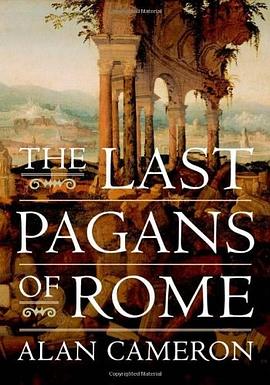
Rufinus' vivid account of the battle between the Eastern Emperor Theodosius and the Western usurper Eugenius by the River Frigidus in 394 represents it as the final confrontation between paganism and Christianity. It is indeed widely believed that a largely pagan aristocracy remained a powerful and active force well into the fifth century, sponsoring pagan literary circles, patronage of the classics, and propaganda for the old cults in art and literature. The main focus of much modern scholarship on the end of paganism in the West has been on its supposed stubborn resistance to Christianity. The dismantling of this romantic myth is one of the main goals of Alan Cameron's book. Actually, the book argues, Western paganism petered out much earlier and more rapidly than hitherto assumed.
The subject of this book is not the conversion of the last pagans but rather the duration, nature, and consequences of their survival. By re-examining the abundant textual evidence, both Christian (Ambrose, Augustine, Jerome, Paulinus, Prudentius) and "pagan" (Claudian, Macrobius, and Ammianus Marcellinus), as well as the visual evidence (ivory diptychs, illuminated manuscripts, silverware), Cameron shows that most of the activities and artifacts previously identified as hallmarks of a pagan revival were in fact just as important to the life of cultivated Christians. Far from being a subversive activity designed to rally pagans, the acceptance of classical literature, learning, and art by most elite Christiansmay actually have helped the last reluctant pagans to finally abandon the old cults and adopt Christianity. The culmination of decades of research, The Last Pagans of Rome will overturn many long-held assumptions about pagan and Christian culture in the late antique West.
作者简介
目录信息
读后感
用户评价
我必须承认,阅读过程并非一帆风顺。作者对细节的极致追求,有时会让叙述显得有些繁复,尤其是在涉及一些相对学术性的考证和推演时。但正是这种不厌其烦的挖掘,才让那些鲜为人知的片段得以重现。我脑海中不断浮现的画面,是那些隐匿在城市角落里,还在默默进行着古老仪式的信徒们,他们眼神中的坚持与迷茫,以及外界社会日新月异的变化带给他们的压力。这种个人信仰与时代洪流之间的张力,是这本书最让我动容的地方。它不是一场轰轰烈烈的革命,而是一场无声的、漫长的告别,一种文化基因的悄然变异,而作者就像一个敏锐的观察者,将这一切捕捉下来,呈现在我们眼前。
从文学性的角度来看,这本书的语言风格是相当独特的。它不是那种通俗易懂、引人入胜的小说式叙述,而是一种更为内敛、更为沉静的表达方式。作者的文字,如同古老的羊皮纸,带着时间的印记,字里行间都透露着一种对历史的敬畏。我尤其喜欢作者在描绘一些具体的仪式和习俗时,那种仿佛穿越时空的细腻描摹。那些古老的咒语,那些象征性的动作,那些在特定季节进行的祭祀,都让我对古罗马的日常生活有了更深的理解。它迫使我去放慢阅读的节奏,去品味每一个词语背后的含义,去感受历史的质感。
总而言之,这本书是一次极具挑战性但也极具回报的阅读体验。它并非为所有读者准备,特别是那些寻求快节奏、娱乐性内容的读者。但如果你对历史的细微之处有着强烈的探索欲,如果你对文明的兴衰有着深刻的思考,那么这部作品一定会给你带来意想不到的启示。它让我重新审视了“文明”这个概念,不再是简单的兴盛与衰落,而是无数细碎的、在时间长河中不断消融和重塑的信仰、习俗与生活方式。作者的努力,让我们得以窥见那段被浓墨重彩的基督教历史所遮蔽的,更加广阔和复杂的图景,那些“最后的异教徒”,他们的存在本身,就是对历史多样性的一种证明。
这本书给我最深刻的感受,是关于“边缘”和“失落”的思考。在宏大的历史叙事中,我们往往关注那些胜利者和主流的声音,但真正构成历史厚度的,恰恰是那些在历史洪流中被冲刷、被边缘化的群体和文化。作者似乎就是致力于发掘这些被遗忘的声音,去理解那些“最后一个”信徒的心路历程。我仿佛能听到他们低语的祈祷,看到他们在日落时分,在废弃的祭坛前,最后一次点燃烛火的场景。这种对被遗忘者的悲悯和尊重,让这本书不仅仅是一部历史著作,更像是一曲献给逝去文明的挽歌,充满了深沉的思考和历史的温度。
这部作品,我只能说,它在某种程度上触及了我内心深处对于历史洪流中那些被遗忘的角落的无限好奇。作者以一种近乎考古学家的细致,小心翼翼地剥开一层层历史的尘埃,试图还原那些在我们如今看来已经模糊不清的信仰与生活方式。我尤其着迷于作者对于罗马晚期那种错综复杂的宗教格局的描绘,它并非简单地将基督教的崛起视为一切的终结,而是展现了一个更加 nuanced(微妙)的过渡时期。那些曾经辉煌的神庙,曾经虔诚的祭司,他们的声音如何在时代的巨浪中逐渐消弭,他们的仪式如何在新的信仰体系中寻求生存或最终消逝,这一切都让我沉浸其中,仿佛亲身经历了一场缓慢而壮丽的谢幕。