
具体描述
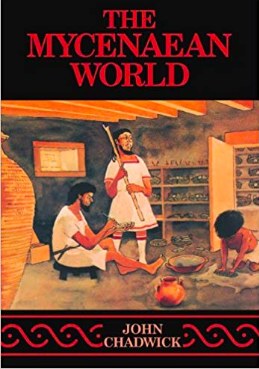
In 1952 the decipherment of the Linear B script suddenly revealed the Greekness of Mycenaean Greece. Now, after new discoveries and more than 20 years of intensive work, scholars are able to interpret the written documents and reconstruct from them a vivid picture of life in this remote period, in a way which is impossible from archaeology alone. John Chadwick, who assisted Ventris in the original decipherment, has played a major part in these advances. He now summarizes the results of research and in so doing opens the door to a new world, Mycenaean Greece seen through the eyes of its inhabitants. The tablets may be only, as he describes them, 'the account books of anonymous clerks', but from these prosaic documents he shows how we can infer a bronze industry, foreign slave-women, or even human sacrifice. Not least important is the comparison of the newly available data with the Homeric account, much to the detriment of Homer's credibility as a witness.
作者简介
The classical scholar John Chadwick, who has died aged 78, played a leading role in one of the most important and exciting linguistic discoveries of the century, the decipherment of Linear B, the writing used by the Mycenaean civilisation of bronze-age Greece.
Incorrigibly modest, Chadwick always took second place to Michael Ventris, his colleague in the extraordinary breakthrough. Ventris had the original inspiration that the symbols of Linear B must represent syllables in an early version of Greek rather than some other, indeterminate eastern Mediterranean language. But, as one of his Cambridge colleagues confirmed after his death, Chadwick brought the expertise of a Greek philologist to the arduous and brilliant research, unaided by computers, that proved the theory.
Ventris was an architect but also an amateur linguist of genius. He had been interested in the mysterious, fire-hardened clay tablets, covered in pictograms and found in Crete and later in mainland Greece, ever since, as a schoolboy, he heard a 1936 lecture by their discoverer, the archaeologist Sir Arthur Evans. Evans identified two systems, Linear A, used by the earlier Minoan civilisation (definitely not Greek) and Linear B, which he never dreamed could be Greek.
Examining the Cretan tablets in 1951, Ventris deduced that certain groups of ideographic sylllables represented place-names on the island, which were often proto-Greek, such as ko-no-so for Knossos. In an experiment he ascribed the same sound-values to the same symbols when they appeared in other words whose meaning could be guessed from their design and context, such as pictograms for men, women, and children. Time after time the result seemed to resemble words in very ancient Greek.
Ventris therefore turned to Chadwick, then a Cambridge classics lecturer and a specialist in the early history of the language, for help. They published a controversial first paper in the Journal of Hellenic Studies in 1953 but were vindicated shortly afterwards when a new find of tablets at Pylos in Greece was deciphered using their method. The tablets contain lists of assets such as food, arms, livestock and people.
Not only had they "cracked" Linear B; by doing so they had shown for the first time that the Mycenaean civilisation that used it, more than 1,000 years before Pericles governed Athens, was Greek. It had ruled in Crete as well as such mainland sites as Mycenae, Tiryns and Pylos, for some 400 years until it was mysteriously destroyed, perhaps by a vast earthquake or volcanic explosion. The stunning discovery also lent strength to Homeric scholars who were confirmed in their theories about the date of the war against Troy and its destruction by bronze-age Greeks, as described by the poet centuries later.
Chadwick and Ventris wrote up their findings in the magisterial work, _Documents in Mycenaean Greek_, published in 1956 just before Ventris died in a car crash, and revised by Chadwick in 1973. He was the sole author of _The Decipherment of Linear B_ in 1958, which made an intricate process of decryption readably accessible to the lay reader.
John Chadwick was born at East Sheen, London, and educated at St Paul's School and Corpus Christi, Cambridge. After wartime Royal Navy Special Branch service he took his degree and started work as a lexicographer with Oxford University Press. Six years later he returned to Cambridge to lecture in classics, working in the university from 1952 until his 1984 "retirement" by which time he was Perceval Maitland Laurence Reader in classics.
But he carried on living in Cambridge, lecturing, writing and working on dictionaries until the day of his death. Reserved, he struck many people as aloof, even forbidding, an impression dispelled by closer acquaintance, according to other academics. he was particulary solicitous of his students, whith whom he kept in touch long after they went down.
Although never given a professor's chair, Chadwick was showered with academic honours by half a dozen countries and was a member of many leading international academic societies. He was also a Fellow of the British Academy and of Downing College, Cambridge. He wrote several further books on Mycenaean culture and other classical subjects and at the time of his death he had completed preparaions for a new Greek lexicon, which is to go ahead.
John Chadwick married Joan Isoblel Hill in 1947; they had one son.
目录信息
The hellenization of Greece 1
The documentary evidence 15
Mycenaean geography 35
The people of the tablets 61
The social structure and the administrative system 69
Religion 84
Agriculture 102
Craft, industry and trade 135
Weapons and war 159
Homer and pseudo-historian 180
The end of the Mycenaean world 188
Bibliography 195
Index 197
· · · · · · (收起)
读后感
用户评价
《迈锡尼文明》这本书,对于我来说,更像是一次沉浸式的历史体验。我一直觉得,理解一个文明,不应该仅仅停留在冰冷的史料和考古报告上,而是要努力去感受那个时代的脉搏。这本书恰恰做到了这一点。它不是那种枯燥乏味的学术论文,而是用一种非常引人入胜的语言,将那些尘封千年的故事娓娓道来。我仿佛能够看到,在赫克托耳的剑光与阿喀琉斯的怒吼之外,在那些神话的迷雾笼罩之下,一个真实而鲜活的文明正在蓬勃发展。书中对迈锡尼人日常生活场景的描绘,比如他们的饮食习惯、服装样式、家居陈设,虽然可能基于推测,但却显得逻辑严谨,充满想象力。我尤其喜欢书中对于迈锡尼宫殿建筑的解读,那些宏伟的“蜜蜂窝”式墓穴,那些壮观的狮子门,它们不仅仅是死者的安息之地,更是生者权力与荣耀的象征。作者是如何将这些物质遗存,转化成对当时社会权力结构、宗教仪式,甚至是人们精神世界的洞察?这一点让我觉得非常震撼。这本书让我不再只是被动地接受信息,而是主动地去思考,去感受,去想象。
最近刚读完《迈锡尼文明》,这部作品给我留下了极其深刻的印象,甚至可以说,它重新构建了我对那个遥远时代的一些认知。我之前对迈锡尼文明的了解,多半停留在一些零散的考古发现和文学作品的描绘中,比如特洛伊战争与迈锡尼王室的联系,以及那些令人惊叹的黄金艺术品。然而,这本书以一种近乎学术性的严谨,又充满了叙事性的生动,为我铺陈开了一幅宏大而细致的画卷。它不仅仅罗列了出土文物,更重要的是,它深入分析了这些文物的意义,并将它们置于更广阔的社会、经济、政治背景下去解读。我尤其对书中关于迈锡尼人贸易网络和海上活动的部分感到着迷,作者是如何通过分析陶器的来源、船只的痕迹等,来描绘出一个活跃在地中海东部的商业帝国的形象?书中对迈锡尼社会等级制度的分析也颇具启发性,从国王到贵族,再到普通民众,他们的生活和地位是如何被界定的?而且,书中对于迈锡尼文字(线形文字B)的解读,更是打开了我认识那个时代的另一扇窗户,那些记录了经济账目、物品清单的文字,虽然朴实无华,却透露出那个时代社会管理的秩序和效率。这本书让我意识到,迈锡尼文明远比我想象的要复杂和成熟。
我一直对那些消失的古老文明怀有强烈的好奇心,尤其是那些在西方文明史中扮演着重要角色的文明,《迈锡尼文明》这本书恰恰满足了我的这份好奇。它不仅仅是关于一个文明的简单介绍,更像是一次深入的考古田野调查的文字记录。我期待这本书能够带领我深入到那些古老的遗址之中,去亲手触摸那些历经沧桑的巨石,去感受那些曾经辉煌的宫殿所散发出的历史气息。作者是如何通过对不同遗址的对比分析,来揭示迈锡尼文明内部的地域差异和政治格局?对于迈锡尼文明的突然衰落,书中是否有较为详尽的解释,是外部入侵,还是内部矛盾,抑或是自然灾害?我希望书中能够详细介绍线形文字B的破译过程,因为这本身就是一段激动人心的学术史。从那些晦涩难懂的符号中,如何一步步还原出那个时代的经济运行和社会结构,这本身就是一项了不起的成就。这本书让我感受到,历史并非完全由宏大的叙事构成,而是由无数个细节,无数个考古发现,以及无数个严谨的推论所堆叠而成。
《迈锡尼文明》这本书,听名字就充满了古老而神秘的吸引力。作为一个对古代历史,尤其是地中海地区的文明发展一直抱有浓厚兴趣的读者,我毫不犹豫地将它加入了我的必读书单。我期待它能带领我穿越回那个青铜时代的辉煌岁月,去探寻那个介于传说与史实之间的迈锡尼文明。我很好奇,这本书究竟会以怎样的视角去解读那些遍布希腊本土的雄伟宫殿遗址,比如迈锡尼、梯林斯、皮洛斯等等,它们那些巨石堆砌的城墙,那些精美的黄金面具和器皿,究竟隐藏着怎样不为人知的秘密?作者是否会深入挖掘那些出土的陶器、壁画、以及传说中的线形文字B,来揭示当时社会的结构、政治体制、宗教信仰、以及他们的经济活动?我特别想知道,这本书对于我们理解希腊黑暗时代以及之后希腊古典文明的兴起,是否会提供更深层次的视角和线索?毕竟,迈锡尼文明的衰落,至今仍是历史学界的一个谜团,书中是否会对此有新的解读或猜想?这不仅仅是一本关于考古发现的书,我更期待它是一次穿越时空的对话,让我能亲身感受到那个时代人们的生活方式,他们的喜怒哀乐,他们的奋斗与荣耀。
作为一名对古代艺术史有浓厚兴趣的读者,《迈锡尼文明》这本书为我打开了一个全新的视角。我一直着迷于古代文明的艺术表现形式,而迈锡尼文明的艺术,尤其是那些出土的黄金制品,如享誉世界的“阿伽门农黄金面具”,总是让我惊叹于那个时代的精湛工艺和独特审美。这本书并没有仅仅停留在对这些艺术品的描述和赞美,而是更深入地探讨了这些艺术品背后的文化内涵和社会功能。比如,这些精美的黄金饰品,它们是如何被制造出来的?它们的材料来源在哪里?它们在当时社会中扮演了怎样的角色?是作为王室的象征,还是作为祭祀的贡品,抑或是陪葬品?作者是如何通过分析这些艺术品的风格、题材和工艺,来推断迈锡尼人的宗教信仰、宇宙观、以及他们与周边文明的文化交流?我特别希望书中能有关于壁画艺术的深入分析,那些描绘着狩猎、战争、祭祀等场景的壁画,究竟是真实的历史记录,还是带有艺术加工的神话传说?这本书让我看到了艺术不仅仅是美的展现,更是理解一个文明的窗口。