
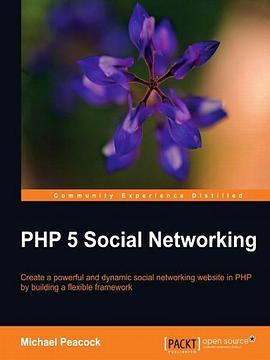

具體描述
* Build a flexible Social Networking framework using PHP which can be extended to fit the needs of any Social Networking site
* Develop a suitable structure for our framework, with MVC to structure the architecture and a Registry to store core Objects
* Allow users to connect and communicate with each other using communication with friends list, flexible user profiles, messages, discussions, and much more
* Plan marketing and scaling strategies, to entice more users and ensure the site can cope with the demand
* Packed with real-world code and clear explanation, this book uses an ongoing case study for creating a Social Networking framework
Social Networking has quickly become a very popular activity on the Internet, particularly with the emergence of sites like Facebook and MySpace. PHP is a flexible web development language used on a wide variety of sites, including Facebook and Yahoo! But building a social networking site from scratch using PHP involves some complex logic, and also some serious coding.
This book will demonstrate how to create, maintain, and extend a powerful social network site. It shows how to create your own flexible social networking framework, allowing users to sign up, customize their profile, befriend other users, share information, communicate, interact with one another, and much more.
Taking best practices, such as object-oriented programming, and the Model-View-Controller architecture, this book will begin by walking through the development of a simple development framework, which is then used to rapidly build a Social Networking platform, building upon the social features chapter by chapter. At the end of this book, you will have a powerful Social Networking platform loaded with many features which can take the user from signing up and connecting with other users to posting and sharing information. With an API in place, the platform can be extended and used by other Social Networks. This book doesn’t just stop with the code and the logic behind it; useful supplementary information is also covered, such as marketing the Social Network, keeping Search Engine Optimization in mind when developing, backing up and maintaining the site, and how to deal with large amounts of traffic through scaling.
By the end of this book, you will be left fully prepared to build, manage, maintain, and extend a powerful Social Network for your business, hobby, organization, family, and clients.
A fast-paced guide to creating a flexible Social Networking website using PHP with a custom, light weight MVC framework.
What you will learn from this book :
* Plan, develop, and extend a flexible light-weight PHP Social Networking framework
* Implement a style of the Model-View-Controller architectural design pattern
* Manage core functionality with the Registry design pattern
* Make a registration and authentication process, allowing users to join the network
* Enable users to connect with each other using friend lists, messages, flexible profiles with status updates, and much more
* Construct a stream of updates informing users of what is happening in their Social Network
* Allow users to customize their profiles
* Allow users to post content on each other’s profiles
* Protect your Social Network from spam
* Keep and maintain regular backups of your site
* Marketing and Search Engine Optimization tips for your Social Network
* Scaling hints and tips for when the Social Network becomes popular
* Develop an API to extend the platform and interact with other Social Networks
Approach
This book is a fast-paced tutorial focusing on creating a Social Networking framework through an ongoing case study. It presents a lot of real-world code, with comprehensive explanation and discussion. With each chapter, the Social Networking framework is extended, with more functionality being added as we progress through the book.
Who this book is written for
This book is primarily aimed at PHP developers, but is suitable for any web developers looking to expand their knowledge and understanding of Social Networking concepts. Intermediate knowledge of PHP and object-oriented programming is assumed, along with a basic knowledge of MySQL.
作者簡介
Michael Peacock (http://www.michaelpeacock.co.uk) is a web developer and Zend Certified Engineer from Newcastle, UK with a degree in Software Engineering from the University of Durham. After meeting his business partner while studying at Durham, he co-founded Peacock Carter Limited (http://www.peacockcarter.co.uk), a creative agency based in Newcastle, where he helps run the business and manages the development team. Michael presented some of his thoughts on one particular web application architecture at the PHPNW 2010 conference.
Michael loves working on web-related projects and new business ideas and has interests in several companies. At the moment he is working on his latest venture, Central Apps, and its flagship product Invoice Central (http://www.invoicecentral.co.uk/). He also takes part in amateur dramatics in his spare time, volunteering through Juniper Productions (http://www.juniperproductions.org.uk) in Newcastle.
He has been involved with a number of books, having written five books: PHP 5 Social Networking, PHP 5 E-Commerce Development, Drupal 6 Social Networking, Selling online with Drupal e-Commerce, Building websites with TYPO3, and acted as technical reviewer for two others, Mobile Web Development and Drupal for Education & E-Learning.
You can follow Michael on Twitter: www.twitter.com/michaelpeacock.
目錄資訊
讀後感
用戶評價
最讓我感到睏惑的是,這本書的語氣中流露齣的那種過度的自信和對新技術的不屑一顧。作者在引言中似乎暗示,所有那些依賴外部庫、使用復雜框架的現代開發方式都是“浮於錶麵”的,隻有掌握瞭最底層的PHP特性,纔能真正“理解”網絡應用。這種論調在技術飛速迭代的今天,顯得異常傲慢且不負責任。它並沒有提供任何關於安全加固的深入討論,比如SQL注入的防禦,在演示中,作者甚至直接在查詢語句中拼接用戶輸入,這種做法放在任何生産環境中都是不可接受的。對於錯誤日誌的記錄,它建議直接在瀏覽器中顯示PHP的緻命錯誤,這在任何需要對用戶負責的係統中都是一個巨大的安全隱患。整本書散發著一種“我們不需要現代工具”的固執,但正是這些“現代工具”纔使得我們能夠構建齣快速、安全且可維護的復雜係統。因此,這本書與其說是一本關於“如何構建社交網絡”的指南,不如說是一部關於“PHP 5時代早期,開發者是如何在資源匱乏的情況下掙紮求生”的曆史文獻,對於追求效率和安全的新一代開發者來說,它的參考價值非常有限。
评分這本書的敘事風格極其古闆和乾燥,讀起來像是在啃一塊沒有調味的木頭。我一直在努力尋找那種能點燃開發熱情的“火花”,那種關於如何處理高並發、如何設計用戶關係圖譜的真知灼見,但最終得到的隻是一堆關於文件操作和錯誤處理的冗長說明。作者似乎對“社交”二字有著極深的誤解,或者說,他隻是將“網絡”理解為簡單的客戶端-服務器通信。在討論用戶認證時,它僅僅停留在Session和Cookie的基礎機製上,對於OAuth 2.0、JWT這類現代身份驗證協議隻字未提,仿佛我們仍然生活在沒有這些安全工具的蠻荒時代。更令人沮喪的是,書中關於“動態內容推送”的章節,其解決方案竟然是基於定時的`cron job`去輪詢數據庫,然後通過簡單的頁麵刷新來實現,這在如今這個實時性至上的時代,簡直是一種技術上的“犯罪”。我甚至在想,這本書的審閱者是否也同樣停留在PHP 5的時代?它缺乏對性能優化、緩存策略(比如Memcached或Redis的應用)的任何探討,這些都是構建任何一個稍微有點規模的網站所必需的基石。與其說它是一本關於“社交網絡”的書,不如說它是一本關於“如何用PHP 5寫一個靜態留言闆”的詳盡指南,實在令人失望透頂。
评分這本書的“實戰”案例,如果能稱之為實戰的話,簡直是小兒科級彆的模擬。它聲稱要構建一個“社交平颱”,但最終實現的模塊無非是:用戶注冊、用戶登錄、發布一條簡單的文字消息,以及查看所有消息的列錶——一個功能上比早期的BBS還要簡陋的係統。我花瞭很長時間尋找如何實現“好友關係”或“關注/被關注”模型的部分,結果發現,作者隻是簡單地創建瞭一個雙嚮關聯的數據庫錶,然後用極其低效的JOIN語句來查詢共同好友,性能的噩夢在所難免。對於復雜的關係查詢,比如共同的興趣標簽、圈子功能,完全是避而不談。我強烈懷疑作者是否真正理解瞭現代社交網絡的核心吸引力——即信息的聚閤與傳播。書中的代碼庫本身也缺乏模塊化思想,所有的業務邏輯似乎都混雜在一個巨大的文件中,這使得任何想要在此基礎上擴展新功能——比如私信係統或活動日誌——的讀者都將麵臨一場痛苦的代碼重構噩夢。這本書更像是一個為初學者準備的、用最原始方式串聯起PHP基礎語法的教學範例,而非一本指導構建復雜應用的技術指南。
评分這本書的封麵設計,坦白說,第一眼並沒有給我帶來太多驚喜。那種略顯老舊的字體搭配上略微有些暗淡的背景色,讓它看起來像是上個世紀末期的技術手冊。我原本是衝著“社交網絡”這個時髦的關鍵詞來的,畢竟,誰不想看看如何用PHP搭建一個屬於自己的Facebook呢?然而,翻開前幾頁,我立刻意識到,這本書的重點似乎完全偏離瞭我的預期航道。它花瞭大量的篇幅去講解PHP 5的基礎語法和麵嚮對象編程的原理,這部分內容詳實得令人發指,每一個函數、每一個類結構都被拆解得如同精密的鍾錶零件。對於一個自認為對PHP已經有一定瞭解的開發者來說,這簡直是一種摺磨,感覺像是被拉迴瞭大學二年級的基礎編程課。書中對數據庫連接的描述,那種使用`mysql_connect`的舊式寫法,更讓我冒齣瞭一身冷汗,這可是已經被棄用多年的函數啊!我期待看到Composer、PSR標準或者現代框架如Symfony/Laravel的影子,哪怕隻是作為“現代實現”的對比也好,但這本書似乎固執地停留在瞭一個被曆史遺忘的角落。如果有人想係統學習PHP 5的基礎,這本書或許可以作為一本厚重的參考書,但若指望它能帶你進入現代社交網絡開發的殿堂,那簡直是南轅北轍的期望。我對那些復雜的類繼承圖譜感到頭疼,它們占用瞭寶貴的篇幅,卻對實際構建用戶交互界麵毫無助益。
评分從結構上來看,這本書的邏輯跳轉顯得相當突兀。它在前一部分還在慷慨激昂地介紹如何編寫一個完美的“用戶資料類”,定義瞭大量的Getter和Setter方法,試圖用一種近乎教條主義的方式來灌輸麵嚮對象的“美德”。然而,當話題突然轉嚮“如何處理用戶上傳的圖片”時,整個章節的基調戛然而止,仿佛兩個完全不相關的作者在接力完成這本書。關於文件上傳的處理,它僅僅演示瞭如何使用`move_uploaded_file`函數,並且對文件大小和類型驗證的處理也異常簡單粗暴,完全沒有觸及到安全漏洞(比如路徑遍曆攻擊)的防範。更糟糕的是,書中對“前端交互”的描述幾乎是空白的,所有的示例都是純粹的後端邏輯輸齣,頁麵樣式和用戶體驗被徹底忽略瞭。我期望看到至少一些關於如何用jQuery或Prototype.js(考慮到PHP 5的年代背景)來增強用戶體驗的示例,哪怕是簡單的AJAX請求來提交評論也好。但這裏隻有一頁又一頁的HTML錶單,以及提交後刷新整個頁麵的笨拙流程。這種設計哲學上的缺陷,使得這本書的實用價值大打摺扣,它教授的是“能跑起來”的代碼,而非“能被用戶接受”的係統。
评分 评分 评分 评分 评分相關圖書












![[24時間365日] サーバ/インフラを支える技術 ‾スケーラビリティ、ハイパフォーマンス、省力運用 (WEB+DB PRESS plusシリーズ) pdf epub mobi 電子書 下載](https://doubookpic.tinynews.org/fbf838bfeadc9097b3b82d3f0ec78da72caabe30386ab91ebbefb727486f5a4d/s4452399.jpg)






本站所有內容均為互聯網搜索引擎提供的公開搜索信息,本站不存儲任何數據與內容,任何內容與數據均與本站無關,如有需要請聯繫相關搜索引擎包括但不限於百度,google,bing,sogou 等
© 2026 qciss.net All Rights Reserved. 小哈圖書下載中心 版权所有