
具体描述
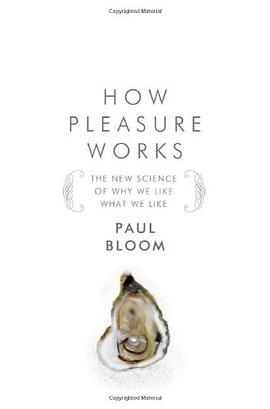
The thought of sex with a virgin is intensely arousing for many men. The average American spends more than four hours a day watching television. Abstract art can sell for millions of dollars. People slow their cars to look at gory accidents, and go to movies that make them cry. Pleasure is anything but straightforward. Our desires, attractions, and tastes take us beyond the symmetry of a beautiful face, the sugar and fat in food, or the prettiness of a painting. In How Pleasure Works, Yale University psychologist Paul Bloom draws on groundbreaking research to unveil the deeper workings of why we desire what we desire. Refuting the longstanding explanation of pleasure as a simple sensory response, Bloom shows us that pleasure is grounded in our beliefs about the deeper nature or essence of a given thing. This is why we want the real Rolex and not the knockoff, the real Picasso and not the fake, the twin we have fallen in love with and not her identical sister. In this fascinating and witty account, Bloom draws on child development, philosophy, neuroscience, and behavioral economics in order to address pleasures noble and seamy, highbrow and lowbrow. Along the way, he gives us unprecedented insights into a realm of human psychology that until now has only been partially understood.
作者简介
Paul Bloom is a passionate teacher of undergraduates, and his popular Introduction to Psychology 110 class has been released to the world through the Open Yale Courses program. He has recently completed a second MOOC, “Moralities of Everyday Life”, that introduced moral psychology to tens of thousands of students. And he also presents his research to a popular audience though articles in The Atlantic, The New Yorker, and The New York Times. Many of the projects he works on are student-initiated, and all of them, he notes, are "strongly interdisciplinary, bringing in theory and research from areas such as cognitive, social, and developmental psychology, evolutionary theory, linguistics, theology and philosophy."
目录信息
1. The Essence of Pleasure
2. Foodies
3. Bedtricks
4. Irreplaceable
5. Performance
6. Imagination
7. Safety and Pain
8. Why Pleasure Matters
Notes
References
· · · · · · (收起)
读后感
本书的收获有两点。 1, the Distinction between Animal Pleasures & Human Pleasures (1)Animal Pleasures,快乐的来源在于“天择”,“天择”会对有利于基因传递的行为给予“快乐”奖赏,以“快乐”之奖赏促使基因载体采取正确的行为以确保基因的有效传递。在“天择”机制...
本书的收获有两点。 1, the Distinction between Animal Pleasures & Human Pleasures (1)Animal Pleasures,快乐的来源在于“天择”,“天择”会对有利于基因传递的行为给予“快乐”奖赏,以“快乐”之奖赏促使基因载体采取正确的行为以确保基因的有效传递。在“天择”机制...
本书的收获有两点。 1, the Distinction between Animal Pleasures & Human Pleasures (1)Animal Pleasures,快乐的来源在于“天择”,“天择”会对有利于基因传递的行为给予“快乐”奖赏,以“快乐”之奖赏促使基因载体采取正确的行为以确保基因的有效传递。在“天择”机制...
本书的收获有两点。 1, the Distinction between Animal Pleasures & Human Pleasures (1)Animal Pleasures,快乐的来源在于“天择”,“天择”会对有利于基因传递的行为给予“快乐”奖赏,以“快乐”之奖赏促使基因载体采取正确的行为以确保基因的有效传递。在“天择”机制...
本书的收获有两点。 1, the Distinction between Animal Pleasures & Human Pleasures (1)Animal Pleasures,快乐的来源在于“天择”,“天择”会对有利于基因传递的行为给予“快乐”奖赏,以“快乐”之奖赏促使基因载体采取正确的行为以确保基因的有效传递。在“天择”机制...
用户评价
not well structured, not informative, not even convincing:(
not well structured, not informative, not even convincing:(
not well structured, not informative, not even convincing:(
在地铁上读完了~挺有意思 但实证研究没啥
not well structured, not informative, not even convincing:(