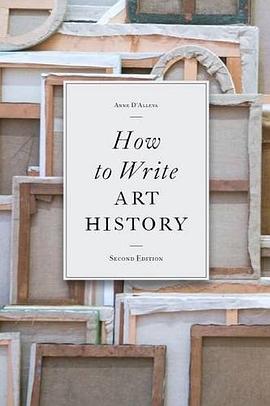

具体描述
作者简介
目录信息
Acknowledgements 7
Introduction How to use this book 8
Chapter 1 Introducing art history
What do art historians do? The object of art history
11
What is `art?
A working definition of art
What is `history'?
Why is art history important?
16
Art history and related disciplines
19
Art criticism
Sociology
Anthropology
Aesthetics
Cultural studies
Visual culture studies
Connoisseurship
Art history's toolbox: formal and contextual analysis
22
Museum accession numbers
Reading captions for information
23
Conclusion
26
Chapter 2 Formal analysis
Formal analysis
27
Formal elements
28
Colour
Line
Space and mass
Scale
Composition
Two-dimensional art: painting, graphic arts, photography
31
Sculpture
35
Wolfflin and formal analysis
36
Architecture
40
Installation art
42
Performance and video art
43
Digital art
46
Textile and decorative arts
48
Patrick Heron analyzes a painting by Matisse
51
Conclusion
51
Chapter 3 Contextual analysis
Art and context
52
Contextual questions
53
Art out of context? Museums and art history
56
A brief history of museums
Museums and the experience of art
Sarah Symmons analyzes a print by Goya
57
The process of interpretation: confronting your assumptions
61
The challenges of cross-cultural interpretation
The challenges of historical interpretation
Historical interpretation in practice
Is African art anonymous?
65
Art and its controversies
69
Style and meaning
71
Conclusion
73
Chapter 4 Writing art history essays and papers
Art historical arguments: opinion vs. interpretation
74
Formal analysis essays
76
Taking notes
Structuring your essay
The comparison essay
Research papers
83
Developing a topic and starting your research
Keeping notes
Resources for research
91
Books
Periodicals
Websites
Reference works
How many sources should I use?
91
Critical moments in art history writing
97
Developing a thesis
Writing an introductory paragraph
Sustaining the argument
Dealing with intentions
The conclusion
Editing
If you experience writer's block
107
Citations and bibliographies
108
MLA citations
Chicago citations
Bibliography or Works Cited
Plagiarism's grey zone
Writing style
113
Common stylistic pitfalls of art history writing
Finding a voice
Putting together those illustrations
116
Conclusion
117
Chapter 5 Navigating art history examinations
Slide identifications and short-answer questions
118
Why are slide identifications important?
How to succeed at slide identifications
Three-step slide memorization
Memory aids
Unknowns
Test-taking strategies for art history exams
126
Art history essays
128
Studying for essay tests
Types of essay question
Effective note-taking
140
Taking good notes during lectures
Developing a consistent short hand
Taking notes on readings
Participation - why bother?
142
Conclusion
143
Chapter 6 Art history's own history
Ancient world
144
Excerpt from Pliny's Natural History
145
Middle Ages
146
Renaissance
147
Excerpt from Vasari's Lives of the Artists
148
Seventeenth-century writers on art
150
Felibien in conversation with Poussin
151
Winckelmann on the Laocoon
153
Age of Enlightenment
154
The nineteenth century: foundations of modern art history
155
Twentieth-century formalists, iconographers and social historians
158
After 1970: the `new' art history
160
The feminist art history revolution
163
Do other cultures practise art history?
165
China
West Africa
Early art history in China
166
Conclusion
169
Glossary 170
Bibliography 172
Table of parallel illustrations in art history surveys 178
Index 180
Picture credits
· · · · · · (收起)
读后感
用户评价
这本书的语言风格是**流畅且极富洞察力的**,它成功地在保持学术严谨性的同时,避免了陷入学院派写作中常见的干涩和冗长。作者的文笔有一种魔力,能够将复杂的概念,用清晰且富含画面感的语言描绘出来。我特别喜欢它在举例分析时所展现出的那种克制而又精准的力度。它不会过度渲染艺术作品的情感价值,而是冷静地分析其结构和意图,但这种冷静分析本身却产生了一种更深层次的震撼力。读起来,就像是跟着一位技艺高超的侦探在抽丝剥茧,每一步的推论都让人信服。这本书不仅是关于“如何写”,更深层次上,它是在教我们“如何**有尊严、有价值地参与**到艺术史的对话中去”。它提供的不仅仅是技巧,更是一种严肃的学术态度和方法论的构建,让我对未来自己的学术追求有了更清晰的蓝图。
哇,这本书简直是艺术史学习者的“救命稻草”,尤其对我这种刚入门的新手来说,简直是打开了一扇新世界的大门。我原本对艺术史的印象还停留在死记硬背艺术家名字和作品年代的阶段,读完这本书后,我才真正领悟到“写”艺术史的精髓所在。它没有给我灌输一堆既定的知识点,而是像一位经验丰富的导师,手把手地教我如何**提问、分析和论证**。书里最让我印象深刻的是它对“语境”的强调,它教会我如何跳出作品本身去看待它产生的时代背景、社会思潮甚至赞助人的意图。比如,它会引导你思考一幅画的构图如何回应了当时的政治气候,或者一种雕塑风格的转变如何折射了社会价值观的松动。这种由表及里的探索过程,让原本枯燥的历史变得生动起来,每一次阅读都像在进行一次高水平的考古发掘,充满了惊喜和发现的乐趣。它让我从一个被动的知识接受者,转变成了一个主动的探究者,非常实用。
说实话,我一开始对这本书抱有很高的期望,但真正读进去后发现,它远超出了我的预期,简直是教科书级别的“实战指南”。这本书最出彩的地方在于它对**学术规范和写作技巧**的细致拆解。它不是那种空泛地谈论“好的论述”的书,而是直接进入了实操层面。比如,它会用大量的篇幅去讨论引文的恰当使用、脚注的格式要求,以及如何构建一个逻辑严密、无懈可击的论点。我尤其欣赏它分享的那些“陷阱”——那些新手常犯的错误,比如“以偏概全”、“过度解读符号”或者“被作者的权威性所误导”。作者仿佛把多年积累的审稿经验都倾囊相授,让我避免了许多未来可能踩的坑。读完后,我感觉自己写论文的底气足了不少,不再是写完后战战兢兢地等结果,而是能够自信地审视自己的结构和论据的扎实程度。这本书的实用性,绝对是五星好评。
这本书的视角非常独特,它似乎将焦点从“看艺术”转移到了“**谈论艺术**”这个行为本身。我过去总觉得,艺术史的研究很大程度上依赖于宏大的叙事和成熟的理论框架,但这本导览让我意识到,每一次成功的艺术史写作,都是一次成功的“微观建构”。它深入剖析了不同时期、不同学派的学者们是如何运用不同的语言工具来构建他们所观察到的“真理”的。书中对比了不同写作风格带来的截然不同的读者体验,这一点对我启发极大。我开始注意到,同样是描绘巴洛克风格,有的学者笔下是充满戏剧性的情感张力,而有的则聚焦于光影的技术革新,这完全是由于作者选择的切入点和侧重点不同。这本书教我的不是‘应该’怎么写,而是‘可以’怎么写,极大地拓宽了我对学术表达方式的认知边界。它像一把手术刀,精准地剖开了学术写作的肌肉与骨骼。
我必须承认,这本书的阅读体验是**极富挑战性,但也极其令人满足**的。它并不是一本轻松的睡前读物,它要求读者必须保持高度的专注力,因为它探讨的很多概念是抽象且复杂的,涉及到后结构主义、符号学在艺术史中的应用等前沿议题。起初,我需要反复阅读一些关于“解构”与“重构”的章节才能勉强理解其核心思想。然而,正是这种智力上的拉锯战,让最终的领悟显得尤为珍贵。它强迫我提升了自己的思维密度和批判性阅读能力。这本书成功地将晦涩的理论知识,转化成了可以应用于具体文本分析的工具箱。读完后,我感觉我的“学术雷达”被彻底校准了,面对任何一篇艺术史文章,我都能迅速地识别出其潜在的意识形态倾向和论证的薄弱环节。这是一种质的飞跃,从模仿到创造的阶梯。
非常实用!
有趣的引论,可爱的老师。入门神书。
超级适合艺术史入门的一本好书!翻开书俨然写着printed in China,居然没有中国出版社来出个翻译版?
很棒的入門書
超级适合艺术史入门的一本好书!翻开书俨然写着printed in China,居然没有中国出版社来出个翻译版?