
具体描述
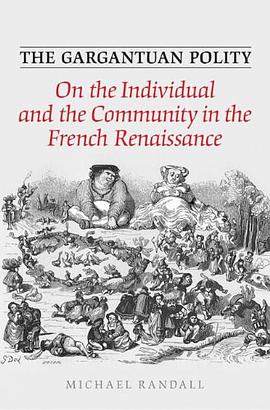
Critics and scholars have long argued that the Renaissance was the period that gave rise to the modern individual. The Gargantuan Polity examines political, legal, theological, and literary texts in the late Middle Ages, to show how individuals were defined by contracts of mutual obligation, which allowed rulers to hold power due to approval of their subjects. Noting how the relationship between rulers and individuals changed with the rise of absolute monarchy, Michael Randall provides significant insight into Renaissance culture and politics by showing how individuals went from being understood in terms of their objective relations with the community to subjective beings. By studying this evolution, he challenges the argument that subjectivity enabled modern political autonomy to come into existence, and instead argues that subjectivity might have disempowered the outwardly directed and highly political individuals of the late Middle Ages. A profound and detailed study of one of the most drastic periods of change, The Gargantuan Polity will be of interest to scholars of French literature, the Renaissance, and intellectual history.
作者简介
目录信息
Pages i-vi
Contents
Pages vii-viii
Illustrations
Pages ix-x
Acknowledgments
Pages xi-xviii
Introduction
Pages 1-18
1. Bottom-Up vs Top-Down Polities: The Council and the Pope
Pages 19-40
2. The Representation of Basel in Chants Royaux Written for the Puy de Rouen
Pages 41-83
3. Late-Medieval Polity and Poetics: Jean Molinet’s Ressource du petit peuple
Pages 84-120
4. The King’s Two Portraits in Claude de Seyssel and Guillaume Cretin
Pages 121-147
5. Barthélemy de Chasseneuz and the Top-Down Polity
Pages 148-168
6. Rabelais and the Ideal Imperfect Polity
Pages 169-200
7. The Death of Consensual Politics and the Individual in Agrippa d’Aubigné
Pages 201-240
Conclusion
Pages 241-252
Notes
Pages 253-340
Bibliography
Pages 341-362
Index
Pages 363-
· · · · · · (收起)