
具体描述
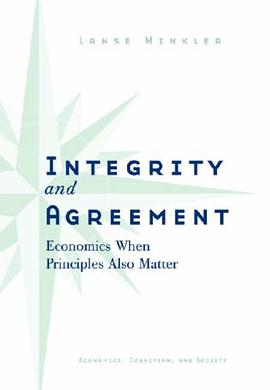
"Two impressive features of this book are its clarity of purpose and the breadth of disciplinary resources to which it appeals."---Geoffrey Brennan, Professor of Economics, Australian National University"Facing massive evidence that people do not act generally as self-regarding payoff maximizers, economists have become increasingly interested in issues of cooperation, altruism, identity, and morality. Lanse Minkler's contribution is particularly important because of his powerful argument that the evidence of cooperation cannot be explained adequately by a more complicated preference function. A disposition for honesty is not simply a matter of preference---it is an issue of personal integrity, identity, and commitment. This has major implications. In particular we have to reconstruct the theory of the firm from first principles. No economist committed to the pursuit of truth should ignore this volume."---Geoffrey Hodgson, Research Professor in Business Studies, University of Hertfordshire, United Kingdom, and Editor in Chief of the "Journal of Institutional Economics""This is an interesting account of the role of integrity---preference-integrity and commitment-integrity---on economic behavior. While drawing knowledge from traditional subfields of economics, it also includes insights gleaned from psychology and philosophy, showing their effects in varied areas such as political behavior, the employment relation, religion, and human rights. In this exciting volume Lanse Minkler does an excellent job of incorporating various newer concepts of fairness and integrity into economic analysis."---Ernst Fehr, Professor and Head of the Chair of Microeconomics and Experimental Economic Research and Director of the Institute for Empirical Research in Economics, University of ZurichSocial scientists who treat humans as rational beings driven exclusively by self-interest ignore a key factor shaping human behavior: the influence of moral principles. Starting with the elementary principle "lying is wrong," economic theorist Lanse Minkler examines the ways in which a sense of morality guides real-life decision making.Whether one feels committed to specific or general moral principles, Minkler explains, integrity demands consistently acting on that commitment. Because truthfulness is the most basic moral principle, integrity means honesty. And honesty extends beyond truth-telling. It requires good faith when entering an agreement and then standing by one's word. From this premise, Minkler explores the implications of integrity for contracts between buyers and sellers and understandings between employers and employees. He also finds a role for integrity in an individual's religious vows, an elected official's accountability to constituents, and a community's obligation to human rights."Integrity and Agreement" reintroduces morality as a factor for economists, sociologists, psychologists, and political scientists to consider in their efforts to comprehend human behavior.Lanse Minkler is Associate Professor of Economics at the University of Connecticut.
作者简介
目录信息
读后感
用户评价
这本小说读得我心潮澎湃,作者的笔力之雄健,简直像是把读者的灵魂也卷入了那个纷繁复杂的世界。故事的开端,主角们在那个古老城市的迷雾中艰难求生,每一个决定都似乎被无形的力量所牵引。我特别喜欢作者对于环境氛围的描绘,那种压抑又带着一丝神秘的色彩,让人仿佛能闻到潮湿空气中泥土和腐朽木头的气味。主角的内心挣扎刻画得入木三分,他对于“正确”与“生存”之间界限的模糊探寻,让人不禁反思我们自身在面对道德困境时的真实反应。尤其是在第三章,那场突如其来的暴风雨,不仅仅是自然现象的展现,更是主角内心风暴的外化,节奏的把控简直是大师级的。我常常在想,如果是我处于那种绝境,是否能像他一样坚持心中的那一点微弱的光亮。情节的推进并非一蹴而就,而是充满了曲折和反转,每一次以为接近真相的时候,总有更深的迷雾笼罩而来。我为那些为了心中的信念而付出的牺牲感到惋惜,也为那些在黑暗中仍能相互扶持的友谊而感动落泪。这本书不仅仅是一个故事,更像是一面映照人性的镜子,让人在阅读中不断地审视自我。
从整体阅读体验上来说,这本书更像是一部宏大的交响乐而非简单的独奏曲。每一个章节,每一个视角人物的切换,都像是一个乐章的引入或转调,它们共同构建了一个立体且多声部的叙事空间。作者对“信任”这一主题的探讨是全方位的,它不仅仅局限于人与人之间,还延伸到了人对制度、对历史记录,乃至对自己直觉的信任。我在阅读过程中,不断地被引导去质疑那些表面上看来不可动摇的“事实”。我喜欢作者在处理群体心理学方面的描写,那种无名大众在恐惧和希望驱动下的集体行为,被描绘得既有说服力又充满警示意味。这本书的高潮部分处理得极其巧妙,它没有采用好莱坞式的爆炸场面,而是将最终的对决安排在一场极其私密、情感张力爆棚的审问或对话中,这种内在的爆发比任何外部的动作场面都更具毁灭性。读完合上书本时,我感到的是一种深刻的疲惫,那不是因为情节复杂,而是因为我的心神完全投入了进去,与书中的角色们一同经历了漫长而艰辛的旅程。这是一次挑战自我认知极限的阅读体验。
说实话,初读这本书的时候,我差点被那些密集的、几乎是百科全书式的背景知识给劝退了。它不像很多主流小说那样,用简单的语言迅速抓住读者的注意力,而是要求你全神贯注,甚至需要准备一个人物关系图谱才能勉强跟上。然而,一旦你穿过了最初的“知识壁垒”,那种沉浸感就会像涨潮的海水一样,将你牢牢吸住。作者在构建这个世界观时,展现了惊人的想象力,但这种想象力又被严密的逻辑框架所约束,使得整个世界观显得无比真实可信。我最喜欢的地方在于,作者没有将任何一个角色简单地脸谱化,即便是看起来最邪恶的反派,其动机和行为逻辑也能在某个黑暗的角落里找到合理的解释。这使得整个冲突的张力变得极其微妙和深刻——你很难明确地为任何一方站队,因为每个人都在自己的立场上,用尽全力去捍卫他们认为必须捍卫的东西。阅读过程更像是一场智力上的攀登,每征服一个难点,都会带来巨大的成就感。这本书对读者的耐心和专注力提出了很高的要求,但回报是丰厚的。
这本书的叙事结构精妙得令人拍案叫绝,它采取了一种非线性的叙事手法,将过去、现在与一些近乎预言的片段巧妙地编织在一起,读起来像是在解一个极其复杂的古老谜题。我花了很大的精力去梳理那些错综复杂的人物关系和历史背景,每一个闪回都像是拼图上的一块关键碎片。作者对于细节的把握达到了偏执的程度,无论是那个传说中已失落文明的符号学解析,还是对某个特定时代服饰材料的描述,都显示出作者深厚的学术功底和严谨的治学态度。我尤其欣赏作者在对话中运用的那种古典韵味,那些对话掷地有声,充满了哲思,绝非现代小说中常见的轻佻浮躁。随着阅读的深入,我逐渐意识到,这个故事的核心似乎并不在于“谁赢了”或者“谁输了”,而在于“如何记忆”和“如何传承”。那种跨越了数代人的秘密和责任,沉甸甸地压在每一个主要角色的肩上。读完之后,我甚至想去查阅一些相关的历史文献,试图去验证故事中那些虚构事件背后的历史原型。这绝对是一部需要反复品读,并且值得做笔记的书。
这本书的文字风格,说实话,非常有辨识度,带着一种冷峻的、近乎诗意的疏离感。作者似乎很少使用情绪外露的词汇,而是倾向于用精准、克制的笔触去描绘人物的内心波澜,这种“不动声色的力量”非常震撼。举个例子,当主角经历巨大创伤时,作者没有大肆渲染哭泣或呐喊,而是用了大段篇幅描写窗外光影的变化和手中茶水的温度,反而将那种深沉的痛苦烘托到了极致。我感觉作者的节奏控制得极好,那些重要的转折点总是出现在你最放松警惕的时候,像是一次精准的外科手术,切开了故事的表象,露出了核心的组织。我发现自己常常会不自觉地停下来,去细细琢磨某一个句子的措辞,那种韵律感和精准性,简直就是语言的艺术品。更难得的是,在如此精致的文笔下,故事的核心主题——关于承诺与背叛的永恒辩证法——却始终清晰可见,没有丝毫被华丽辞藻所掩盖。它像一件打磨光滑的黑曜石,沉重、冰冷,却闪耀着犀利的光芒。