
具体描述
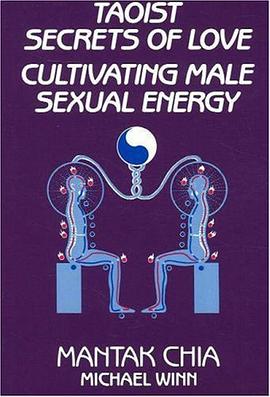
Mantak Chia reveals for the first time to the general public, the ancient sexual secrets of the Taoist sages. These secrets enable men to conserve and transform sexual energy through its circulation in the Microcosmic Orbit, invigorating and rejuvenating the bodys vital functions. Hidden for centuries, these esoteric techniques and principles make the process of linking sexual energy and transcendent states of consciousness accessible to the reader. This revolutionary and definitive book teaches: Higher Taoist practices for alchemical transmutation of body, mind and spirit; The secret of achieving and maintaining full sexual potency; The Taoist "valley orgasm" -- Pathway to higher bliss; How to conserve and store sperm in the body; The exchange and balancing of male and female energies, within the body and with one's partner; How this practice can fuel higher achievement in career and sports.
作者简介
Mantak Chia,was born in Thailand泰国
on April 4,1944. When he was six or seven years of age he learned to
"sit and still the mind" from Buddhist monks while on a summer
vacation. This is not to say that he was passive and quiet as a child.
In fact, he excelled in track and field events during his grammar
school days in Hong Kong. It was during that time that he learned
the traditional Thai Boxing and met Master Lu, who taught him Tai
Chi Chuan. Shortly thereafter, Master Lu introduced him to
Aikido, Yoga and more Tai Chi. His knowledge of esoteric practice
did not begin, however, until he was eighteen and he had returned to
Thailand. It was at that time that a senior classmate, Cheng Sue Sue,
a student of Yi-Eng, taught him the level of Tao Esoteric practice up
to the Reunion of Man and Heaven。
When he was in his twenties, Master Chia studied with Master
Meugi in Singapore, who taught him Kundalini Yoga and the Buddhist Palm. With the Buddhist Palm, he was soon able to eliminate
blockages of flow of life-force in his internal organs and to drive
cold, wet or sick energy out of patients who came to see his Master,
thereby restoring them to health. The young Mantak Chia felt, however, that Kundalini Yoga produced too much heat and could be
dangerous and so he later combined it with elements of Taoist practice, which had cooling effects。
Later, in his twenties, he met and studied with Master Pan
Yu, who had created a synthesis out of Taoist, Buddhist and
Ch'an teaching, and Master Cheng Yao-Lung, who had also created a new system by combining Thai Boxing and Kung Fu. From
Master Cheng Yao-Lung, he learned the Shao-Lin secret method
of internal power as well as the Iron Shirt method called "Cleansing the Marrow and Renewal of the Tendon". From Master Pan
Yu, he learned a variation of Kundalini and the "steel body", a
technique that is said to keep the body from decay. Master Pan Yu
still lives and practices in Hong Kong, where he treats patients by
transmitting his life-force to them. To better understand the
mechanism behind the healing energy, Chia also studied Western
medical science and anatomy for two years.。
Yet, with all of these achievements, Master Chia was the manager of the Gestetner Company in Thailand, was in charge of sales
of offset machines and was well acquainted with the working of
the company's copying and printing machines. He may well be the
only Taoist master in the world with a computer in his living room.
He is also married and has a son. His wife Maneewan works as a
medical technician. He is, in short, living proof that his practice is
very much down-to-earth, striving to enhance everyday life and
not requiring retreat from society to a hermit's life.
The main thrust of Chia's intention is to strip away the mysticism, the mumbo-jumbo, the powers vested in the Guru, the reliance on things-other-worldly or magical. He seeks to present, instead, a fully predictable working model that might be considered
as a scientific means of dealing with energy systems. In time, he
hopes this will lead to technological developments that might serve
to simplify or speed the means whereby such progress might be
made. It is with such hopes that he beckons members of the
medical community to investigate what he has to offer. There are
already physicians and lawyers and computer programmers, who
have experienced, first hand, the benefits that Master Chia's methods provide. It is up to them and others in the scientific community to join Master Chia in his lifetime task of bridging the gap between reason and spirit, mind and body, science and religion.
目录信息
读后感
好吧,英文版的也找到了http://www.holybooks.com/wp-content/uploads/Taoist-Secrets-of-Love-Cultivating-Male-Sexual-Energy.pdf
可以直接搜索锁龙功。有大小两部功。 其实应该是单人练习的。 单人练习好处有二 第一自如的控制不射精。 第二增强性功能。 首先做个试验就能明白,射精的时候摁住阴囊后的部位,尽量往后摁,古人也说过太靠前会进入膀胱,和射出来差别不大。然后就会少射出精液。 而所谓的单人...
[http://krishnamurti.abundanthope.org/index_htm_files/Taoist-Secrets-of-Love-Cultivating-Male-Sexual-Energy.pdf] © 1984 by Mantak & Maneewan Chia All Rights Reserved No part of this book may be reproduced by any mechanical, photographic or electronic...
好吧,英文版的也找到了http://www.holybooks.com/wp-content/uploads/Taoist-Secrets-of-Love-Cultivating-Male-Sexual-Energy.pdf
可以直接搜索锁龙功。有大小两部功。 其实应该是单人练习的。 单人练习好处有二 第一自如的控制不射精。 第二增强性功能。 首先做个试验就能明白,射精的时候摁住阴囊后的部位,尽量往后摁,古人也说过太靠前会进入膀胱,和射出来差别不大。然后就会少射出精液。 而所谓的单人...
用户评价
这本书,姑且称之为《山海间的哲思》,其最大的特点在于它那种近乎“原始”的力量感。作者似乎摒弃了一切现代的修饰和学院派的腔调,直接从大自然最基本的元素——山川、河流、风暴——中提炼出关于生存法则的洞见。读起来有一种非常粗粝、踏实的感觉,完全不像市面上那些空谈概念的书籍。书中对“坚韧”的定义让我印象深刻,它不是盲目地抵抗,而是在面对不可抗拒的力量时,学会如何“弯曲而不折断”。我发现,作者在论述自然法则与人类社会互动时,总是能找到非常恰当的地理学证据来佐证他的观点,这使得整本书的说服力大大增强。例如,他对比了受季风影响的文明和受海洋影响的文明在集体性格上的差异,分析得入木三分。对于那些厌倦了室内理论、渴望与世界进行更直接、更本质对话的读者来说,这本书绝对是不可多得的精神食粮,它提醒我们,我们身体里流淌的,依然是自然的规律。
坦白说,我本来对《星辰下的契约》这类带有神秘色彩的书籍持保留态度,但这本书彻底颠覆了我的看法。它的写作风格是一种高度融合了历史考据与个人体验的混合体,使得那些听起来天方夜谭的古老知识,在作者的笔下变得有血有肉,可信度极高。作者似乎花了大量精力去追踪一些失落的文本线索,并通过自己的实践去验证那些理论。这本书最吸引我的地方在于,它没有把“力量”描绘成一种外在的攫取,而是侧重于“连接”和“共振”。它探讨了人类与周围环境之间潜在的、未被现代科学完全探明的能量交换网络。书中对于“意图的塑造”一章的描述,既有仪式感,又不失科学的严谨性,探讨了如何通过高度集中的意志力去影响现实的微小层面。读完后,我感觉自己对这个世界的运作机制有了一种全新的、更为广阔的视角,它不再是单纯的物理学范畴,而是包含了某种深层次的、相互依存的智慧结构。
我最近翻阅了一本名为《尘世中的静默之音》的书,它给我的感受是极度的“克制与精确”。这本书的作者似乎对语言的运用有着近乎偏执的控制,每一个词汇的摆放都像是经过精密计算的,没有一丝多余的冗余。它主要聚焦于“当下”的体验,但不是那种喧嚣的、感官刺激下的“当下”,而是内在意识流趋于平静时的那一瞬间捕获。书中大量的篇幅都致力于解释如何通过呼吸和专注力的训练,将心灵从“时间线”的牵引中解脱出来。我尤其欣赏作者对“聆听”的重新定义,他认为真正的聆听,是放下所有预设立场和判断,仅仅作为接收器而存在。这种对细节的极致打磨,使得全书的阅读体验非常独特,它要求读者也必须以同样的专注度去对待每一个句子,否则很容易错过那些深藏在词句间的精妙之处。这本书更像是一部操作手册,指导你如何精修你自己的“内在仪器”。
读完《时间的河流与岸边的灯塔》后,我的心情久久不能平静。这本书的叙事风格极其飘逸,充满了诗意的隐喻,仿佛作者不是在写理论,而是在编织一幅流动的画卷。它不像那种讲究逻辑严谨的学术著作,它更像是对生命本质的一种感性探索。我尤其被其中对“流变”概念的描绘所打动,作者用大量篇幅去描绘世间万物的不断消逝与重生,那种略带忧伤却又充满希望的笔调,让我联想到了很多我个人经历过的告别与新生。书中的语言充满了画面感,比如描述“顿悟”的瞬间,作者用“如同深海之光穿透至暗的岩层”来形容,这种修辞手法极大地增强了文字的感染力。虽然有些人可能会觉得它的论证过程不够直白清晰,但我恰恰欣赏这种朦胧的美感——它迫使读者必须调动自己的想象力和内在体验去填补那些留白之处。这是一本需要你静下心来,在光线柔和的角落,慢慢品味的“心灵茶饮”,喝得急了,反而会错过它最醇厚的滋味。
这本新书,名为《古老智慧的现代回响》,真的给我带来了不少启发。我一直对那种跨越时空的哲学思辨很感兴趣,而作者在这本书里,似乎成功地捕捉到了一种微妙的平衡——既尊重那些流传已久的思想精髓,又用非常现代、贴近生活的语言去阐释。比如,书中探讨“无为”的时候,并没有把它描绘成一种消极的退缩,反而更像是一种高效的、顺应自然节奏的工作方法论。我特别喜欢作者在描述“知足常乐”那一章时所用的类比,那简直就像是把我从日常的焦虑中一下子抽离出来,让我看到了另一种更从容的生活可能性。书的结构安排得也很有匠心,章节之间的过渡自然流畅,每一章都像是一个独立的思考单元,但当你合上书本时,又会发现它们共同构建了一个宏大而完整的世界观。我花了很长时间去消化其中关于“内在和谐”的部分,那部分的内容深入浅出,引人深思,特别是它对于如何处理人际关系中的摩擦,提出了不同于主流成功学的那种“柔性”策略,非常实用,让人耳目一新。这本书不像是那种灌输教条的指南,更像是一位智者在你耳边轻声细语的引导,让你自己去发现答案,而不是被动接受。
逻辑异常混乱。有些观点很想问问作者你是认真的吗,但是又因为好奇心读了下去。
逻辑异常混乱。有些观点很想问问作者你是认真的吗,但是又因为好奇心读了下去。
逻辑异常混乱。有些观点很想问问作者你是认真的吗,但是又因为好奇心读了下去。
逻辑异常混乱。有些观点很想问问作者你是认真的吗,但是又因为好奇心读了下去。
逻辑异常混乱。有些观点很想问问作者你是认真的吗,但是又因为好奇心读了下去。