
具体描述
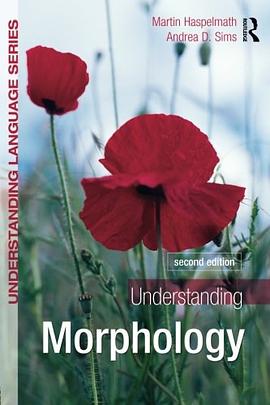
This new edition of Understanding Morphology has been fully revised in line with the latest research. It now includes 'big picture' questions to highlight central themes in morphology, as well as research exercises for each chapter. Understanding Morphology presents an introduction to the study of word structure that starts at the very beginning. Assuming no knowledge of the field of morphology on the part of the reader, the book presents a broad range of morphological phenomena from a wide variety of languages. Starting with the core areas of inflection and derivation, the book presents the interfaces between morphology and syntax and between morphology and phonology. The synchronic study of word structure is covered, as are the phenomena of diachronic change, such as analogy and grammaticalization. Theories are presented clearly in accessible language with the main purpose of shedding light on the data, rather than as a goal in themselves. The authors consistently draw on the best research available, thus utilizing and discussing both functionalist and generative theoretical approaches. Each chapter includes a summary, suggestions for further reading, and exercises. As such this is the ideal book for both beginning students of linguistics, or anyone in a related discipline looking for a first introduction to morphology.
作者简介
Martin Haspelmath(Max Planck Institute for Evolutionary Anthropology)
Andrea D. Sims(The Ohio State University)
目录信息
Preface to the first edition xiii
Abbreviations xv
1 Introduction 1
1.1 What is morphology? 1
1.2 Morphology in different languages 4
1.3 The goals of morphological research 6
1.4 A brief user’s guide to this book 9
Summary of Chapter 1 11
Further reading 11
Comprehension exercises 12
2 Basic concepts 14
2.1 Lexemes and word-forms 15
2.2 Affixes, bases and roots 19
2.3 Morphemes and allomorphs 22
Summary of Chapter 2 27
Appendix. Morpheme-by-morpheme glosses 27
Comprehension exercises 29
Exploratory exercise 30
3 Rules 33
3.1 Morphological patterns 34
3.1.1 Affixation and compounding 34
3.1.2 Base modification 35
3.1.3 Reduplication 38
3.1.4 Conversion 39
3.1.5 Outside the realm of morphology 40
viâ•… C O N T E N T S
3.2 Two approaches to morphological rules 40
3.2.1 The morpheme-based model 41
3.2.2 The word-based model 46
Summary of Chapter 3 54
Further reading 54
Comprehension exercises 55
Exploratory exercise 56
4 Lexicon 60
4.1 A morpheme lexicon? 61
4.2 A strict word-form lexicon? 66
4.3 Reconciling word-forms and morphemes 70
Summary of Chapter 4 75
Further reading 75
Comprehension exercises 76
Exploratory exercise 77
5 Inflection and derivation 81
5.1 Inflectional values 81
5.2 Derivational meanings 86
5.2.1 Derived nouns 87
5.2.2 Derived verbs 88
5.2.3 Derived adjectives 89
5.3 Properties of inflection and derivation 89
5.3.1 Relevance to the syntax 90
5.3.2 Obligatoriness 92
5.3.3 Limitations on application 93
5.3.4 Same concept as base 93
5.3.5 Abstractness 94
5.3.6 Meaning compositionality 94
5.3.7 Position relative to base 95
5.3.8 Base allomorphy 96
5.3.9 Word-class change 96
5.3.10 Cumulative expression 98
5.3.11 Iteration 98
5.4 Dichotomy or continuum? 98
5.4.1 Inherent and contextual inflection 100
5.5 Inflection, derivation and the syntax-morphology interface 102
5.5.1 The dichotomy approach and split morphology 102
5.5.2 The continuum approach and single-component
architecture 105
Summary of Chapter 5 106
Appendix. Notation conventions for inflectional values 107
C O N T E N T S â•… vii
Further reading 109
Comprehension exercises 110
Exploratory exercise 110
6 Productivity 114
6.1 Speakers’ knowledge of productivity 114
6.2 Productivity, creativity and gradience 116
6.3 Restrictions on word-formation rules 117
6.3.1 Phonological restrictions 118
6.3.2 Semantic restrictions 119
6.3.3 Pragmatic restrictions 120
6.3.4 Morphological restrictions 120
6.3.5 Borrowed vocabulary strata 121
6.4 Productivity and the lexicon 122
6.4.1 Processing restrictions 123
6.4.2 Synonymy blocking 125
6.4.3 Productivity and analogy 127
6.5 Measuring productivity 129
Summary of Chapter 6 131
Further reading 132
Comprehension exercises 133
Exploratory exercise 134
7 Morphological trees 137
7.1 Compounding types 137
7.2 Hierarchical structure in compounds 142
7.3 Hierarchical structure in derived lexemes 144
7.4 Parallels between syntax and morphology? 147
Summary of Chapter 7 150
Further reading 150
Comprehension exercises 151
Exploratory exercise 152
8 Inflectional paradigms 156
8.1 Syntagmatic and paradigmatic relations in morphology 156
8.2 Inflection classes 158
8.2.1 Inflection class assignment 160
8.2.2 Relationship to gender 162
8.2.3 Inflection classes and productivity 163
8.3 Paradigmatic relations and inflection class shift 165
8.4 Inheritance hierarchies 167
8.5 Stems and Priscianic formation 172
viiiâ•… C O N T E N T S
8.6 Syncretism 174
8.6.1 Systematic versus accidental inflectional homonymy 174
8.6.2 Underspecification 176
8.6.3 Rules of referral 179
8.7 More form-meaning mismatches 180
8.7.1 Defectiveness 180
8.7.2 Deponency 182
8.8 Periphrasis 183
Summary of Chapter 8 184
Further reading 184
Comprehension exercises 185
Exploratory exercise 187
9 Words and phrases 189
9.1 Compounds versus phrases 190
9.2 Free forms versus bound forms 196
9.3 Clitics versus affixes 197
9.4 Lexical integrity 203
Summary of Chapter 9 206
Further reading 207
Comprehension exercises 207
Exploratory exercise 209
10 Morphophonology 211
10.1 Two types of alternations 211
10.2 The productivity of morphophonological alternations 217
10.3 The diachrony of morphophonological alternations 220
10.4 Morphophonology as phonology 222
10.5 Morphophonology as morphology 228
Summary of Chapter 10 231
Further reading 231
Comprehension exercises 232
11 Morphology and valence 234
11.1 Valence-changing operations 234
11.1.1 Semantic valence and syntactic valence (argument
structure and function structure) 234
11.1.2 Agent-backgrounding operations 237
11.1.3 Patient-backgrounding operations 240
11.1.4 Agent-adding operations: causatives 241
11.1.5 Object-creating operations: applicatives 242
11.1.6 General properties of valence-changing operations 243
C O N T E N T S â•… ix
11.2 Valence in compounding 245
11.2.1 Noun incorporation 245
11.2.2 V–V compound verbs 247
11.2.3 Synthetic nominal compounds 249
11.3 Transpositional derivation 253
11.3.1 Transposition and argument inheritance 253
11.3.2 Action nouns (V Æ N) 254
11.3.3 Agent nouns (V Æ N) and deverbal adjectives (V Æ A) 255
11.3.4 Deadjectival transposition (A Æ N, A Æ V) 256
11.4 Transpositional inflection 257
Summary of Chapter 11 262
Further reading 263
Comprehension exercises 263
12 Frequency effects in morphology 265
12.1 Asymmetries in inflectional values 265
12.1.1 Frequent and rare values 265
12.1.2 The correlation between frequency and shortness 267
12.1.3 The correlation between frequency and differentiation 268
12.1.4 Local frequency reversals 270
12.1.5 Explaining the correlations 272
12.2 The direction of analogical levelling 273
12.3 Frequency and irregularity 274
Summary of Chapter 12 276
Further reading 277
Comprehension exercises 277
Exploratory exercise 278
Key to comprehension exercises 281
References 301
Glossary of technical terms 318
Language index 347
Subject index 357
· · · · · · (收起)
读后感
总体来看,方法论上以functionalism为主,但并不排斥formalism的做法。虽然从formal那边借来不少理论当靶子…… Summary of Chapter 1 概论 形态学可以定义为是一门研究语素组合构成词汇的学问。但另一个多少更加抽象些的定义(研究词汇形式和意义系统共变)被证明会更令人满...
总体来看,方法论上以functionalism为主,但并不排斥formalism的做法。虽然从formal那边借来不少理论当靶子…… Summary of Chapter 1 概论 形态学可以定义为是一门研究语素组合构成词汇的学问。但另一个多少更加抽象些的定义(研究词汇形式和意义系统共变)被证明会更令人满...
总体来看,方法论上以functionalism为主,但并不排斥formalism的做法。虽然从formal那边借来不少理论当靶子…… Summary of Chapter 1 概论 形态学可以定义为是一门研究语素组合构成词汇的学问。但另一个多少更加抽象些的定义(研究词汇形式和意义系统共变)被证明会更令人满...
总体来看,方法论上以functionalism为主,但并不排斥formalism的做法。虽然从formal那边借来不少理论当靶子…… Summary of Chapter 1 概论 形态学可以定义为是一门研究语素组合构成词汇的学问。但另一个多少更加抽象些的定义(研究词汇形式和意义系统共变)被证明会更令人满...
总体来看,方法论上以functionalism为主,但并不排斥formalism的做法。虽然从formal那边借来不少理论当靶子…… Summary of Chapter 1 概论 形态学可以定义为是一门研究语素组合构成词汇的学问。但另一个多少更加抽象些的定义(研究词汇形式和意义系统共变)被证明会更令人满...
用户评价
这本书的案例选择简直是教科书级别的精准和广博,它完全摆脱了那种只盯着印欧语系打转的局限性。我惊喜地发现,作者花了相当大的篇幅去解析一些在西方语言学界相对“小众”但结构极其有趣的语种,比如,他们对于芬兰语的黏着现象的描述,那种多达十几层形态素的堆叠,仅仅通过清晰的标注和对比,就将一个复杂的黏着语的内在逻辑展示得淋漓尽致。还有关于阿兹特克语中复杂的动词前缀和中缀系统的分析,那种对语素边界的细致划分,读起来简直像是在做精密的考古工作,每一个标记都承载着重要的语法信息。我尤其欣赏作者在处理跨语言对比时所展现出的那种批判性视角,他们不仅仅是罗列现象,更是在比较不同语言在解决“如何表达意义”这个问题上的根本策略差异。这使得这本书远超出了任何一本单纯的“形态学概论”的范畴,它更像是一份世界语言形态结构的全景地图,让人对人类语言多样性的惊人创造力肃然起敬。
我必须承认,我是在一个相当大的知识盲区里接触到这本书的,那时我对语言的内部结构认知还停留在比较基础的层面,对于形态学这个领域,我更多的是一种敬畏和不解并存的复杂情绪。这本书的叙述风格,可以说是一场从温和引导到层层递进的智力探险。初期,作者似乎非常体贴地顾及读者的接受能力,用大量生动的、取自日常生活的高频词汇来解释那些抽象的规则,比如他们如何巧妙地将“不规则变化”归类到更深层的历史音变规律中,让我这个门外汉都感到豁然开朗,仿佛拨开云雾见青天。然而,随着章节的深入,特别是讨论到屈折变化和派生过程的边界问题时,语言的复杂性便如海啸般袭来。作者并没有回避那些晦涩难懂的理论模型,比如乔姆斯基早期的一些生成理论框架在形态学中的应用,那些图表和公式的出现,虽然让阅读的难度陡增,但也精确地展示了该领域前沿研究的深度。我常常需要在阅读完一节后,合上书本,在脑海中反复构建那个理论的“骨架”,才能勉强跟上作者的逻辑飞跃。这种强迫读者主动参与思考的写作方式,虽然耗费精力,但带来的知识内化效果是无可比拟的,它不是在“喂”你知识,而是在“训练”你的思维结构。
这本书的价值,或许不在于它能让你在一夜之间成为形态学专家,而在于它为你的思维搭建了一个极其坚固的理论脚手架。我发现,自从读完它,我在处理任何新的语言现象时,潜意识里都会自动调动起书中的那些分析工具——我会本能地去寻找词的最小意义单位、去辨识其边界、去判断是屈折还是派生。它的影响是深远的,甚至蔓延到了我对其他符号系统的理解上。比如,当我看到复杂的编程语言的语法结构时,我都能从中隐约捕捉到一些形态学上的影子。这本书的伟大之处在于它的“普适性”,它传授的不是特定语言的知识,而是分析任何语言结构的底层逻辑和方法论。对于任何一个严肃对待语言现象的研究者来说,这本书提供了一个近乎完美的、可以反复参阅的基准线,它让你明白,形态学的探索永无止境,每一个新的发现都可能推翻既有的藩篱。它不是一本读完就可以束之高阁的书,而是一本需要伴随你整个学术生涯的“工具箱”。
这本书的封面设计简直是视觉上的享受,那种沉稳而又不失深邃的蓝色调,配上那个仿佛蕴含着无数语言奥秘的烫金字体,让人一眼就能感受到它非同一般的学术分量。我是在一家老旧的书店角落里偶然发现它的,当时我正在寻找一些关于认知语言学的入门读物,结果却被它硬朗的装帧和那一抹低调的奢华感吸引住了。初翻开扉页,里面印刷的质量就让我赞叹不已,纸张的厚度恰到好处,墨迹清晰锐利,即便是长时间阅读,眼睛也不会感到疲劳。我记得当时翻到目录时,内心“咯噔”了一下,因为它涉及的领域似乎比我预想的要深奥得多,那种排列得井井有条的章节结构,预示着作者在梳理复杂概念时所下的苦功。特别是前言部分,作者没有用那些空洞的套话来堆砌篇幅,而是非常直白地指出了当前形态学研究中的几个核心痛点,那种坦诚和挑战现状的勇气,瞬间点燃了我继续探索下去的欲望。这本书的排版也极为考究,不是那种密密麻麻的文字堆砌,而是留有足够的边距和行间距,这使得那些复杂的词根、词缀的例子在视觉上得以充分呼吸,即便是那些带有大量符号标记的专业术语,也能让人一目了然,这对于我这种需要反复查阅和对比的读者来说,简直是福音。
读完这本书,我最大的感受是,它彻底重塑了我对“词”的理解。以前我总觉得一个词就是一个不可分割的意义单元,顶多是词根加上几个大家都能看懂的前缀后缀。这本书像一把锋利的手术刀,将这些看似坚固的单元层层剖开,揭示了它们内部精妙的组织结构和运作机制。特别是关于形态和句法交互的部分,那些关于词缀如何影响句子结构选择的论述,让我开始意识到形态学绝不是语言学的“末梢神经”,它深刻地影响着整个句子的意义生成过程。我记得有一个章节详细讨论了“零形”形态素的概念,这种“看不见但存在着”的结构单位,对于理解某些语言中信息如何被编码,起到了关键的解释作用。这种对隐藏结构、对“未被言说之物”的探索,让我联想到了哲学上的“潜能”与“实现”的关系。它训练你去关注那些微小的、容易被忽略的语素变化,因为正是这些微小的变化,决定了整个词汇表达的完整性和精确性,这种细节的敏感度是任何日常语言使用中都难以培养的。
男神的书读起来通常就是轻松加愉快啊
为复试祈福
为复试祈福
课本。真的好难读,好难懂= =导致我对morphology无感的原因之一。。。。。如果本科最后一个学期跟Mark Aronoff 上这门课的话会好很多吧TVT
簡潔清晰,是很好的入門教材。另外,章節後面的Exploratory Exercise都很有意思。