
具体描述
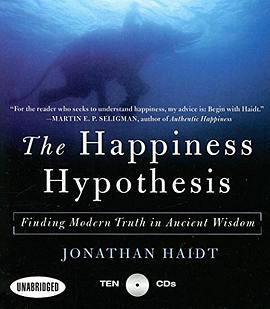
This is a book about ten great ideas.Each chapter is an attempt to savor one idea that has been discovered by several of the world's civilizations - to question it scientifically, and to extract from it the lessons that apply to our modern lives.Jonathan Haidt skillfully combines two genres#151;philosophical wisdom and scientific research#151;delighting the reader with surprising insights. He explains, for example, why we have such difficulty controlling ourselves and sticking to our plans; why no achievement brings lasting happiness, yet a few changes in your life can have profound effects, and why even confirmed atheists experience spiritual elevation. In a stunning final chapter, Haidt addresses the grand question "How can I live a meaningful life?," offering an original answer that draws on the rich inspiration of both philosophy and science.
作者简介
Jonathan Haidt is the Thomas Cooley Professor of Ethical Leadership at New York University's Stern School of Business. He received his Ph.D. in social psychology from the University of Pennsylvania in 1992 and then did post-doctoral research at the University of Chicago and in Orissa, India. He taught at the University of Virginia for 16 years, where he conducted the research reported in The Righteous Mind.
目录信息
读后感
1 象与骑象人的基本原理:大象(情绪)负责绝大部分工作,而骑象人(理性)仅仅扮演着顾问或者仆人的角色,只有在充满情绪的大脑运作顺畅时,我们的理性才得以运转。 象的层次:身体、右脑、非理性、潜意识、自动化、难于控制 骑象人的层次:心灵、左脑、理性、意识、控制化 ...
人类需要用比喻来思考。 我们对新事物或者复杂事物的理解,是借助于已知事物与前者之间的关联。我们将人生比作旅程,便知道我们要选好方向,了解地形,找到旅伴。那么,关于看不见的"心理",最好的避雨是什么呢? 佛陀把人的心理比喻为野生大象: 我此过去心,任意随所欲,...
不错的书。 积极心理学,有别于成功学的口号和忽悠,从人类心理机制的角度阐述如何获得快乐和人生意义。 读后比较有启发,很多地方可以和自己的生活对照。蓦然回首,才发现走过了很多弯路。而这些弯路,已经有无数人重复,并且早已总结出应对之策。心理学就是这样一个很好的工...
开始看的时候略显枯燥~~ 对我这个只是拿心理学当喜好而没认真钻研过的人来说,陌生的名词太多了~~所以看的有点晕,有点累,有点迷迷糊糊~ 不过个别可以看的很懂的章节,看完后真的是受益匪浅。 里面举的几个例子也是相当的好。 比如正方形和空间的例子~等等~~ 我相信这本...