
具体描述
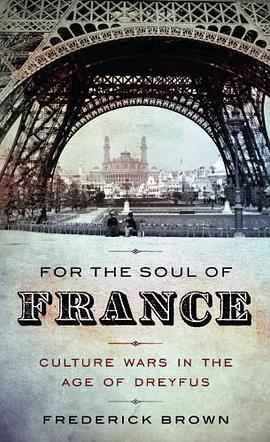
Frederick Brown, cultural historian, author of acclaimed biographies of Émile Zola (“Magnificent”— The New Yorker ) and Flaubert (“Splendid . . . Intellectually nuanced, exquisitely written”— The New Republic ) now gives us an ambitious, far-reaching book—a perfect joining of subject and writer: a portrait of fin-de-siècle France.
He writes about the forces that led up to the twilight years of the nineteenth century when France, defeated by Prussia in the Franco-Prussian War of 1870–71, was forced to cede the border states of Alsace and Lorraine, and of the resulting civil war, waged without restraint, that toppled Napoléon III, crushed the Paris Commune, and provoked a dangerous nationalism that gripped the Republic.
The author describes how postwar France, a nation splintered in the face of humiliation by the foreigner—Prussia—dissolved into two cultural factions: moderates, proponents of a secular state (“Clericalism, there is the enemy!”), and reactionaries, who saw their ideal nation—militant, Catholic, royalist—embodied by Joan of Arc, with their message, that France had suffered its defeat in 1871 for having betrayed its true faith. A bitter debate took hold of the heart and soul of the country, framed by the vision of “science” and “technological advancement” versus “supernatural intervention.”
Brown shows us how Paris’s most iconic monuments that rose up during those years bear witness to the passionate decades-long quarrel. At one end of Paris was Gustave Eiffel’s tower, built in iron and more than a thousand feet tall, the beacon of a forward-looking nation; at Paris’ other end, at the highest point in the city, the basilica of the Sacré-Coeur, atonement for the country’s sins and moral laxity whose punishment was France’s defeat in the war . . .
Brown makes clear that the Dreyfus Affair—the cannonade of the 1890s—can only be understood in light of these converging forces. “The Affair” shaped the character of public debate and informed private life. At stake was the fate of a Republic born during the Franco-Prussian War and reared against bitter opposition.
The losses that abounded during this time—the financial loss suffered by thousands in the crash of the Union Génerale, a bank founded in 1875 to promote Catholic interests with Catholic capital outside the Rothschilds’ sphere of influence, along with the failure of the Panama Canal Company—spurred the partisan press, which blamed both disasters on Jewry.
The author writes how the roiling conflicts that began thirty years before Dreyfus did not end with his exoneration in 1900. Instead they became the festering point that led to France’s surrender to Hitler’s armies in 1940, when the Third Republic fell and the Vichy government replaced it, with Marshal Pétain heralded as the latest incarnation of Joan of Arc, France’s savior . . .
作者简介
目录信息
读后感
用户评价
从结构上看,这本书的骨架搭建得极为坚固,它巧妙地将两条看似平行却最终汇合的叙事线索编织在一起。一条线索专注于宏大的历史进程与政治博弈,充满了权谋与刀光剑影;另一条线索则聚焦于几位核心人物的个人情感纠葛与道德抉择,充满了柔韧的生命力。作者的高明之处在于,他从未让其中一条线索压倒另一条,而是让它们相互渗透、彼此印证。历史的残酷影响着个体的爱情,而个体微小的反抗与牺牲,也常常成为历史转折点上不起眼的催化剂。这种双重视角,极大地丰富了作品的层次感,避免了传统历史小说常见的“史书味”过重或“言情”感太强的问题。每一次历史事件的转折点,都能看到角色们在爱、责任与背叛之间的痛苦拉扯,使得阅读过程充满了智力上的挑战和情感上的共鸣。最终,那种历史的厚重感与人性的光辉交织在一起,让整部作品的格局达到了一个非常高的境界,令人不得不佩服作者对整体布局的掌控能力。
我尤其欣赏作者在处理“时间”这一维度上的手法。它并非简单地按照年表顺序推进,而是巧妙地运用了大量的闪回和预示,使得过去与现在在叙事中不断交织、相互映照。这种非线性叙事结构,让读者在追溯历史根源的同时,也能预感到未来命运的走向,制造出一种宿命般的张力。例如,对一个古老家族徽章的反复描绘,每一次出现,其象征意义都在随着故事的发展而悄然转变,从最初的荣耀象征,到后来的沉重负担,再到最后的释然,这种象征意义的动态演变,是极高明的文学技巧。此外,这本书在探讨“失落”的主题上,达到了一个令人心碎的高度。它不仅仅是关于领土或权力的失去,更是关于记忆的模糊、身份的瓦解,以及那些曾经坚信不疑的价值观在时代更迭中的消亡。这种对“精神废墟”的深沉描绘,带来的情感冲击力,远超对具体事件的描述,它触及了人类对于“存在”的终极焦虑。
读完这本书,我最大的感受是作者对那个特定历史时期社会肌理的观察入微,其深度和广度都令人惊叹。它不像许多历史小说那样流于表面的事件堆砌,而是深入到日常生活的肌理之中,挖掘出制度变迁对普通人生活习惯、思维模式乃至语言习惯产生的微妙影响。例如,书中对某一阶层审美趣味的转变、对新兴思潮如何在贵族沙龙和底层酒馆中以不同面貌传播的描写,都极其考究。我特别留意到作者在处理阶级矛盾时的手法,没有采用过于脸谱化的对立,而是展现了不同阶层之间那些既疏离又微妙的相互依存关系。那种隐秘的权力流动、看不见的社会壁垒,在作者的笔下清晰可见。这种对“社会生态”的精细描摹,让我仿佛置身于那个时代,不仅听见了他们的辩论,更闻到了空气中弥漫的灰尘与香水味。更难能可贵的是,作者在描绘这些复杂背景时,依然保持了叙事的流畅性,那些看似冗余的细节,最终都如同精确的齿轮般,推动着情节的向前发展,展现出一种近乎百科全书式的叙事雄心。
这本书的叙事节奏把握得实在精妙,仿佛作者是一位技艺高超的指挥家,将历史的恢弘与人物的细腻情感交织在一起,奏出一曲跌宕起伏的乐章。从开篇主角踏上那片充满未知与诱惑的土地开始,我就被深深吸引住了。那种初入异乡的迷惘、对未知世界的渴望,以及潜藏在心底对自我价值的追寻,都描绘得入木三分。作者没有急于抛出宏大的历史背景,而是通过一个个鲜活的侧面描写,如清晨集市的喧闹、黄昏时分古老石板路的寂静,缓缓地铺陈出时代的底色。人物的内心挣扎更是引人入胜,他们的选择并非黑白分明,而是游走在理想与现实的钢丝之上,每一次抉择都牵动着读者的心弦。尤其欣赏的是,当历史的洪流袭来时,作者并未让人物成为历史的附庸,而是展现了他们在巨大压力下,如何凭借个人的勇气与智慧,去抗争、去适应,甚至去重塑自己的命运。那段关于信仰与忠诚的拷问,读来令人深思,它探讨的不仅仅是特定时期的道德困境,更是贯穿于人类文明史中的永恒命题。那种笔触的细腻,使得那些宏大的历史背景,最终都落脚于个体命运的微观叙事之中,读完后久久不能平静,回味无穷。
这本书的语言风格变化多端,简直是一场文字的盛宴。初看时,它的散文诗般的优美辞藻让人沉醉,那种古典的、略带忧郁的腔调,非常适合描绘那些逝去的辉煌与浪漫。然而,随着故事进入冲突的高潮阶段,文字的节奏骤然加快,变得精准、有力,甚至带着一种近乎新闻报道的冷峻和客观,极大地增强了现场感和冲击力。这种在华丽与朴实之间自如切换的能力,是很多作家难以企及的。而且,作者在角色对话的设计上也独具匠心。每个主要人物的声音都是如此鲜明、独特,他们说话的方式,使用的词汇,甚至停顿的习惯,都精确地反映了他们的教养、地域和当时的处境。你几乎不需要看署名,就能从寥寥数语中分辨出谁是贵族,谁是学者,谁又是饱经风霜的士兵。这种对“声音”的精雕细琢,让人物的立体感大大增强,使得原本复杂的关系网,因为这些鲜明的“人声”而变得清晰易懂。