具体描述
For more than a century missionaries were the main contact points between the Chinese and American peoples. Often frustrated in saving Chinese souls, they nevertheless founded hospitals and colleges, and meanwhile on the American scene they helped form the image of China.
This volume offers views of missionary roles in the United States and in China. Early American Protestant missions moved on from the Near East to the Far East. The second great surge of American missionary expansion in the 1880s was signaled by the formation of more business-like mission boards, by the Student Volunteer Movement to recruit liberal arts college graduates for evangelism abroad, and by the Layman’s Movement to back them up. During the same period in China, missionary journalism was reaching a new Chinese-Christian community, and missionary educational and medical work was building modern institutions of social value for Chinese communities. A few “Christian reformers” emerged in China’s treaty ports, and by the end of the century there was a missionary contribution to the reform movement in general.
By the 1920s missionary and Chinese Christian educators were collaborating in Christian colleges like Yenching University, only to meet eventual disaster as the Nationalist revolution and Japan’s invasion precipitated the great Chinese Communist-led revolution of the 1940s and after. American missions contributed fundamentally both to the revolutionary changes in China and to the American public response to them, although their impact on American policy s less clear.
Fourteen contributors studying both sides of the missionary effort, in China and in America, present case studies that suggest conclusions and themes for research.
作者简介
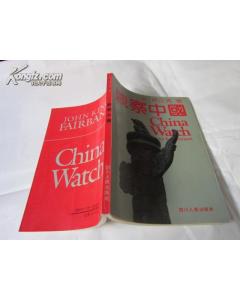
John King Fairbank was Francis Lee Higginson Professor of History and Director of the East Asian Research Center (now the Fairbank Center for Chinese Studies) at Harvard University.
目录信息
I. Protestant Missions in American Expansion
Near East Notes and Far East Queries [James A. Field, Jr.]
Evangelical Logistics: Mission Support and Resources to 1920 [Valentin H. Rabe]
The Student Volunteer Movement and Its Role in China Missions, 1886–1920 [Clifton J. Phillips]
Modernism and Missions: The Liberal Search for an Exportable Christianity, 1875–1935 [William R. Hutchison]
II. Christianity and the Transformation of China
The Theology of American Missionaries in China, 1900–1950 [M. Searle Bates]
Christianity in the Chinese Idiom: Young J. Allen and the Early [Chiao-huih sin-pao], 1868–1870 [Adrian A. Bennett and Kwang-Ching Liu]
Littoral and Hinterland in Nineteenth Century China: The “Christian” Reformers [Paul A. Cohen]
Christianity and Nationalism: The Career of Wu Lei-ch’uan at Yenching University [Philip West]
III. China Mission Images and American Policies
Ends and Means: Missionary Justification of Force in Nineteenth Century China [Stuart Creighton Miller]
Why They Stayed: American Church Politics and Chinese Nationalism in the Twenties [Shirley Stone Garrett]
The Missionary Response to the Nationalist Revolution [Paul A. Varg]
The Missionary Enterprise and Theories of Imperialism [Arthur Schlesinger, Jr.]
Abbreviations
Notes
Glossary
Index
· · · · · · (收起)
读后感
用户评价
读罢全书,我最大的感受是它对于“交流”这一概念的深刻反思。这不仅仅是关于信仰的输入与输出,更是一场关于现代性、权力结构和身份认同的激烈碰撞。作者通过聚焦于中美两国在传教运动中的相互塑造作用,颠覆了那种单向度的“西方影响东方”的刻板印象。美国方面,传教运动如何反过来塑造了美国本土的宗教观、慈善事业乃至对外政策,书中都有细致的铺陈。这种“回流效应”的分析,是许多同类著作中常常被忽略的关键环节。我仿佛看到,在那个全球化的早期阶段,双方是如何在无意识或有意识地改变着彼此的叙事框架和价值体系。文字的节奏感非常强,尤其是在描述重大事件,如条约签订或教案发生时,那种紧迫感和戏剧性,让人不由自主地屏住呼吸,思考历史的偶然性与必然性。
如果说有什么地方让这本书脱颖而出,那便是它对“空间”的独特处理。作者不仅仅关注时间线上的演变,更是将传教站、城市聚居区、乡村边缘地带等地理空间,视为权力运作和文化摩擦发生的载体。他巧妙地将地图学、建筑学的一些概念融入历史叙事,比如讨论在福州或上海的传教站布局如何象征着一种空间上的占有和宣告。这种具象化的描述,让抽象的意识形态冲突变得立体起来。我甚至能想象出那些花园围墙内外的生活图景,感受到空气中弥漫的不同气息。这种对物理环境与社会互动的紧密结合,使得阅读体验极为丰富,不仅仅是知识的积累,更像是一次深度的“现场考察”。这种对地方性的精细把握,无疑提升了作品的史学价值和可读性。
这本书最让我难以忘怀的是其冷静而克制的语调,它成功地在批判与理解之间找到了一个优雅的平衡点。它没有陷入到简单的道德审判中去责难历史人物的对与错,而是致力于解释“为什么”会这样发生。例如,书中对早期传教士们那种近乎狂热的奉献精神,并非用嘲讽的口吻带过,而是尝试去理解在特定的历史和神学背景下,这种精神是如何被激发和维持的。同时,对于中国方面那些复杂的反应,比如在不同时期对西方的欢迎与排斥的摇摆不定,作者也给予了充分的尊重和解释。这种不偏不倚、力求洞察本质的写作态度,使得全书读起来令人信服且回味悠长。它提供了一把理解近代中西关系复杂性的钥匙,其价值远远超出了单一的宗教史范畴,而触及了全球化早期文明互动这一宏大主题。
这本关于传教事业的书简直是一部引人入胜的历史画卷。作者的叙述功力深厚,将19世纪中叶中国社会的复杂图景和西方宗教热情交织在一起,展现得淋漓尽致。我尤其欣赏他对地方抵抗和文化冲突的细致描绘。他没有简单地将中国描绘成一个被动接受的客体,而是深入挖掘了中国士绅、地方精英乃至普通民众在面对这种外来影响时的微妙反应和策略。那些关于医疗、教育和信仰传播的微观故事,使得宏大的历史叙事充满了人性的温度。比如,书中对某位地方官员如何在维护传统与适应新局势之间进行艰难抉择的描述,让我对那个时代的“中间人”产生了极大的同情与理解。这种多视角的叙事策略,使得整本书读起来丝毫没有枯燥的说教感,反倒像是在跟随一位高明的导游,穿梭于历史的迷宫之中,每一步都能发现新的视角和值得深思的细节。那种对细节的执着,让那些遥远的往事仿佛触手可及。
从文献考据的角度来看,这部作品的扎实程度令人称奇。作者显然花费了巨大的精力,将跨越太平洋的档案、私人信件以及早期中文记录进行了细致的交叉验证。我常常惊叹于他如何能在看似矛盾的史料中,提炼出最可靠的脉络。书中对不同教派内部张力的剖析尤为精彩——新教与天主教在传教策略上的分歧,乃至同一教派内部不同差会之间的竞争,都被剥开来看得清清楚楚。这种对组织动力学的洞察,超越了一般的历史回顾,更像是一份社会心理学的案例分析。尤其值得称赞的是,作者并未回避传教士自身在意识形态上的盲点和局限性,反而将其作为分析历史事件发展的重要变量。这使得全书的论证既有力又谦逊,它不为任何一方涂脂抹粉,而是努力还原一个充满张力和复杂性的历史现场,读后让人感到一种思想上的酣畅淋漓。
最后一篇
最后一篇
最后一篇
最后一篇
最后一篇