
具体描述
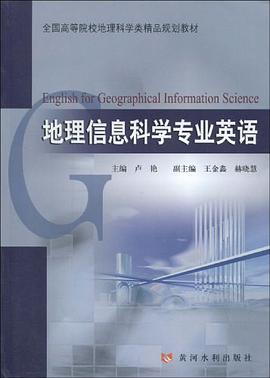
《地理信息科学专业英语》以培养学生地理信息科学专业英语文献阅读和翻译能力为主要目的,以地理信息系统、遥感、全球定位系统和3s集成理论与技术为主要内容,分为4个部分18章内容。第一部分为地理信息系统的基本原理、技术方法及应用,第二部分为遥感基本原理、技术方法及应用,第三部分为全球定位系统的基本原理、技术方法及应用,第四部分为3S集成理论、关键技术及应用。书中每章后均附有专业词汇和难点句子的翻译。
《地理信息科学专业英语》可以作为地理信息系统、遥感和全球定位系统等专业的本科生和研究生的教材,也可供相关专业的技术人员和教师参考使用。
地理信息科学专业英语 本书是一本专为地理信息科学(GIS)专业学生和从业人员设计的英语学习指南。它旨在帮助读者掌握GIS领域的专业术语、概念和表达方式,提升阅读、写作、听力和口语能力,从而更好地理解和运用GIS技术。 本书特点: 聚焦专业词汇和概念: 全书围绕GIS的核心概念展开,涵盖了空间数据、地理编码、遥感、地图投影、空间分析、数据库管理、GIS软件应用等关键领域。每个章节都精心挑选了最常用、最核心的专业词汇,并提供详细的解释、例句和用法提示,帮助读者建立扎实的专业词汇基础。 提供丰富的阅读材料: 本书收录了大量来自国际知名GIS期刊、会议论文、研究报告和行业网站的精选阅读材料。这些材料内容真实、前沿,语言地道,旨在让读者在真实的语境中学习和理解GIS专业英语,同时也能了解GIS领域的最新发展动态。 强化写作技能训练: 针对GIS专业论文、报告和项目建议书的写作特点,本书提供了详尽的写作指导和范例。从学术论文的结构、段落组织,到如何清晰、准确地描述空间数据处理过程、分析结果,本书都将一一解析,并提供大量的写作练习,帮助读者掌握专业写作技巧。 提升听力理解能力: 随书附带的音频材料包括了GIS领域的专家讲座、研讨会片段、软件操作演示等。这些音频材料语速适中,发音清晰,内容贴近实际应用,旨在帮助读者提高对GIS专业英语的听力理解能力,适应不同场景下的沟通需求。 促进口语交流实践: 本书设计了多项口语练习,如小组讨论、角色扮演、成果展示等。通过这些练习,读者可以就GIS相关的技术问题、研究成果、项目合作等话题进行有效交流,提升在国际学术会议、工作面试或团队协作中的口语表达能力。 结合实际案例分析: 书中穿插了多个与GIS应用相关的实际案例分析,例如城市规划、环境保护、灾害管理等。通过对这些案例的英语描述和讨论,读者可以更直观地理解GIS技术在解决现实问题中的作用,并学习如何在英语中有效地阐述这些应用。 提供学习策略和资源建议: 本书不仅教授专业知识,还分享了高效学习GIS专业英语的方法和技巧,并推荐了相关的在线学习资源、专业协会和学术期刊,帮助读者在课后能够自主学习,持续提升。 本书结构(示例): 第一部分:GIS基础概念与专业词汇 Chapter 1: Introduction to Geographic Information Science Key Terms: GIS, spatial data, geographic information, geomatics, etc. Reading: An overview of GIS history and its interdisciplinary nature. Writing: Describing the fundamental components of a GIS. Listening: Introduction to GIS by a leading researcher. Speaking: Discussing the importance of GIS in society. Chapter 2: Spatial Data and Data Models Key Terms: Vector data, raster data, attribute data, topology, spatial relationships, etc. Reading: Different types of spatial data and their characteristics. Writing: Explaining the differences between vector and raster data models. Listening: A lecture on spatial data acquisition methods. Speaking: Comparing and contrasting different spatial data formats. Chapter 3: Geographic Coordinate Systems and Projections Key Terms: Latitude, longitude, datum, projection, distortion, UTM, etc. Reading: Understanding the principles of map projections and their implications. Writing: Describing the process of transforming coordinates from one system to another. Listening: A tutorial on selecting appropriate map projections for different applications. Speaking: Debating the advantages and disadvantages of specific projection systems. 第二部分:GIS核心技术与应用 Chapter 4: Data Acquisition and Geocoding Key Terms: GPS, remote sensing, surveying, digitizing, geocoding, address matching, etc. Reading: Methods for acquiring and integrating spatial data. Writing: Detailing the steps involved in geocoding a dataset. Listening: A presentation on satellite imagery and its applications. Speaking: Discussing challenges in spatial data acquisition. Chapter 5: Spatial Analysis Techniques Key Terms: Buffering, overlay, spatial querying, network analysis, interpolation, etc. Reading: Exploring common spatial analysis operations and their outputs. Writing: Explaining how to perform a suitability analysis. Listening: A demonstration of spatial analysis tools in GIS software. Speaking: Presenting the results of a spatial analysis for a given problem. Chapter 6: GIS Databases and Data Management Key Terms: Geodatabase, relational database, spatial indexing, data quality, metadata, etc. Reading: Principles of designing and managing GIS databases. Writing: Describing the process of creating a geodatabase schema. Listening: A workshop on best practices for GIS data management. Speaking: Discussing the importance of data quality in GIS projects. 第三部分:GIS软件应用与学术写作 Chapter 7: Introduction to GIS Software (e.g., ArcGIS, QGIS) Key Terms: Interface, tools, layers, symbology, layout, etc. Reading: A guide to common GIS software functionalities. Writing: Documenting the steps for creating a map in GIS software. Listening: A video tutorial on performing a specific GIS task. Speaking: Explaining how to use a particular GIS tool. Chapter 8: Writing GIS Research Papers and Reports Key Terms: Abstract, introduction, methodology, results, discussion, conclusion, references, etc. Reading: Examples of well-structured GIS research papers. Writing: Drafting an abstract for a GIS study. Listening: Tips for presenting GIS research at conferences. Speaking: Practicing a brief presentation of a GIS project. Chapter 9: Presenting GIS Projects and Findings Key Terms: Visual aids, presentation skills, audience engagement, Q&A, etc. Reading: Strategies for effective visual communication in GIS presentations. Writing: Preparing talking points for a project presentation. Listening: Analyzing successful GIS project presentations. Speaking: Delivering a short presentation on a GIS case study. 附录: Glossary of GIS Terms (English-Chinese) Common GIS Acronyms Recommended Reading and Online Resources 本书致力于成为GIS专业学生和研究人员的得力助手,帮助他们在日益全球化的学术和职业环境中,用流利的英语自信地沟通和表达。