
具体描述
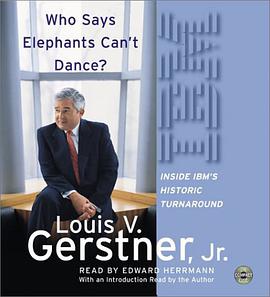
In 1990, IBM had its most profitable year ever. By 1993, the company was on a watch list for extinction -- victimized by its own lumbering size, an insular corporate culture, and the PC era IBM had itself helped invent. Enter Lou Gerstner. The presumption was that Gerstner had joined IBM to preside over its continued dissolution into a confederation of autonomous business units -- effectively eliminating the corporation that had invented many of the industry's most important technologies. Instead, Gerstner took hold of the company, making the bold decision to keep it together, defiantly announcing, "The last thing IBM needs right now is a vision." Told in Lou Gerstner's own words, this is a story of an extraordinary turn-around, a case study in managing a crisis, and a thoughtful reflection on the computer industry and the principles of leadership. Summing up his historic business achievement, Gerstner recounts high-level meetings, explains the no-turning-back decisions that had to be made, and offers his hard-won conclusions about the essence of what makes a great company run. Read by Edward Herrman With an introduction Read by the Author
作者简介
郭士纳
郭士纳(Lou Gerstner,Jr.),IBM现任董事长、前任CEO。在加盟IBM之前,他是RJR纳贝斯克公司董事长兼CEO。此前还在美国运通公司任总裁11年,兼任其最大的分公司董事长兼CEO此前,他还曾任麦肯锡管理咨询公司总监。他在达特茅斯学院获工程学学士学位,在哈佛商学院获工商管理硕士学位。
目录信息
读后感
《谁说大象不能跳舞》总括 这是一本经典的书籍,一本为数不多的经典自传类书籍!值得几遍、几十遍的阅读。虽然我的第一次阅读我没有太多的感悟,这并不是因为书籍的经典程度和精彩程度不足,而是我的水平和视野不到,因为我还没有到达一定层次,没有真正深入思考更多的关于企业...
郭士纳面对千头万绪、问题重重、暮气沉沉的IBM,他是如何迈出万里长征的第一步的,如何确定方向,如何看到问题的关键,如何确定要解决问题的优先级,这里面有太多我们去反复琢磨和学习的地方。 郭士纳的第一次IBM高层会议,当被引入会议室时,他发现除...
文/老钱 那些曾经辉煌过、后来却逐渐衰落了的大企业,是否可以根据变化了的情况及时调整战略,促成业务模式和企业文化之转型,进而焕发出第二春来? 看《谁说大象不能跳舞》前我觉得很难,看完这本书后我依然觉得很难,但知道这种事在一个叫做IBM的伟大企业里发生过。 正如本...
“这不是大象能否战胜蚂蚁的问题,这是一只大象能否跳舞的问题。如果大象能够跳舞,那么蚂蚁就必须离开舞台”。这句铿锵有力的话,给我的印象很深。让我把它写在这里。 坦率地说,这本书我读得很累。在很多次,他都变成了我催眠的良好工具(甚至比英语书还好)。读到一半的时候...
《谁说大象不能跳舞》总括 这是一本经典的书籍,一本为数不多的经典自传类书籍!值得几遍、几十遍的阅读。虽然我的第一次阅读我没有太多的感悟,这并不是因为书籍的经典程度和精彩程度不足,而是我的水平和视野不到,因为我还没有到达一定层次,没有真正深入思考更多的关于企业...