
具体描述
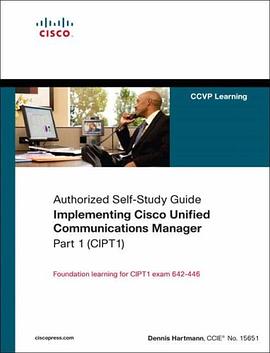
Foundation learning for CIPT1 exam 642-446 Dennis Hartmann, CCIE(R) No. 15651 Implementing Cisco Unified Communications Manager, Part 1 (CIPT1), is a Cisco(R)-authorized, self-paced learning tool for CCVP(R) foundation learning. This book provides the knowledge necessary to install, configure, and deploy a Cisco Unified Communications solution based on Cisco Unified Communications Manager, the call routing and signaling component of the Cisco Unified Communications solution. By reading this book, you will gain an understanding of deploying a Cisco Unified Communications Manager to support single site, centralized, distributed, and hybrid call processing models. This book focuses on Cisco Unified Communications Manager Release 6.x. You will learn how to install and configure Cisco Unified Communications Manager, power over Ethernet switches, and gateways using MGCP. You will also learn how to build a scalable dial plan for on-net and off-net calls. The dial plan chapters of the book cover call routing, call coverage, digit manipulation, class of service, and call coverage components. This book will teach you how to implement media resources, LDAP directory integration, and various endpoints including Skinny Client Control Protocol (SCCP) and Session Initiation Protocol (SIP). Cisco Unified Video Advantag endpoint configuration is covered, in addition to, Cisco Unity(R) voice mail integration and basic voice mail box creation. Various user features are discussed including Presence. Whether you are preparing for CCVP certification or simply want to gain a better understanding of Cisco Unified Communications Manager fundamentals, you will benefit from the foundation information presented in this book. Implementing Cisco Unified Communications Manager, Part 1 (CIPT1), is part of a recommended learning path from Cisco that includes simulation and hands-on training from authorized Cisco Learning Partners and self-study products from Cisco Press. To find out more about instructor-led training, e-learning, and hands-on instruction offered by authorized Cisco Learning Partners worldwide, please visit www.cisco.com/go/authorizedtraining. Dennis J. Hartmann, CCIE(R) No. 15651 is a lead Unified Communications instructor at Global Knowledge. Dennis has been working with CallManager since CallManager 2.0. Dennis has various technical certifications: CCIE No. 15651, CCVP, CCSI, CCNP(R), CCIP(R), and MCSE. Dennis has worked with various Fortune 500 companies including AT&T, Sprint, Merrill Lynch, KPMG, and Cabletron Systems. * Understand Cisco Unified Communications Manager architecture and components * Evaluate Cisco Unified Communications Manager deployment models * Install, upgrade, and administer Cisco Unified Communications Manager * Apply network configuration, NTP, and DHCP configuration options * Configure and manage user accounts * Deploy various Cisco Unified IP Phones* Configure Catalyst(R) switches for power over Ethernet and voice VLAN requirements * Harden IP Phones to mitigate security risks * Configure Media Gateway Control Protocol (MGCP) gateways * Configure dial plans, call routing, and digit manipulation * Deploy various media resources and user features* Integrate Cisco Unity Voicemail with Cisco Unified Communications Manager * Configure video-enabled IP Phones This volume is in the Certification Self-Study Series offered by Cisco Press(R). Books in this series provide officially developed self-study solutions to help networking professionals understand technology implementations and prepare for the Cisco Career Certifications examinations. Category: Cisco Unified Communications Manager 6 Covers: CIPT1 exam 642-446 $65.00 USA / $72.00 CAN
作者简介
目录信息
读后感
用户评价
这本书对我来说,最大的价值在于它提供了一个系统性的学习框架。在我刚开始接触思科统一通信的时候,感觉知识点非常零散,很多东西都无法串联起来。这本书的章节设置非常合理,从宏观的系统架构,到微观的每个组件功能,再到具体的配置步骤,都安排得井井有条。我特别喜欢它关于CUCM的部署选项和集群拓扑的讲解,这让我能够根据实际需求选择最适合的部署方案。而且,书中对CUCM安全性的讨论也给了我很大的启发,了解了用户认证、设备安全策略等方面的配置,能够更好地保护我们的通信系统。它还涉及了呼叫者ID和呼叫转移等常见功能,这些功能虽然看似简单,但在实际应用中却需要仔细配置才能实现预期的效果。这本书不仅是技术手册,更像是一位经验丰富的导师,一步步地带领我探索CUCM的奥秘。它的内容覆盖面很广,但又不会让人感到 overwhelming,每一部分都讲解得恰到好处,让你在掌握基本概念的同时,还能对更高级的功能有所了解。
我最近在为CIPT1考试做准备,市面上各种资料琳琅满目,真正能做到既全面又深入的却不多。这本书,说实话,一开始我还有点担心,毕竟是“认证自学指南”,但实际翻阅下来,我被它的专业性和系统性深深折服。它不仅仅是罗列知识点,而是真正地剖析了CUCM的内在逻辑。我尤其欣赏它对CUCM集群管理和高可用性的讲解,这部分内容在实际部署中至关重要,往往也是最容易出问题的环节。作者通过详细的步骤和清晰的图解,让我对主副集群的搭建、数据库复制、服务激活等关键配置有了非常直观的理解。而且,这本书对各种电话终端的注册原理、信令协议(SIP和SCCP)的对比分析,也做了深入的阐述,这对于理解用户终端如何与CUCM进行通信至关重要。它还提到了很多我在其他资料里没怎么见过的细节,比如DNS在CUCM中的作用,以及各个服务的依赖关系,这些细节往往决定了系统能否稳定运行。通过这本书的学习,我感觉我对CUCM的理解已经从“知其然”提升到了“知其所以然”的阶段,对于排查故障也有了更清晰的思路。
这本书简直是为我量身打造的!最近公司开始大规模部署思科的统一通信系统,我这小白一个,一开始真是两眼一抹黑,什么CUCM、SIP、SCCP都搞不清。翻了好几本资料,要么太理论,要么就是一堆枯燥的命令。直到我看到这本书,简直眼前一亮。它不像那种“速成宝典”,而是循序渐进,从最基础的概念讲起,比如为什么需要统一通信,CUCM到底是个啥,它的核心组件有哪些,都解释得特别到位。最让我惊喜的是,它不是那种干巴巴的文字堆砌,而是穿插了大量的图示和表格,比如CUCM的架构图,我一下子就能明白各个模块是怎么关联的。而且,作者在讲解每个功能的时候,都会结合实际的应用场景,让我知道这个功能到底有什么用,在实际工作中怎么去配置。感觉作者就是把我带进了思科统一通信的世界,让我不再是那个站在门外看热闹的,而是能真正地参与进去。这本书的语言也很接地气,没有太多晦涩难懂的术语,即使我之前对思科设备了解不多,也能很快跟上节奏。总之,对于想快速掌握CUCM基础知识的同学来说,这本书绝对是入门的首选,强烈推荐!
作为一名希望深入理解思科统一通信技术的工程师,我一直在寻找一本能够帮助我系统构建知识体系的参考书。这本书,确实没有让我失望。它不仅仅是关于CUCM的“how-to”,更是关于CUCM的“why”。我最欣赏它对于CUCM的扩展性和集成性的探讨,比如如何与其他系统(如IM&P、Unity Connection)进行整合,这对于构建一个完整的通信解决方案至关重要。书中对MTP(Media Termination Point)和H.323/SIP中继的讲解,也让我对呼叫流程的细节有了更深入的理解。而且,它还涵盖了CUCM的备份和恢复策略,以及系统监控和故障排除的常用方法,这些都是在实际运维中不可或缺的技能。这本书的知识深度和广度都恰到好处,既能让初学者快速入门,也能让有一定基础的工程师找到提升的空间。它鼓励读者动手实践,通过大量的配置示例来巩固学习效果,这种学习方式非常有效。总而言之,这本书是我在CIPT1学习道路上的一盏明灯,为我提供了宝贵的指导和支持。
作为一个在网络通信领域摸爬滚打多年的老兵,我深知理论与实践相结合的重要性。这本书,恰恰完美地做到了这一点。它没有回避那些复杂的配置细节,而是直接切入主题,详细讲解了CUCM的安装部署、用户和终端的管理、呼叫路由的配置等核心功能。最让我印象深刻的是,它对于呼叫路由的讲解,从最基础的CSS(Calling Search Space)和Partition,到更复杂的Route Patterns、Route Lists和Route Groups,作者层层递进,让每一个概念都显得清晰明了。我尤其喜欢它在讲解IP电话配置时的思路,从设备型号的选择,到TFTP服务器的配置,再到本地化选项的设置,每一步都衔接得非常顺畅。而且,书中还提供了很多实用的命令行配置示例,虽然书本是关于GUI配置为主,但了解背后的命令行逻辑,对于更深层次的理解和故障排查非常有帮助。这本书不是那种“填鸭式”的教学,而是引导读者去思考,去理解CUCM的设计理念。通过阅读这本书,我不仅巩固了现有的知识,还学到了很多新的技巧和最佳实践。