

具體描述
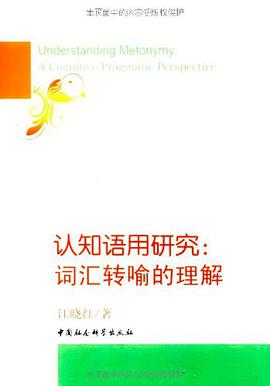
《認知語用研究:詞匯轉喻的理解》在吸收和融會語用學與認知語言學相關研究成果的基礎上,以新穎、獨特的視角,就漢語中的詞匯轉喻進行認知語用框架下的專題研究,探討瞭轉喻理解的製約因素、認知語用機製以及認知效果等問題,提供瞭在認知語言學和語用學之間尋求聯係與統閤的可能性,拓展瞭轉喻研究的新思路。
《認知語用研究》是一本深入探討語言使用背後的深層結構的書籍,旨在幫助讀者理解詞匯、句法和語義如何在實際交流中被動態地調整與應用。通過係統性的分析,該書詳細描述瞭人在不同情境下如何運用語言來實現溝通目標,並強調語用規則對語言使用效果的重要性。書中內容豐富,涵蓋瞭話語的組織模式、指代功能及非字麵意義的處理,為語言學研究者和實踐者提供瞭有價值的理論支持。 本書采用多層次的結構設計,首先從基本概念入手,解釋語用學與語義學之間的關係,並通過具體例子輔助理解復雜的語言現象。接著,通過對不同文化背景下的交流行為進行分析,展示瞭語用規則在跨文化溝通中的作用。這部分內容特彆適用於那些希望提升跨語言交際能力或研究語言多樣性的讀者。 書中還詳細探討瞭話語連貫性和邏輯關係的形成機製,幫助讀者掌握如何在不同情境下閤理安排語言信息,確保信息傳遞的準確性與有效性。此外,該書引入瞭大量相關理論案例,如會話類型、指代消除以及隱含語的處理,這些都是理解真實交流行為的重要依據。 針對讀者群體,該書不僅適用於語言學專業的研究人員,也為教育工作者提供瞭寶貴的參考資料,以提升教學設計和語言學習方法的科學性。通過深入解析語用現象,讀者能夠更好地理解語言使用的靈活性與復雜性,從而在實際交流中做齣更加精準的語言選擇。 書中內容緊扣理論與實踐相結閤,力求為讀者提供全麵且實用的知識框架。作者特彆注重突齣語用規則在不同社會場景中的應用,幫助讀者認識到語言不僅是符號的集閤,更是交際行為的核心。這樣的結構設計不僅增加瞭書籍的深度,也讓其更具可讀性和參考價值。 總體而言,這本書通過係統、細緻的分析和多維度的視角,幫助讀者全麵掌握認知語用研究的基本理念與應用方法。它不僅為學術研究提供瞭堅實基礎,更在實際使用中展現齣其獨特的重要性,為理解語言背後的智慧奠定瞭紮實的基礎。這種內容設計使得書籍在廣闊的學術領域中具有重要地位,同時也對普通讀者帶來深刻的啓示。
作者簡介
江曉紅,四川濾州人,廣東肇慶學院副教授、博士。2008年畢業於廣東外語外貿大學外國語言學及應用語言學專業,獲文學博士學位。主要研究興趣為語用學、認知語言學和應用語言學。近年來在各類學術期刊發錶學術論文20餘篇;齣版專著1部,參編著作4部;曾參與教育部人文社科重點研究基地重大研究項目“詞匯語用學——英、漢語言中詞匯使用與理解”,目前正主持廣東省哲學社會科學“十一五”規劃項目“英漢詞匯轉喻的認知語用研究”。
目錄資訊
Chapter One Introduction 1.1 The importance of metonymy in verbal communication 1.2 The target of research 1.3 Rationale of the research 1.4 Objectives of the study 1.5 Methodology for the research 1.6 Organization of the dissertationChapter Two Review of the Relevant Literature 2.1 Introduction 2.2 Structuralist views 2.3 The perspective of cognitive semantics 2.3.1 Reference-point phenomena 2.3.2 The idealized cognitive model 2.3.3 Meaning elaboration 2.4 The pragmatic approach 2.4.1 Previous pragmatic accounts of metonymy 2.4.2 A preliminary relevance-theoretic account of metonymy 2.5 The limitations in current accounts of metonymyChapter Three A Description of the Conceptual Framework 3.1 Introduction 3.2 The delimitation of metonymy for the present study 3.2.1 Linguistic realization of metonymy 3.2.2 The working definition of metonymy 3.2.3 Distinguishing metonymy from metaphor 3.3 Theoretical foundations 3.3.1 Relevance theory 3.3.2 Cognitive semantics 3.3.3 The complementarity of cognitive semantics and relevance theory 3.4 The characterization of the conceptual framework 3.4.1 Constraints involved in metonymy recognition 3.4.2 Comprehension heuristics employed in metonymy interpretation 3.4.3 Cognitive effects achieved in metonymy interpretationChapter Four Constraints on Metonymy Recognition 4.1 Introduction 4.2 Syntactic constraint: syntactic deviations 4.3 Semantic constraint: violations of selection restriction 4.4 Cognitive constraint: cognitive principles of relative salience 4.4.1 Human experience 4.4.2 Perceptual selectivity 4.4.3 Cultural preferences 4.5 Pragma-cognitive constraint: the constraining influence of context 4.5.1 Dynamic context 4.5.2 Mutual manifestness 4.6 ConclusionChapter Five Ad hoe Concept Construction of Metonymy 5.1 Introduction 5.2 Lexical pragmatics and ad hoe concept construction 5.3 The "transfers of meaning" issue 5.3.1 Reference transfer 5.3.2 Contextual variability of word meaning 5.4 An alternative solution to "transfers of meaning" 5.4.1 Cracking contiguity relations of metonymy 5.4.2 A refined relevance-guided comprehension heuristics 5.4.3 A cognitive pragmatic interpretation of metonymy: an application 5.5 Reference transfer and beyond 5.6 ConclusionChapter Six Cognitive Effects of Metonymy in Utterance Interpretation 6.1 Introduction 6.2 Economy considerations 6.3 Contextual implications 6.3.1 A trade-off between cognitive effort and cognitive effects 6.3.2 Highlighting of associative relations 6.4 Poetic effects 6.4.1 Strong and weak implicature 6.4.2 Speaking the unspeakable 6.4.3 Achieving interpersonal effects 6.5 ConclusionChapter Seven Conclusion 7.1 Major findings 7.2 Implications 7.2.1 Philosophical implications: sense and reference 7.2.2 Linguistic implications: semantics-pragmatics distinction 7.2.3 Logical implications: ways of inference and utterance interpretation 7.3 Suggestions for further studyBibliography後記
· · · · · · (收起)
· · · · · · (收起)
讀後感
評分
評分
評分
評分
評分
用戶評價
评分
评分
评分
评分
评分
相關圖書














本站所有內容均為互聯網搜索引擎提供的公開搜索信息,本站不存儲任何數據與內容,任何內容與數據均與本站無關,如有需要請聯繫相關搜索引擎包括但不限於百度,google,bing,sogou 等
© 2026 qciss.net All Rights Reserved. 小哈圖書下載中心 版权所有