具體描述
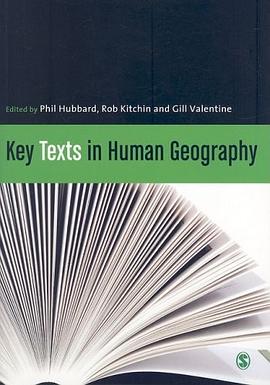
Exploring the Unseen: A Deep Dive into Contemporary Sociocultural Cartographies A Comprehensive Examination of Identity, Space, and Power Dynamics in the 21st Century This ambitious volume transcends traditional geographical boundaries, offering a rigorous and multifaceted exploration of how human experience is shaped, contested, and represented within the shifting landscapes of the modern world. Moving beyond established methodological discussions—which are thoroughly covered in other essential texts—this book focuses intently on the outcomes and interpretations of spatial organization, emphasizing the critical nexus between lived reality, theoretical abstraction, and the exercise of governance. Part I: The Performance of Place and the Lived Environment The initial section delves into the ephemeral yet profound ways in which individuals inhabit and imbue spaces with meaning. We move away from purely empirical site descriptions to investigate the performative nature of daily life. Chapter 1: Choreographies of Belonging: Embodiment in Transit Hubs. This chapter analyzes how major infrastructural nodes—airports, high-speed rail terminals, and digital marketplaces—function as liminal stages for the negotiation of national, ethnic, and professional identities. It examines the subtle non-verbal cues, regulatory architectures, and design elements that enforce or undermine feelings of inclusion. Drawing on extensive fieldwork across three continents, the research illuminates the micro-aggressions and micro-affirmations embedded within these heavily regulated zones. We specifically contrast the "rushed efficiency" demanded by global capital with the embodied resistance enacted through deliberate pace and spatial occupation by migrant laborers. Chapter 2: Sensory Geographies and Affective Atmospheres. Shifting focus from visual representation to the full spectrum of human perception, this section explores the role of soundscapes, olfactory markers, and haptic experiences in constructing regional character. It posits that many geographically significant boundaries are maintained not through official signage but through a shared, often unspoken, sensory vocabulary. Case studies include the sonic segregation in post-conflict urban centers and the olfactory branding strategies employed by heritage food production zones. The analysis employs theories of sensory ecology to explain how these non-visual cues profoundly impact historical memory and territorial attachment. Chapter 3: Digital Scaffolding: The Hyper-Real and the Material Anchor. This investigation probes the growing divergence between digitally mediated experience and embodied presence. It critiques simplistic binary oppositions, arguing instead for an understanding of the interpenetration of virtual and physical geographies. We examine the digital twin technologies used in urban planning and argue that while these simulations promise optimization, they often erase the "messiness" of situated action—the unscripted interactions that give a place its unique texture. A key focus is placed on the digital afterlife of physical ruins and how digital preservation efforts unintentionally flatten historical complexity. Part II: Contested Territories and the Politics of Scale The core of the book examines how power operates across different scales—from the intimate scale of the household to the planetary scale of resource distribution—and the resulting conflicts over demarcation and authority. Chapter 4: The Invisibility of Infrastructure: Pipelines, Cables, and the Hidden Flows of Capital. This critical examination focuses on the material networks that underpin globalization but remain intentionally obscured from public view. It traces the political and ecological consequences of trans-border energy pipelines and submarine fiber-optic cables, arguing that the maintenance of their invisibility is a deliberate political strategy to insulate decision-makers from accountability regarding ecological disruption and local displacement. The methodology here integrates historical political economy with contemporary risk assessment analysis. Chapter 5: Vernacular Governance: Resistance Outside the State Apparatus. This challenging chapter analyzes spatial organization and social regulation occurring entirely outside formal state or municipal control. It examines decentralized, self-organized spatial orders within informal settlements, transnational diasporic networks, and emergent online communities that enforce their own codes of conduct and territorial rights. By analyzing these "shadow sovereignties," the book provides a nuanced understanding of governance that is not reliant on recognized legal frameworks. Chapter 6: Climate Migration and the Redrawing of Security Maps. Addressing one of the most pressing contemporary issues, this section analyzes the geopolitical consequences of forced environmental displacement. It moves beyond statistical modeling to examine the legal geography surrounding climate refugees—a category still largely unacknowledged in international law. The focus is on how established border regimes adapt, often violently, to accommodate (or reject) populations whose claims to territory are based on ecological degradation rather than explicit military conflict. The chapter argues for a radical rethinking of territorial integrity in the face of planetary-scale environmental instability. Part III: Representing the Spatial Other: Cartography, Narrative, and Knowledge Production The final section critiques the very tools and narratives used to understand and assert control over space, focusing on how knowledge itself becomes a mechanism of power. Chapter 7: The Limits of Metricization: When Data Fails to Capture Experience. This chapter offers a methodological critique of quantitative approaches that prioritize easily measurable variables (e.g., density, speed, flow) at the expense of qualitative depth. It analyzes specific instances where standardized metrics used in international development or urban renewal projects have inadvertently led to profound social fragmentation because they fail to account for local ecological knowledge or kinship structures. It advocates for radically participatory forms of spatial documentation. Chapter 8: Narrative Cartography and the Ethics of Storytelling in Space. This chapter examines non-traditional forms of mapping—oral histories, literary representations of landscape, and artistic installations—as legitimate, and often superior, forms of spatial knowledge transmission. It explores the ethical responsibilities inherent in translating embodied experience into a communicable spatial form, particularly when dealing with marginalized histories. The work of indigenous storytellers and counter-memorializing artists is used to illustrate how narrative can actively decolonize established topographies. Chapter 9: Beyond the Horizon: Future Geographies of Shared Stewardship. Concluding the volume, this chapter speculates on emergent spatial ethics required for global sustainability. It examines concepts such as "assemblage" and "rhizome" not merely as theoretical constructs, but as practical blueprints for designing adaptive, non-hierarchical socio-ecological systems. The final argument posits that a true geographical understanding of the 21st century requires moving away from mapping what is fixed toward mapping the processes of becoming—a geography defined by fluidity, interdependence, and mutual vulnerability. This book is essential reading for advanced students, researchers, policymakers, and practitioners interested in critical human geography, political ecology, urban theory, and the philosophy of space. It provides the necessary theoretical grounding and empirical depth to analyze the complex spatial realities that define our increasingly interconnected and fragile world.