
具体描述
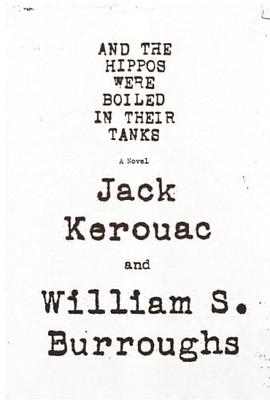
And the Hippos Were Boiled in Their Tanks is a novel by Jack Kerouac and William S. Burroughs. It was written in 1945, a full decade before the two authors became famous as leading figures of the Beat Generation, and remained unpublished for many years.
Written in the form of a mystery novel, the book consists of alternating chapters by each author writing as a different character. Burroughs (as William Lee, the pseudonym he would later use for his first published book, Junkie) writes the character "Will Dennison" while Kerouac (as "John Kerouac"), takes on the character of "Mike Ryko".[1][2]
According to the book The Beat Generation in New York by Bill Morgan, the novel was based upon the killing of David Kammerer who was obsessed with Lucien Carr. Carr stabbed Kammerer to death in a drunken fight, in self defense by some accounts, then dumped Kammerer's body into the Hudson River. Carr later confessed the crime, first to Burroughs, then to Kerouac, neither of whom reported it to the police. When Carr eventually turned himself in, Burroughs and Kerouac were arrested as accessories after the fact. Kerouac served some jail time because his father refused to bail him out but Burroughs was bailed out by his family. (Kerouac married Edie Parker while in jail, and she then paid his bail.)[3]
As a consequence of his experiences related to the Kammerer/Carr case, Burroughs became addicted to morphine.
In later years, Burroughs did not consider And the Hippos Were Boiled in Their Tanks worth retrieving from obscurity. In the 1986 documentary What Happened to Kerouac? he dismissed it as "not a distinguished work." According to his longtime companion James Grauerholz numerous attempts were made by Kerouac and others to get the book published, until Burroughs brought a lawsuit over the use of quotations from the manuscript that appeared in New York magazine in 1976; the suit, which was settled in the 1980s, established the ownership of the work.[4]. When Burroughs died in 1997, Grauerholz became the executor of his estate, with responsibility for the disposition of his unpublished works. He had befriended Lucien Carr and agreed not to publish the manuscript in Carr's lifetime. Carr's death in 2005 made way for the book to be published at last.[5].
Penguin Books published the novel in November 2008.[6][7] An American edition was published by Grove Press.
The book's title allegedly comes from a news broadcast, heard by Burroughs, about a fire at the St Louis Zoo during which the announcer broke into hysterics on reading the line. However, in his afterword to the 2008 publication, James Grauerholz indicated that the origin of the title is unconfirmed and may have been related to a zoo incident in Egypt, or possibly even a fire that occurred at a circus.[8]
作者简介
Jean-Louis "Jack" Lebris de Kerouac ( /ˈkɛruːæk/ or /ˈkɛrɵæk/; March 12, 1922 – October 21, 1969) was an American novelist and poet. He is considered a literary iconoclast and, alongside William S. Burroughs and Allen Ginsberg, a pioneer of the Beat Generation.[2] Kerouac is recognized for his spontaneous method of writing, covering topics such as Catholic spirituality, jazz, promiscuity, Buddhism, drugs, poverty, and travel. His writings have inspired other writers, including Ken Kesey, Bob Dylan, Richard Brautigan, Thomas Pynchon,[3] Lester Bangs, Tom Robbins, Will Clarke, and Haruki Murakami.[citation needed] Critics of his work have labeled it "slapdash", "grossly sentimental",[4] and "immoral".[5] Kerouac became an underground celebrity and, with other beats, a progenitor of the Hippie movement,[6] although he remained antagonistic toward it. In 1969, at age 47, Kerouac died from internal bleeding due to long-standing abuse of alcohol. Since his death Kerouac's literary prestige has grown and several previously unseen works have been published. All of his books are in print today, among them: On the Road, Doctor Sax, The Dharma Bums, Mexico City Blues, The Subterraneans, Desolation Angels, Visions of Cody and Big Sur.
William Seward Burroughs II ( /ˈbʌroʊz/; also known by his pen name William Lee; February 5, 1914(1914-02-05) – August 2, 1997(1997-08-02)) was an American novelist, poet, essayist and spoken word performer. Burroughs was a primary figure of the Beat Generation and a major postmodernist author who affected popular culture as well as literature. He is considered to be "one of the most politically trenchant, culturally influential, and innovative artists of the 20th century."[1] Burroughs wrote 18 novels and novellas, six collections of short stories and four collections of essays. Five books have been published of his interviews and correspondences. Burroughs also collaborated on projects and recordings with numerous performers and musicians, and made many appearances in films.
He was born to a wealthy family in St. Louis, Missouri, grandson of the founder of the Burroughs Corporation, William Seward Burroughs I, and nephew of public relations manager Ivy Lee. Burroughs began writing essays and journals in early adolescence. He left home in 1932 to attend Harvard University, studying English and anthropology, but after being turned down by the Office of Strategic Services and U.S. Navy to serve in World War II, dropped out and spent the next twenty years working a variety of jobs. In 1943 while living in New York City, he befriended Allen Ginsberg and Jack Kerouac, the mutually influential foundation of what became the countercultural movement of the Beat Generation, while becoming involved in the drug addiction that affected him for the rest of his life.
Much of Burroughs's work is semi-autobiographical, primarily drawn from his experiences as a heroin addict, as he lived throughout Mexico City, London, Paris, Berlin, the South American Amazon and Tangier in Morocco. Finding success with his confessional first novel, Junkie (1953), Burroughs is perhaps best known for his third novel Naked Lunch (1959), a work fraught with controversy that underwent a court case under the sodomy laws. With Brion Gysin, he also popularized the literary cut-up technique in works such as The Nova Trilogy (1961–64). In 1983, Burroughs was elected to the American Academy and Institute of Arts and Letters, and in 1984 was awarded the Ordre des Arts et des Lettres by France.[2] Jack Kerouac called Burroughs the "greatest satirical writer since Jonathan Swift,"[3] a reputation he owes to his "lifelong subversion"[1] of the moral, political and economic systems of modern American society, articulated in often darkly humorous sardonicism. J. G. Ballard considered Burroughs to be "the most important writer to emerge since the Second World War," while Norman Mailer declared him "the only American writer who may be conceivably possessed by genius."[3]
Burroughs had one child in 1947, William Seward Burroughs III, with his second wife Joan Vollmer, who died in 1951 in Mexico City after Burroughs's accidental manslaughter, an event that deeply permeated all of his writings. Burroughs died at his home in Lawrence, Kansas after suffering a heart attack in 1997.
目录信息
读后感
有些书的价值不应该仅仅通过内容去判断。《而河马被煮死在水槽里》看书名似乎天马行空、噱头十足,但如若阅读前没有进行过任何了解,相信绝大多数读者很难从小说的字里行间品出多少妙处。也许威廉-巴勒斯以及他的作品《裸体午餐》让人有些陌生,但杰克-凯鲁亚克这个名字绝...
与其说这是一本描写哥大谋杀案的小说,不如说是一本对beat generation真实生活的写照。他们过着颓废平淡的生活,一群狐朋狗友,酒精和毒品,日子就这样日复一日的过去了。 关于Lucien Carr 他是个迷人的男孩,带着天生的忧郁气质,大家对他的谋杀也都持宽容的态度。感谢这本书...
这是一部有故事的书。小说一般都有故事,此书贯穿的故事就是一对有十余年年龄差距的人,有同性恋暧昧,纠缠良久,最后年轻者杀了年长者,然后投案。小说篇幅不长,线条也很简单,就是要展示这个过程,两个人的关系,两个人在一个小群体里的关系,如何试图摆脱对方而不可,然后...
用户评价
这本书给我带来了一种久违的、近乎原始的阅读震撼。它不是那种迎合大众口味的“爽文”,它的深刻是内敛的,需要读者沉下心来慢慢品味的。作者构建的世界观逻辑严密,即便涉及一些超出现实范畴的设定,也都有着一套自洽的内在法则,让人完全信服。更难得的是,它对社会结构的批判是如此尖锐而精准,它没有直接喊出那些政治口号,而是通过人物的命运和无望的挣扎,将权力体系的压迫感描绘得淋漓尽致。我甚至觉得,这本书读完后,我看待日常社会新闻的视角都变得更加多维和警觉了。那种潜藏在平静表面下的暗流涌动,被作者用精准的笔触一一揭示出来,让人读后久久不能平静,甚至会忍不住思考,我们自己所处的世界,又有多少“隐藏的机制”在悄无声息地运作着。
从文学手法上来说,作者无疑是进行了大胆而成功的实验。书中的象征意义丰富到令人发指,每一个出现的物件,无论是天空的颜色,还是背景音乐的选择,似乎都在暗示着更深层的含义,这让这本书具备了极高的学术研究价值。我花了好大力气去梳理那些看似跳跃的时间片段,发现它们其实是精确地对应着某种心理学上的“创伤记忆”模型。它不是那种让你轻松阅读的书籍,需要你集中所有的注意力去捕捉那些转瞬即逝的线索和隐喻。它挑战了传统小说的线性结构,更像是一部交响乐的乐谱,各个声部并行不悖,最终汇聚成震撼的高潮。我给出的评价是,如果你寻求的是一种智力上的刺激和对文学形式边界的探索,那么这本书绝对不会让你失望,它提供的阅读体验是独一无二且极具挑战性的。
老实说,我一开始接触这本书是抱着一种比较审慎的态度,毕竟市面上打着“深刻”旗号的作品太多,很多都只是故作高深。然而,这本书的语言风格却以一种近乎冷峻的克制,达到了令人惊讶的艺术高度。它的句子结构时而短促有力,像机关枪一样扫射着信息,时而又拉得很长,充满了古典文学的韵味,这种变化极大地丰富了阅读的听觉体验。作者似乎对历史的脉络有着异乎寻常的敏感,即使是虚构的叙事,也充满了历史的厚重感和时代的烙印。那些不经意的道具描写,比如一枚生锈的徽章,一张泛黄的照片,都承载着远超其本身重量的故事,体现了作者深厚的文学功底。我特别喜欢它处理时间线的方式,那种非线性的叙事,如同打碎的镜子,需要读者自己去拼凑完整的图景,这种主动参与感极大地提升了阅读的智力挑战性。
这本小说最吸引我的是它在情感上的复杂性和模糊性。没有绝对的英雄或恶棍,每个人物都行走在灰色的地带,他们的动机交织在一起,既有高尚的自我牺牲,也有自私的算计与背叛。作者巧妙地运用了多重叙事视角,使得读者对同一个事件的理解不断被颠覆和重塑,这种不确定性恰恰是真实人生的写照。我曾一度因为某个角色的选择而愤怒,但随着后续情节的展开,我又不得不理解他行为背后的无奈与推力,这种情感的过山车体验非常过瘾。整本书的基调是低沉的,弥漫着一种宿命般的悲剧色彩,但正是这种压抑,才让那些微小的、关于希望和友谊的瞬间显得格外珍贵和闪耀。读完合上书的那一刻,我感到一种深刻的疲惫,那不是阅读质量低劣带来的厌倦,而是心神被深度故事完全浸透后的那种充实感。
这本书的叙事节奏简直让人欲罢不能,每一个章节的推进都像是在解开一个精心编织的谜团,作者对人物心理的刻画入木三分,我几乎能感受到主角们在那些错综复杂的情境下内心的挣扎与蜕变。特别是那些环境描写,细腻到仿佛能让我闻到空气中弥漫的气息,感受到光影在粗糙墙壁上的游走。情节的张力控制得极佳,总是在你以为一切尘埃落定的时候,抛出一个新的转折,让你不得不立刻翻到下一页。我尤其欣赏作者在处理道德困境时的那种毫不手软的态度,没有简单的黑白对错,只有在现实的泥泞中艰难求生的复杂人性。阅读的过程,与其说是看故事,不如说是一场深刻的自我审视,迫使我去思考那些平日里被我刻意回避的深层问题。它不是那种读完就扔在一边的消遣读物,而是那种会反复咀嚼,每次重温都会有新发现的佳作。那种对细节的执着,对情感层次的挖掘,构建了一个无比真实且令人信服的世界。
fun reading
自诩某团粉丝多年的我终于看了这本小书😇JK的部分比WSB耐看一点(粉丝滤镜两米八)简而言之,舔狗舔到最后一无所有......到处乱窜的Rimbaud完全就是有形的暗示..........(另外书里的Mike总是让我想到盖茨比利的Nick......
哥伦比亚同妻大学的那帮基佬起书名一个比一个狠,笔触一个比一个无聊(说的就是你凯鲁亚克
这本书的名字和遇上一只狗的名字一样深入我心。想要知道故事的话不如直接看after,信息量更多。
lulu……团宠啊……David这个痴汉程度真是………………不过where is Allen???