具体描述
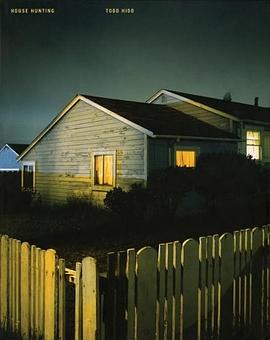
Our first monograph on the work of Todd Hido, House Hunting, was published in to huge acclaim, and was named as Best First Monograph by Photo-Eye. With his fifth monograph selling out within weeks of publication, the time feels right to bring back into print this very special book. It is classic Hido; large color photographs of suburban homes at night, radiating contrasts of warmth and cold, loneliness and comfort, dark and light. Six years on, this outstanding collection of photographs is still something to get excited about. Hido's work is held in a large number of collections, both public and private, including The Art Institute of Chicago, The Guggenheim Museum and the Whitney Museum of American Art. A faithful reprint of the first edition, the book opens as before with a short text by A.M. Homes.
Todd Hido’s photographic practice unfolds with a quiet intensity rooted in the rhythms of everyday suburban life, particularly focusing on ordinary homes and the subtle emotional textures that dwell within them. Known for his understated yet deeply evocative images, Hido captures moments that linger just beyond immediate recognition—children at play in empty playgrounds, silhouetted figures moving through twilight streets, or the quiet interior of a house bathed in soft evening light. His work avoids drama and spectacle, instead drawing attention to the subtle gestures, fleeting glances, and unspoken moods that define domestic existence. Hido’s compositions often emphasize stillness and repetition, reflecting the cyclical nature of time spent within familiar spaces. The interplay between interior and exterior is a recurring theme, where glass windows frame distant landscapes while inside scenes reveal intimate human activity. This layering invites viewers to perceive both isolation and connection simultaneously—the solitude of private moments set against broader environmental contexts. His use of natural light enhances the quiet poetry of these environments, revealing textures in weathered wood, worn flooring, or shifting shadows with delicate precision. Though centered on domesticity, Hido’s images transcend mere documentation. They evoke a sense of memory, nostalgia, and impermanence—how homes hold stories not always visible but deeply felt. The spaces he photographs are rarely pristine; they carry traces of lived experience: half-empty rooms, slightly out-of-focus backgrounds, the faint glow of evening sun. These details suggest movement and time passing, hinting at lives unfolding quietly beyond the frame. Hido’s work also engages subtly with memory and absence. By capturing moments that are fleeting—children leaving a playground, a door closing softly—he emphasizes impermanence without sentimentality. The emotional core lies not in grand narratives but in quiet presence: the weight of stillness, the comfort of routine, and the subtle emotions embedded in ordinary settings. Technically, Hido employs a measured approach—slow shutter speeds, careful framing, and attention to light—that reinforces the contemplative tone of his images. His black-and-white photographs deepen this atmosphere, stripping away color to focus on form, contrast, and mood. Through this restrained aesthetic, he constructs a visual language that speaks with quiet authority, inviting sustained observation and introspection. Collectively, Todd Hido’s body of work functions as an intimate archive of modern domestic life—less about what is shown than how it feels to inhabit such spaces. His photographs dwell in the in-between moments, revealing the poetry within routine, the dignity in simplicity, and the profound quiet power of everyday existence.