
具体描述
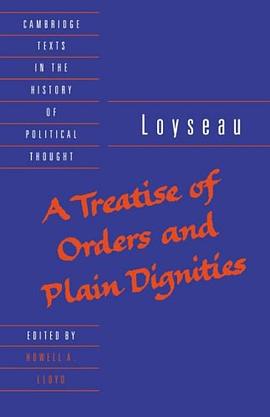
A Treatise on Orders evaluates the three orders and how they function in society. Loyseau puts particular emphasis on the fact that these orders were established by social custom and tradition, not mandate or law. He defines each order by the role it served in society, and shows how they were afforded certain rights and obligations not shared. The rigorous boundaries and roles of each order allowed absolutely no social mobility, but there was some mobility within their own hierarchy. Loyseau believed the advantage to such a system was that it created a whole society, without fragments, with every person knowing his or her clearly defined place.
First Estate, Clergy: The clergy were regarded as the highest order for their association with God, and most respected for their job to provide salvation. They were divided amongst themselves as subdeacon, deacon, priest, bishop, cardinal, and monk. They were distinguished in society by their shaved hair and long robes, a tradition associated with the toga of Romans and were completely tax exempt.
Second Estate, Nobility: This order was divided into simple nobility, high nobility and princes. Simply nobility, or gentlemen, were men who were not given a higher degree of honor. High nobility were men given special appointments, such as knighthood, high office, or fiefs. The only princes were by blood only, which signified relation to the sovereign. This order served in the high positions of the Court and state, and was also tax exempt. They were given special privileges, such as no nobleman could be condemned to hanging or flogging, and all were able to carry a sword as an outward symbol of their nobility. Together with the clergy they comprised the ruling class.
Third Estate, Commoners: The final order included men of letters, (doctors, philosophers, teachers) financiers (anyone handling finances among provinces, parishes, or individuals) merchants, men of affairs (business men of any kind, notaries, attorneys, etc.), peasants, and laborers. They were distinguished by the work they provided, starting with men of highest education and monetary positions, descending to those men who had no job (beggars, vagabonds), who were considered the lowest of society. Loyseau is very critical of this order and did not consider it to be a sign of dignity to be part of the Third Estate, but merely definition of occupation.
作者简介
Charles Loyseau (1564 – 1627) is considered one of the best sources for understanding the French social structure of the seventeenth and eighteenth centuries.[1] He was a lawyer in the Parlement of Paris, the highest royal court in France, as well as a judge in local and seigneurial courts.[2] He evaluated French society and law and his most famous work, A Treatise on Orders and Simple Dignities, written in 1610, is considered the most comprehensive account of the orders of the three Estates. This work was used to justify France’s social organization up until the end of the Old Regime in 1789.[3]
目录信息
读后感
用户评价
这本书的叙事节奏把握得极为高明,它巧妙地在宏大叙事和个体经验之间找到了一个令人舒适的平衡点。有时候,它会突然跳脱出现代都市的喧嚣,转而深入到中世纪修道院的日常作息中去探究“纪律的意义”;而下一秒,它又能将焦点拉回到当代白领在电子邮件洪流中的挣扎,用古典的语言来解构现代的焦虑。这种时空上的自由穿梭,极大地拓宽了读者的认知边界。我惊喜地发现,那些看似过时的教条或礼仪,在被作者用新的语境重新审视后,竟然能焕发出惊人的生命力,成为解决当代迷惘的有效工具。书中关于“沉默的权力”那一段,简直如同一记闷棍,它提醒我们在信息爆炸的时代,真正有力量的往往是那些被刻意保留和精心选择的表达。作者的知识储备令人叹服,引用了从马基雅维利到维特根斯坦的诸多思想碎片,却又将它们融合成一个独特的、自洽的逻辑体系,丝毫没有堆砌学问的匠气,展现出一种化繁为简的大家风范。
这本关于“秩序与朴素尊严”的著作,从我翻开第一页开始,就让我陷入了一种既熟悉又陌生的沉思之中。它的开篇并没有急于抛出宏大的理论框架,而是像一位经验丰富的老者,娓娓道来关于日常生活结构与个人价值感之间的微妙张力。我特别欣赏作者处理“秩序”这个概念的方式,他避开了僵硬的等级制度或刻板的规则条文,转而关注那种内化于心的、支撑个体心智稳定的内在架构。例如,书中对清晨起身、固定阅读时间、乃至餐桌礼仪的细致描摹,看似琐碎,实则揭示了这些“小小的仪式”如何构建起一个人抵御外界混沌的堡垒。阅读过程中,我数次停下来,审视自己家中那堆积如山的旧书和那张总也整理不好的书桌,意识到自己口中追求的“尊严”,恐怕早已被无序的生活消磨殆尽。作者的笔触冷静而克制,不带一丝说教意味,只是客观地呈现了有序生活所能带来的宁静与效能,仿佛是提供了一张古老的蓝图,邀请读者自行去比对和修复自己精神世界的建筑。这使得这本书超越了一般的自我提升读物,更像是一部关于人类精神结构与环境交互的社会学观察报告,深刻地触动了对生活本质有所追问的读者。
读完这本书的中间部分,我产生了一种强烈的“反思性行动欲”。它不像其他一些理论书籍只是停留在思想层面,而是精准地指出了我们行动中的那些“不协调”之处。比如,作者用一段话描述了当我们不得不面对不合规矩、不符我们内在认知的环境时,那种潜意识里的道德拉扯和能量损耗。这让我立即联想到我工作中那些不得不屈从的流程,以及为了维护表面的“和平”而放弃原则的瞬间。书中提出的“内部秩序”与“外部环境”之间的动态平衡艺术,是全书最实用的洞见之一。它并不是要求我们成为不谙世事的隐士,而是教导我们如何在复杂系统中,保持核心的正直和优雅的界限。作者的建议是实践性的,比如如何通过调整坐姿来重塑自信,如何通过书写草稿来净化思绪,这些看似微不足道的细节,在作者的体系下,都被赋予了重大的心理学意义,让我仿佛醍醐灌顶,立刻开始尝试调整自己处理邮件的习惯。
初读此书,我立刻感受到一股强烈的、源自古典主义的审美气息,它不是那种矫揉造作的复古,而是一种对“形式之美”近乎执着的追寻。作者在讨论“尊严”时,似乎将触角伸向了艺术史和建筑学领域,将社会结构类比为巴洛克时期的复杂立面或古希腊神庙的严谨比例。这种跨学科的叙事方式,使得原本可能枯燥的哲学讨论变得生动而富有画面感。书中某些章节对材质、光影、以及空间分隔的描述,精彩得让人几乎能闻到旧羊皮纸的味道,或者感受到黄昏时分透过拱形窗投下的长影。我尤其对其中关于“功能与形式的统一”的论述印象深刻,它挑战了现代社会中追求“快速迭代”的价值观,提倡一种经得起时间考验的、沉淀下来的美学标准。这种对恒久价值的坚守,让这本书在充斥着即时满足感的当下显得尤为珍贵。它不是一本教你如何快速成功的书,而是一本邀请你慢下来,重新校准自己“品味刻度”的指南,读完后,你会开始用一种更挑剔、也更具敬畏的眼光看待周围的一切物件。
最后的感受,是关于这本书的“情感重量”。尽管全书的论述结构严谨,语言也颇为正式,但字里行间却流淌着一种深沉的、对人类处境的悲悯情怀。作者似乎清晰地看到了,在追求效率和进步的狂热中,我们正在疏远一些最根本的人类需求——对稳定、可预见性和内在尊严的需求。这种“尊严”并非傲慢,而是一种对自己生命轨迹拥有掌控感的哲学基础。我感觉作者不仅仅是在陈述一种理论,更是在为那些在现代生活中感到漂浮无依的灵魂提供一个坚实的锚点。这种锚定感,来自于对历史长河中人类共同经验的尊重,来自于对那些经过时间检验的、关于如何“好好生活”的智慧的继承。整本书读下来,没有廉价的鸡汤,没有激进的口号,只有一种历经沉淀后的坚韧与宁静,它提供给读者的,是一种可以内化、可以生长的精神遗产,让人在合上书本后,依然能感受到一种清晰的力量在体内回旋,促使我以一种更为审慎和负责任的态度去面对接下来的每一天。
Loyseau is definitely the key to the Ancien Regime.
Loyseau is definitely the key to the Ancien Regime.
Loyseau is definitely the key to the Ancien Regime.
Loyseau is definitely the key to the Ancien Regime.
Loyseau is definitely the key to the Ancien Regime.