
具体描述
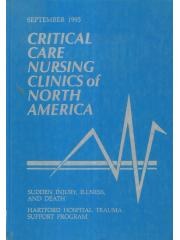
The management of patients in crisis is one of the greatest challenges that emergency
nurses and critical care nurses face every day. The initial focus of care always is directed
at lifesaving and limb-maintaining interventions. An immediate history of recent events
and underlying health problems is needed. This necessity is intertwined with the ongoing
assessment of the patient s condition. The emergency nurse and critical care nurse must
have an in-depth understanding of the pathophysiologic changes that occur during a
multitude of patient problems. The purpose of the first half of this issue of the Critical Care
Nursing~ Clinics OfNorth America is to provide an opportunity for understanding the perti nent
factors associated with the most common causes of sudden injury, illness, and deatb.
Each of the following articles includes a review of (1) the incidence of a specific problem;
(2) the identified cause of the problem; (3) pathophysiologic changes; (4) emergency inter
ventions taken; (4) nursing management of the situation; and (5) preventive strategies. We
have sought to present a wide range of clinical problems that will apply to all areas of
nursing practice.
The opening article by Patton and Pacetti deals with sudden cardiac death. This article
moves beyond the basic concepts frequently reviewed and highlights both the structure-
function and the electrogenie theory. Other issues reviewed include acute and chronic
lesions of the myocard ium, hypertrophy and cardiomyopathy, non-ischemic card iomyopa-
thies, sudden cardiac death, and congenital anomalies. The article by JaccJbs presents a
comprehensive review of neurologic events using a generic approach before focusing on
specific medical and traumatic conditions that are encountered frequently. Assessment of
the patient is emphasized in this article along with the medical and nursing interventions
required for the effective management of these critical events.
Rescorl s article discusses concepts surrounding environmental emergencies, with atten-
tion to the ability to withstand heat, cold, electrical energy, and eaten or-injected toxins.
The best defense against injury is prevention, it is important to lea rn about the environment
where one plans to live, work, or play, with an awareness of the habits and habitats of
the animals in one s surroundings. Pediatric emergencies are described by Vernon-I~evett,
noting that they encompass a wide range of illnesses with similarities and differences.
This article addresses only the most common illnesses seen in children, organizing them
according to organ systems and common final pathways within a system. Pediatric emer-
gencies tend to progress very rapidly, but they usually are treated readily with accurate
assessment and rapid intervention.
A review" of sudden infant death syndrome is given by O Donnell and Gaedeke. This
syndrome is the leading cause of death of infants in the United States between 1 month
and I year of age. |he environmental and maternal risk factors contimle to be evaluated
further to identity infants at risk and to develop prevention strategies. The anguish associ-
ated with sudden infant death syndrome cannot be expressed adequately and must be
included in any discussion of it. Keenarfs article focuses on the role of nursing assessment
of traumatic events in sudden illness, injury, and death. The critical component of this
role is patient assessment. The primary and secondary surveys of trauma assessment offer
the nurse a systematic method of assessing trauma patients not only for injuries, but also
fur the development of potential complications. The trauma nurse plays a critical role in
the assessment of the trauma patient. This assessment spans from the time of the patient s
作者简介
目录信息
读后感
用户评价
这本书对新兴技术和未来趋势的探讨,展现了其超越时效性的前瞻性视野。在危重症护理领域,技术的迭代速度令人目眩,新的呼吸机模式、连续性肾脏替代疗法(CRRT)的优化方案,以及人工智能在血流动力学监测中的应用,层出不穷。这本书没有仅仅停留在介绍当前的标准操作流程上,而是花了相当的篇幅去展望这些前沿技术是如何重塑未来ICU护理的。例如,在神经重症方面,它对颅内压(ICP)和脑灌注压(CPP)的动态管理进行了深入剖析,并探讨了如何利用新兴的微创监测技术来指导镇静和镇痛策略。这种对未来趋势的把握,让我觉得我读的不是一本“存量知识”的总结,而是一张“未来地图”。它让我开始思考,在接下来的五年里,我的专业技能需要朝哪个方向发展才能保持竞争力。对于那些雄心勃勃,不甘于只做现有流程执行者的年轻护士来说,这种前瞻性的内容激励作用是巨大的,它为我们指明了持续学习和自我提升的方向。
我必须强调这本书在人文关怀和伦理困境处理上的深度。重症监护不仅仅是机械和药物的堆砌,它更关乎生命质量、家庭支持以及在极端压力下的道德抉择。这本书非常勇敢地触及了这些“软性”但至关重要的议题。它没有回避关于生命支持撤除的艰难对话、关于知情同意的复杂性,以及如何在高强度的照护压力下维护自身的心理健康。书中专门辟出章节讨论“临终关怀”在ICU中的整合,以及如何与患者家属进行富有同理心的沟通,尤其是在面对灾难性的神经系统预后时。这种对患者整体性和家庭整体性的关注,极大地拓宽了我的职业视野。我开始意识到,作为ICU护士,我们不仅是技术专家,更是沟通的桥梁和痛苦的见证者。书中提供的沟通脚本和冲突解决策略,对于处理那些充满情绪张力的家庭会议非常有帮助。它提醒我们,在追求最优生理指标的同时,绝不能牺牲患者的尊严和家庭的福祉。这部分内容,是任何纯粹的技术手册都无法替代的宝贵财富。
从排版和视觉设计的角度来看,这本书的用心程度也让人赞叹。在快节奏的重症监护室里,时间就是生命,清晰、高效的信息传递至关重要。这本书在这方面做得极其出色。它的图表设计简洁明了,色彩运用克制而有效,关键信息点总是被突出显示,比如那些需要立即关注的“红旗”警报参数或剂量范围。我发现,即便是那些篇幅较长的技术性章节,由于逻辑结构的清晰和分段的精妙,阅读起来也不会感到压力。特别是那些专门用于快速参考的表格和算法图,我已经把它们打印出来贴在了我的工作区域附近,以便在压力最大的时候能够迅速定位信息。这不仅仅是一本供案头精读的书籍,更是一个实打实的工具箱。很多医学教材的内容往往过于密集,需要花费大量时间去筛选有效信息,但这本书似乎深谙重症护士的痛点,它把“知识密度”和“可检索性”做到了完美的平衡。这种对用户体验的关注,在专业的学术出版物中是相对少见的,它体现了编者团队对一线工作的深度理解和尊重。
这本书简直就是一本为初入ICU的护士量身定制的指南,内容详实得让人惊叹。我刚开始接触危重症护理的时候,面对那些复杂的监护仪和层出不穷的病情变化,真是手足无措。这本书的切入点非常实用,它没有把我们一下子推到那些晦涩难懂的理论深处,而是从最基础、最常见的临床场景入手。比如,关于心血管支持的章节,作者用非常直观的图表和流程图,清晰地展示了从评估心输出量到调整血管活性药物剂量的一系列步骤。我特别喜欢它对“为什么”的解释,不仅仅告诉你“怎么做”,更深入地剖析了背后的生理学和药理学原理,这让我对自己的操作更有信心,不再是机械地执行医嘱。阅读过程中,我感觉自己像是有位经验丰富的前辈在我身边手把手地指导,尤其是在处理那些突发的恶性心律失常时,书中提供的快速反应清单简直是救命稻草。它把那些教科书上写得云山雾罩的知识点,用一种非常接地气、可以立刻应用到床旁的方式呈现出来,极大地缩短了我从理论到实践的过渡期。对于任何渴望在急性期护理领域站稳脚跟的护理专业人士来说,这本书的实操价值无可替代,它真正做到了将复杂的临床决策过程简化、透明化。
这本书的叙事风格非常引人入胜,它没有采用那种冰冷、刻板的学术写作腔调,反而更像是一系列精心策划的病例讨论会录音整理稿。我常常在阅读时产生一种身临其境的感觉,仿佛正坐在一个挤满了顶尖专家的会议室里,听他们激烈而又富有建设性地辩论一个棘手的病例。每个章节的开头都会抛出一个非常典型的、让人印象深刻的临床困境,比如多器官功能障碍综合征(MODS)的早期识别与干预,随后便是对现有证据的梳理、不同治疗流派的比较,最后落脚到“最佳实践”的总结。这种讨论式的结构,极大地激发了我的批判性思维。它鼓励你质疑既定的流程,去探究不同的选择背后的逻辑和风险。我特别欣赏它在讨论循证医学证据时的那种平衡感,它会诚实地指出哪些领域是证据薄弱的“灰色地带”,而不是故作全能地给出绝对的答案。这对于我们这些需要在有限资源和不确定性中做决策的临床工作者来说,是极其宝贵的。读完之后,我感觉自己的临床思维层次被提升了,不再满足于“照章办事”,而是开始主动思考“为什么这个患者需要这个特定的治疗方案”。这本书真正培养的是一种独立解决问题的能力,而不是被动接受知识。