
具体描述
Marketing is the business function that identifies customer needs and wants, deter-
mines which target markets the organization can serve best, and designs appro-
priate products, services, and programs to serve these markets. However, market-
ing is much more than just an isolated business function--it is a phiJosophy that
guides the entire organization. The goal of marketing is to create customer satis-
faction profitably by building value-laden relationships with important customers.
The marketin~ deparrmenr cannot accomplish this goal by itself.,At must team up
closely with other departments in the company and partner with other organiza-
tions throughout its enrire value-delivery sysrem ro provide superior value to cus-
tomers. Thus. marketing calls upon everyone in the organization to "think cus-
tomer" and to do all they can to help create and deliver superior customer value
and satisfaction. As Professor Stephen Burnett of Northwestern puts it, qn a truly
great marketing orgamzarion, you can t tell who s in the marketing department.
Everyone in the organization has to make decisions based on the impact on the
consumer."
Many people see marketing only as advertising or selling. But real market-
ing does not involve the art of selling what you make so much as knowing what
to make! Organizations gain market leadership by understanding consmner needs
and finding solutions that delight customers through superior value, quality, and
service. If customer value and satisfaction are absent, no amount of advertising or
selling can compensate.
Marketing is all around us and we all need to know something about it.
. , . , z .
Marketing is used not only by manufacturing compames, v~holesalers, and retail-
ers. but b3 all kinds of individuals and organizations. Lawyers, accountants, and
doctors use marketing to manage demand for their services. So do hospitals, muse-
ums, and performing arts groups. No politician can get the needed votes, and no
resort the needed tourls:s, without developing and carrying out marketing plans.
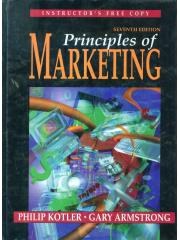
Principles of Marketing is designed to help students learn about and apply the
basic concepts and practices of modern marketing as they are used in a wide vari-
ety of settings: in product and service firms, consumer and business markets, profit
and nonprofit organizatmns, domestic and global companies, and small and large
businesses.
People throughout these organizations need to know how to define and seg-
ment a market and how to position themselves strongly by developing need-satis-
fying products and services for chosen target segments. They must know how to
price their offerings to make them attractive and affordable and how to choose
and manage intermediaries to make their products available to customers. And
they need to know how to advertise and promote products.so customers will know
about and want them. Clearly, marketers need a broad range of skills in order to
sense, serve, and satisfy consumer needs.
Students also need to know marketing in their roles as consumers and citi-
zens Someone is always trying to sell us something, so we need to recognize the
methods they use. And when students enter the lob market, they must do "mar-
keting research" to find the best opportunities and the best ways to "market them-
selves" to prospective employers. Many will srart their careers with marketing jobs
in sales forces, in retailing, in advertising, in research, or in one of a dozen other
marketing areas.
作者简介
目录信息
读后感
用户评价
如果要用一个词来形容这本书带来的最大价值,我会选择“深度校准”。我过去阅读了不少关于市场营销的材料,它们往往过于强调“战术”的更新——比如最新的社交媒体玩法、最新的算法优化技巧。然而,这本书却强迫我后退一步,重新审视那些从未改变的“战略”基石:人性的需求、供需的永恒悖论、以及信息不对称下的决策过程。它像是给我提供了一个高倍显微镜,让我能看清那些看似固定的市场结构是如何在微观层面不断蠕动和演化的。这种对底层逻辑的追溯,使得我对当下每一个新出现的“热点”都能保持一种审慎的、批判性的眼光,避免被短暂的潮流所裹挟。它教会我如何去提问,而不是仅仅满足于现有的答案,这对于一个终身学习者来说,是比任何具体的技巧都更为宝贵的财富。
章节的组织结构,展现了作者对教学法的深刻理解。它似乎是为那些渴望从零开始建立完整市场认知体系的初学者量身定制的,但其深度又足以让资深从业者从中挖掘出新的视角。开篇部分用极简的语言勾勒出了市场经济运作的基本图景,如同建筑师在施工前绘制的宏伟蓝图,奠定了坚实的基础。随后,内容开始向各个关键职能领域(如定价策略、渠道管理、品牌定位)进行细致的分解。最让我称道的是,每一个核心理论的阐述之后,都会紧跟着一系列精心设计的“思考题”或“实践挑战”。这些挑战不是那种可以轻易在网上搜索到答案的简单选择题,而是需要读者结合自身经验进行深度剖析的开放式问题,极大地促进了理论与实践的结合。这种“教—思—练”的循环模式,确保了知识的内化,而非浅尝辄止。
这本书的装帧设计简直让人眼前一亮,那种沉甸甸的质感,拿在手里就知道不是什么敷衍之作。封面设计采用了极简主义风格,主色调是深沉的墨蓝,配上烫金的标题字体,透露出一种低调的专业感。我特别欣赏它在细节处理上的用心,比如书脊的压纹,在不同光线下会呈现出微妙的光影变化,这种对视觉体验的关注,无疑提升了阅读的愉悦度。内页纸张的选择也极为考究,米白色的纸张,既能保护视力,又不会显得过于廉价,墨水的渗透度控制得非常好,字迹清晰锐利,即便是长时间阅读也不会感到眼睛疲劳。装帧的装订方式非常牢固,即便是频繁翻阅查找资料,书页也不会松散脱落,这对于我这种需要经常查阅参考书的读者来说,简直是一个福音。从包装到实体,这本书都在向你传达一种信号:这是一本严肃且值得信赖的专业书籍。我甚至觉得,仅仅是把它放在书架上,也能为整个书房增添几分专业气息。这种对产品本身的精益求精,已经超越了内容本身,形成了一种完整的阅读体验,不得不令人佩服出版方在工艺上的投入与追求。
这本书的叙事风格,老实说,一开始让我有些不适应,因为它完全颠覆了我对“教科书”的固有印象。它不像是那种干巴巴地陈述事实的官方教材,反而更像是一位经验丰富的行业老兵,坐在你面前,用一种既充满智慧又带着点儿戏谑的语气,跟你分享他几十年的实战心得。语言的组织极其灵活,时而化用古典哲学中的概念来比喻现代商业困境,时而又蹦出一些非常接地气、甚至略带讽刺的业界黑话,让你在会心一笑的同时,深刻领悟到其中的真谛。这种充满个性和张力的文风,使得原本可能枯燥的理论学习过程,变成了一次充满互动的思想对话。我发现自己不再是被动地接受信息,而是积极地与作者的观点进行辩论和碰撞。这种阅读体验,极大地增强了知识的吸收效率,因为它调动了读者的情感和批判性思维,而不是仅仅依靠死记硬背。
我最近沉迷于探索那些能够真正触及商业灵魂深处的理论构建,而这本书的逻辑框架,可以说是近期我接触到的最为严谨和富有洞察力的。它没有沉溺于那些浮于表面的营销口号和过时的案例,而是深入剖析了现代市场行为背后的深层心理学和社会学基础。作者似乎拥有一种近乎解剖学的能力,将复杂的市场动态分解为一个个清晰可辨的组成部分,然后用精妙的数学模型和逻辑链条将它们重新组合起来。阅读过程中,我多次停下来,反思自己过去对某些商业现象的理解是否过于片面。尤其是在探讨“价值共创”这一概念时,书中提出的多维度评估体系,彻底颠覆了我过去那种单向输出的传统营销思维。它更像是一部高级的思维工具箱,而不是简单的知识手册。每一个章节的过渡都设计得浑然天成,仿佛是大师的乐章,层层递进,高潮迭起,让人欲罢不能地想要探究下一个理论的精妙之处。