
具体描述
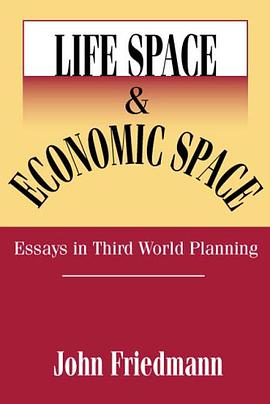
John Friedmann is internationally known for his pathbreaking work in urban and regional development planning theory. Life Space and Economic Space contains some of his most original and controversial essays on spatial and territorial development in the low-income countries of the world. The essays focus on a conflict he considers fundamental to human existence: that conflict between life space and economic space. By "life space" Friedmann means the bounded territories over which we strive to exert some degree of self-governance and which constitute the human habitat. By "economic space" he means the ubiquitous global space of market relations.Friedman demonstrates the implications of his theoretical position in a number of ways: he examines development in Southeast Asia, introduces the notion of "world cities, " and presents a politico-territorial model of rural development which he calls agropolitan. The analysis extends in wide-ranging fashion from the space of global relations to the most intimate space of the household economy which, when linked to other households, constitutes the economy of the barrio or neighborhood. In a chapter proposing a dual-track model of development, he sketches a model of the barrio economy drawn from Latin American experience and based on social mobilization, collective self-empowerment and political action.Friedmann perceives a global crisis which he traces to the dissolution of territorial relations. This he believes results from penetration of the global system of markets into the remotest corners of the world, undermining traditional cultures and ways of life. The consequence is incipient breakdown, he asserts, and we need to repoliticize spaceand subordinate the power of capital to the collective will of people organized to work toward common ends. This deliberately provocative collection of essays includes an autobiographical fragment providing contextual information about the author.
作者简介
目录信息
读后感
用户评价
这本书最引人入胜的部分,或许在于它成功地架设了一座桥梁,连接了原本看似泾渭分明的两个研究领域。我原以为“生活空间”和“经济空间”的研究路径是两条平行线,各自有其成熟的理论体系和分析工具。然而,作者通过引入一系列跨界案例——比如共享经济的兴起如何重新定义了私人空间的边界,或者远程工作模式如何模糊了工作与家庭的时间和地理界限——展示了这两者是如何在当代社会中相互渗透、彼此塑造的。这种系统性的整合能力,体现了作者扎实的跨学科功底,也为未来的研究指明了方向。它不再是“要么经济要么生活”的二元对立,而是探索一种动态的、共生的、常常充满矛盾的**共存状态**。读完后,我感到头脑中原有的知识结构正在被轻轻地松动,一些旧有的分类标签正在瓦解,取而代之的是更加流动的、更贴近现实复杂性的理解框架。
本书的文字风格极其沉稳而富有韵律感,不像某些学术著作那样干涩难懂,反而更像是一部跨学科的散文集,充满了哲学思辨的张力。作者擅长使用并置(juxtaposition)的手法,将宏大的历史变迁与个体一生的起伏并置,使得每一个论点都具有了史诗般的厚重感。在探讨城市扩张的论述中,他没有简单地批判“圈地运动”,而是冷静地剖析了人类对“确定性”的永恒追求,这种追求如何驱动了我们对土地的丈量、分割和占有,以及这种占有欲望最终如何反噬了我们所珍视的“生活空间”。语句的组织充满了一种克制的张力,你知道作者内心汹涌着复杂的情绪和深刻的见解,但他选择用精确、近乎古典的句式来表达,这种抑制反而增强了文字的力量,让读者不得不放慢速度,咀嚼每一个词语背后的多重含义。
这本书的叙事节奏犹如一位老练的建筑师,在引导我穿梭于那些看似无关的“空间”之间,却又在不经意间揭示了它们之间内在的、坚实的联系。作者并没有急于抛出宏大的理论框架,而是从极微观的个体经验入手,细腻地描摹了日常生活场景中,人们如何构建、定义和协商他们的“生活空间”。这种空间不仅仅是物理上的居所、通勤路线,更是一种心理上的舒适区、社会交往的边界。我尤其欣赏作者对于“边缘地带”的刻画——那些介于清晰定义的家庭空间和公共领域之间的模糊区域,它们如何成为创新、冲突和身份重塑的温床。这种对日常微观尺度的关注,使得抽象的社会学概念变得触手可及,仿佛我正亲身站在那些被精心维护或被无意遗弃的空间的门槛前,感受着光影与空气的微妙变化。它迫使我重新审视自己每天穿梭往返的那些场所,不再只是一个被动的“使用者”,而是开始思考我如何通过每一次选择、每一次停留,参与到这些空间的塑造之中。
读到全书的最后部分,我感受到一种难以言喻的惆怅,但这并非源于悲观,而是源于对现实复杂性的深刻理解后产生的敬畏。作者的结论是审慎的,他并没有提供一个万能的解决方案来解决空间错位带来的社会不公或心理疏离。相反,他似乎在邀请我们所有人——无论是政策制定者、城市规划师,还是仅仅是日常通勤的普通居民——去正视这种永恒的紧张关系:我们渴望稳定和界限(生活空间的需求),但经济系统却要求流动性和无限扩张(经济空间的需求)。这种内在的冲突是人类社会结构的一部分,是无法一劳永逸解决的议题。这本书的价值不在于给出答案,而在于它以一种近乎文学性的精确度,将我们置于这个永恒的“两难境地”之中,让我们清晰地看见我们自己所站立的这个充满张力的“场域”。它是一部需要反复品味的著作,每次重读,都会从不同的缝隙中捕捉到新的光芒。
深入阅读后,我发现作者对“经济空间”的解读,远超出了传统教科书上对市场效率或资源配置的刻板描绘。他巧妙地将经济活动——那些看似纯粹的买卖、投资、劳动——锚定在特定的地理和社会肌理之中。那些看似坚不可摧的金融网络,其基础却是社区信任的微妙平衡,是特定行业集群中代代相传的隐性知识。例如,书中对某个传统手工业聚落的案例分析,细致入微地展示了资本流动如何被地方性的伦理规范所钳制或加速,这种“嵌入性”的分析角度令人耳目一新。这不再是关于“最优解”的讨论,而是关于“在地性”如何形塑经济逻辑的深刻洞察。它挑战了那种认为经济力量可以无视地域差异而横扫一切的傲慢假设,让我看到每一个经济决策背后,都有一张由历史、人际关系和地方规制交织而成的复杂网。这种对经济“人性化”的回归,极具启发性,也让人对全球化的宏大叙事产生审慎的反思。
only preface and epilogue. regional planning. essays in 1980-90s. there is no universal development
only preface and epilogue. regional planning. essays in 1980-90s. there is no universal development
only preface and epilogue. regional planning. essays in 1980-90s. there is no universal development
only preface and epilogue. regional planning. essays in 1980-90s. there is no universal development
only preface and epilogue. regional planning. essays in 1980-90s. there is no universal development