
具体描述
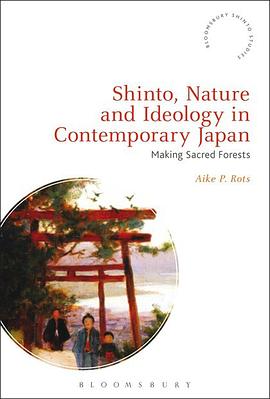
Shinto, Nature and Ideology in Contemporary Japan is the first systematic study of Shinto's environmental turn. The book traces the development in recent decades of the idea of Shinto as an 'ancient nature religion,' and a resource for overcoming environmental problems. The volume shows how these ideas gradually achieved popularity among scientists, priests, Shinto-related new religious movements and, eventually, the conservative shrine establishment.
Aike P. Rots argues that central to this development is the notion of chinju no mori: the sacred groves surrounding many Shinto shrines. Although initially used to refer to remaining areas of primary or secondary forest, today the term has come to be extended to any sort of shrine land, signifying not only historical and ecological continuity but also abstract values such as community spirit, patriotism and traditional culture.
The book shows how Shinto's environmental turn has also provided legitimacy internationally: influenced by the global discourse on religion and ecology, in recent years the Shinto establishment has actively engaged with international organizations devoted to the conservation of sacred sites. Shinto sacred forests thus carry significance locally as well as nationally and internationally, and figure prominently in attempts to reposition Shinto in the centre of public space.
Reviews
“A comprehensive overview … [Aike P. Rots] focuses not only on what these paradigms say but also what they leave out, and how they relate to actual practices and campaigns at the local and national levels. He is generous with his sources but pays attention to the distance between their rhetoric and reality.” – Reading Religion
“A significant and valuable contribution to the fields of religious studies, Japanese studies, Shinto studies, and Asian studies generally ... [It] provides the kind of thorough, fair, and at times sharply critical exposé of contentious issues pulsing through current shrine Shinto and Japanese nationalism.” – Contemporary Japan
“Shinto's latest iteration as a “green religion” is critically examined in this timely volume. Is the new environmental paradigm a rebranding strategy aimed at gaining legitimacy? Can Shinto activism expand beyond local preservation activities to engage national and global issues? How is it related to the imperial-ethnic paradigms, which define the Shinto establishment's neonationalistic political agenda? These questions and more are seriously engaged here.” – Mark R. Mullins, Professor of Japanese Studies, University of Auckland, New Zealand
“In this illuminating book, Aike Rots critically analyses the much-vaunted image of Shinto as a 'nature religion' promoting environmentalism, showing that Shinto environmentalism is infused with themes of nationalism and full of ambiguities. As he demonstrates, Shinto 'sacred forests' that are depicted as manifestations of the natural world may be highly manufactured, while the shrines that promote them may take sponsorship from businesses involved in environmentally-damaging activities.” – Ian Reader, Professor Emeritus, The University of Manchester, UK
“This well-researched analysis of the “Shinto environmentalist paradigm” centred on “sacred forests” (chinju no mori) makes an important and timely contribution to the study of religion in Japan and to current debates regarding Shinto ideology.” – Erica Baffelli, Senior Lecturer in Japanese Studies, University of Manchester, UK
作者简介
Aike P. Rots is Associate Professor in Contemporary Japanese Culture at the University of Oslo, Norway.
目录信息
List of figures
Note on style
1. Introduction
2. Defining Shinto
3. Love of nature
4. The Shinto environmentalist paradigm
5. Chinju no mori
6. Landscapes of the past
7. Forests for the future
8. Acorns for Tohoku
9. Going green, going global
Conclusion
Bibliography
Index
· · · · · · (收起)
读后感
用户评价
这本书的标题暗示着一种历史的纵深感,它似乎不满足于对当下的描述,而是要追溯一条从古代经由江户时代,最终抵达现代的绵长思想线索。对我而言,理解任何一种强大的意识形态,都必须回到其历史的“断裂点”和“延续点”。神道教的独特性在于其对“谱系”和“传承”的极端重视,这种对连续性的强调,在面对现代化带来的剧烈社会变迁时,扮演了怎样的稳定器的角色?我推测,作者可能会详细阐述明治维新时期,国家如何通过对古老神话的重新编纂,构建起一个强有力的现代民族叙事。这种“发明传统”的过程,必然涉及对原有地方性神祇信仰的清洗、整合与等级划分。如果能看到这种意识形态建构的“幕后操作”,即哪些元素被保留、哪些被边缘化,以及这种选择背后的权力逻辑,那么这本书的价值就不仅仅是学术性的,更具有社会学的警示意义。我渴望看到那些被历史洪流冲刷掉的、但可能仍残存于民间记忆中的“异端”或“边缘”神灵的故事。
这本书,光是书名就让人产生无限遐想。它似乎触及了一个极为复杂而微妙的领域,那就是在当代日本社会中,神道教的理念是如何与自然观相互交织,并最终构建起某种主流意识形态的。我一直对日本文化中的“物哀”和“幽玄”抱有浓厚的兴趣,而神道教,作为其精神内核的基石,其影响力远非仅仅局限于宗教仪式。我猜想,作者一定深入探讨了现代性冲击下,传统信仰如何进行自我调适与重塑,比如在环境保护、国家认同,乃至日常审美趣味中,神道对“洁净”与“不洁”的区分,以及对特定自然景观(如神木、圣地)的膜拜,是如何被提炼和挪用,成为一种隐性的社会规范。如果这本书能细致地剖析这些内在的逻辑链条,解释神道教如何超越单纯的信仰层面,渗透进公共话语和政策制定中,那无疑是一次思想上的盛宴。我特别期待它能提供一些具体的案例研究,比如现代建筑设计中对自然元素的引用,或是特定节日庆典中对古老仪式的“复兴”,如何服务于某种当代政治或社会建构的目的。这种宏大叙事下的微观观察,往往最能揭示一个社会深层的文化心理。
读完前言和目录后,我的直觉是,这本书的视角可能会相当具有批判性,但绝非那种简单地将神道标签为“落后”或“迷信”的低级批判。真正有价值的研究,应当是那种能展示复杂性的——即神道教在提供精神慰藉和文化归属感的同时,又是如何被权力结构所利用和形塑的。我对“自然”这个词在书中的处理方式格外感兴趣。在日本文化中,自然常常被赋予一种近乎神圣的、不可侵犯的特质,但这种对自然的“神圣化”是否在某种程度上阻碍了更具生态学意义的、以科学为基础的环境保护行动?换言之,神道式的“敬畏自然”与现代“保护环境”之间,在实践层面是否存在脱节,甚至冲突?这种张力,或许正是当代日本在面对气候变化和工业污染时所表现出的某种犹豫和矛盾的根源。我期待作者能够超越表面的美学赞叹,直面这种精神资源在现代危机中的效用与局限。
拿到这本书时,我首先被它严谨的学术气息所吸引,封面上那种冷静的分析态度,预示着这不是一本泛泛而谈的文化随笔,而是一部深入挖掘理论根基的作品。我非常好奇作者是如何处理“意识形态”这个沉重概念的。在现代日本语境中,意识形态的构建往往是微妙的、去中心化的,它不像某些西方理论那样具有清晰的对抗性或宣言性,而是更像一种弥散在日常生活中的“常识”。我希望作者能够提供一个精密的分析框架,来辨识和解构那些被自然化了的神道教元素。例如,关于天皇制与神道教的共生关系,这无疑是理解战后日本身份政治的关键。作者是否探讨了战后“去神道化”的努力,以及这种努力在多大程度上是表面的,而神道的核心宇宙观又是如何以更隐蔽的形式,继续影响着日本人看待自己与土地、历史的关系?我尤其关注那些关于“地方性”的论述,因为神道教的实践在不同地区差异巨大,地方的自然崇拜如何与中央集权的国家神道叙事进行张力互动,这才是理解日本文化韧性的关键所在。这本书如果能提供丰富的田野调查资料来支撑其理论推导,那就太棒了。
我一直认为,要真正理解一个民族的集体潜意识,必须从其最日常、最不易察觉的符号系统中入手。这本书如果能成功地将宏大的“意识形态”议题,通过“神道”和“自然”这两个具象的载体进行落地,那它就完成了一次非常出色的跨学科对话。我特别好奇作者是如何处理“审美化”与“政治化”之间的界限的。日本的茶道、花道,乃至对季节流转的敏感捕捉,无一不与神道教对“瞬间完美”和“物我合一”的追求相关。然而,当这种审美化的表达被系统性地运用到国家形象的塑造,或者被用于淡化历史上的深刻矛盾时,它就从一种精神追求异化成了意识形态工具。我希望作者能提供一些鲜活的、甚至略带讽刺意味的例子,来说明这种转化是如何发生的。比如,在旅游宣传中被浪漫化的“原始自然”,背后隐藏的土地私有权或资源开发权的问题,以及人们在享受这种“精神洗礼”时,对这些现实问题的集体失语。这种对美感背后阴影的挖掘,才是一个成熟的文化研究者应有的担当。