
具体描述
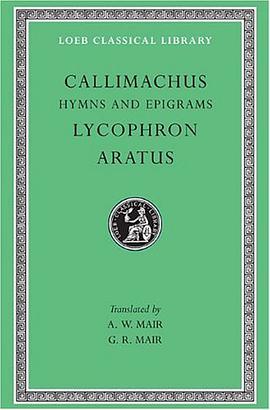
Callimachus of Cyrene, 3rd century BCE, became after 284 a teacher of grammar and poetry at Alexandria. He was made a librarian in the new library there and prepared a catalogue of its books. He died about the year 240. Of his large published output, only 6 hymns, 63 epigrams, and fragments survive (the fragments are in Loeb no. 421). The hymns are very learned and artificial in style; the epigrams are good (they are also in the Loeb Greek Anthology volumes).
Lycophron of Chalcis in Euboea was a contemporary of Callimachus in Alexandria where he became supervisor of the comedies included in the new library. He wrote a treatise on these and composed tragedies and other poetry. We possess Alexandra or Cassandra wherein Cassandra foretells the fortune of Troy and the besieging Greeks. This poem is a curiosity—a showpiece of knowledge of obscure stories, names, and words.
Aratus of Soli in Cilicia, ca. 315–245 BCE, was a didactic poet at the court of Antigonus Gonatas of Macedonia, where he wrote his famous astronomical poem Phaenomena (Appearances). He was for a time in the court of Antiochus I of Syria but returned to Macedonia. Phaenomena was highly regarded in antiquity; it was translated into Latin by Cicero, Germanicus Caesar, and Avienus.
作者简介
Callimachus of Cyrene, 3rd century BCE, became after 284 a teacher of grammar and poetry at Alexandria. He was made a librarian in the new library there and prepared a catalogue of its books. He died about the year 240. Of his large published output, only 6 hymns, 63 epigrams, and fragments survive (the fragments are in Loeb no. 421). The hymns are very learned and artificial in style; the epigrams are good (they are also in the Loeb Greek Anthology volumes).
Lycophron of Chalcis in Euboea was a contemporary of Callimachus in Alexandria where he became supervisor of the comedies included in the new library. He wrote a treatise on these and composed tragedies and other poetry. We possess Alexandra or Cassandra wherein Cassandra foretells the fortune of Troy and the besieging Greeks. This poem is a curiosity—a showpiece of knowledge of obscure stories, names, and words.
Aratus of Soli in Cilicia, ca. 315–245 BCE, was a didactic poet at the court of Antigonus Gonatas of Macedonia, where he wrote his famous astronomical poem Phaenomena (Appearances). He was for a time in the court of Antiochus I of Syria but returned to Macedonia. Phaenomena was highly regarded in antiquity; it was translated into Latin by Cicero, Germanicus Caesar, and Avienus.
目录信息
4. Bibliography
Introduction To The Phaenomena.
The Phaenomena
III. Lycophron—
Introduction:
1. The Life of Lycophron
2. Works
3. The Manuscripts
4. The Paraphrases
5. The Scholia
6. Bibliography
Alexandra
Maps Of The Stars
· · · · · · (收起)
读后感
用户评价
阅读完这本作品集的开篇部分,我立刻感受到了一种扑面而来的、强烈的历史回响。它的语言并非当代人习惯的那种直白叙事,而是充满了古典的韵律和克制的抒情。我感觉自己仿佛被卷入了一个遥远时代的回音室,那些句子像经过精心打磨的宝石,每一个词的选择都显得深思熟虑,没有一句是多余的。这种阅读体验是需要耐心的,它不像快餐文学那样能立刻提供满足感,而更像是一场马拉松,需要你沉下心来,去品味字里行间隐藏的那些细微的情感波动和哲学思辨。尤其是在那些描绘自然景物的段落中,那种宏大叙事下隐藏的个体渺小感,处理得非常到位。
这本书的节奏掌控得相当出色,即便它收录了不同体裁的作品,整体阅读的连贯性依然保持得很好。我特别欣赏作者是如何在严肃的探讨和轻松的讽喻之间进行优雅的切换。有时候,你会因为一段关于永恒的深刻思考而陷入沉思,紧接着,下一篇可能就以一种近乎机智的、略带嘲讽的口吻,解构了某种社会现象。这种张弛有度的叙事结构,使得长篇阅读过程中的疲劳感大大降低。它不是单向度的倾诉,更像是一场与作者智慧的对弈,你得时刻准备好迎接下一轮的思维挑战,这种动态的平衡感,非常难得。
从文学技法层面来看,这本书展示了作者对于语言驾驭的炉火纯青。我注意到它大量运用了复杂的句法结构和大量的典故引用,这无疑提高了阅读门槛,但同时,也极大地丰富了文本的内涵层次。对于那些熟悉古典文学背景的读者来说,这无疑是一场盛宴,你会不断地发现那些精心埋设的互文关系和致敬。然而,对于初次接触这类风格的读者,可能需要时常停下来查阅注解或者反复咀嚼才能真正领会其精髓。这种对读者知识储备的“要求”,反而形成了一种独特的筛选机制,确保了真正能欣赏到其深层价值的读者能够留下来。
这本书的封面设计,说实话,初看之下并没有立刻抓住我的眼球。它采用了一种略显古典的字体排版,底色是那种沉静的灰蓝色,让人联想到黄昏时分的光线。我原本期待着能看到一些更具视觉冲击力的现代设计元素,但事实是,它选择了一种更内敛、更注重文字本身美感的呈现方式。拿到手里,纸张的质感倒是出乎意料地好,厚实而带着一种微微的粗粝感,翻页时发出的沙沙声,很有仪式感。我猜想,作者或出版方是想通过这种朴素的包装,引导读者将注意力完全集中到文字的内容上,而不是被华丽的外表所干扰。
总而言之,这不仅仅是一部可以快速翻阅的书籍,它更像是一件需要时间去沉淀和体会的艺术品。它成功地营造了一种既古典又具有永恒生命力的氛围。我个人认为,它最强大的地方在于它能够不动声色地将宏大的宇宙观与极其细微的个人情感体验缝合在一起,不制造戏剧冲突,却在平淡的叙述中蕴含着巨大的情感张力。它不会提供简单的答案或安慰,更多的是提供了一种重新审视既有观念的视角,读完之后,我的内心久久不能平静,那种余韵久久不散,让人不由自主地想要重新翻开,去捕捉之前可能错失的那些微妙之处。