
具体描述
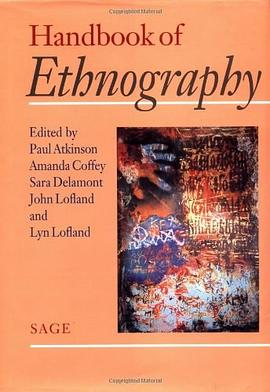
'I wish the Handbook of Ethnography had been available to me as a fledgling ethnographer. I would recommend it for any graduate student who contemplates a career in the field. Likewise for experienced ethnographers who would like the equivalent of a world atlas to help pinpoint their own locations in the field, the Handbook of Ethnography is it' - Journal of Contemporary Ethnography 'This wonderful Handbook establishes the central, and complex place ethnography now occupies in the human disciplines. All future work will begin here' - Norman K Denzin, University of Illinois, Urbana-Champaign 'A marvellous achievement! The Handbook has all the marks of a winner - compelling writing, comprehensive coverage and very useful discussions. This is a real benchmark for ethnography. It will set the background for debate and point to new directions for years to come.My graduate students will love it' - Jaber F Gubrium, University of Florida, Gainesville 'The Handbook of Ethnography compiles invaluable, original, critical essays on ethnographic work, earning it a place on everyone's must-have bookshelf' - Virginia Olesen, University of California, San Francisco 'The Handbook is a remarkable synthesis of existing thinking in and around ethnography' - Forum for Qualitative Social Research - follow the link below to read the complete review 'No self-respecting qualitative researcher should be without Paul Atkinson (et al's) handbook on ethnography. This really is encyclopaedic in concept and scope. Many "big names" in the field have contributed so this has to be the starting point for anyone looking to understand the field in substantive topic, theoretical tradition and methodology. The chapters on visual ethnography and semiotics expand the field marvellously, while those on field notes and on ethics are accomplished surveys of the field' - SRA News Ethnography is one of the chief research methods in sociology, anthropology and other cognate disciplines in the social sciences.This Handbook provides an unparalleled, critical guide to its principles and practice. The volume is organized into three sections. The first systematically locates ethnography firmly in its relevant historical and intellectual contexts. The roots of ethnography are pinpointed and the pattern of its development is demonstrated. The second section examines the contribution of ethnography to major fields of substantive research. The impact and strengths and weaknesses of ethnographic method are dealt with authoritatively and accessibly. The third section moves on to examine key debates and issues in ethnography, from the conduct of research through to contemporary arguments. The result is a landmark work in the field, which draws on the expertise of an internationally renowned group of interdisicplinary scholars. The Handbook of Ethnography provides readers with a one-stop critical guide to the past, present and future of ethnography. It will quickly establish itself as the ethnographer's bible.
作者简介
Paul Atkinson is Emeritus Professor of Sociology at Cardiff University. Recent publications include For Ethnography (SAGE 2014) and Thinking Ethnographically (SAGE 2017). The fourth book in his quartet will be Crafting Ethnography, also for SAGE. The fourth edition of Hammersley and Atkinson Ethnography: Principles in Practice was published by Routledge in 2019. He is a Fellow of the Academy of Social Sciences and of the Learned Society of Wales.
目录信息
读后感
用户评价
这本书的书名似乎是《人类学手册》,但它给我的感觉更像是一份关于现代社会生活纹理的细致入微的地图,只是绘制的工具不是墨水和纸,而是深入现场的观察和对日常行为的“在场”理解。我一直对那些我们习以为常、却从未停下来深究其意义的习俗抱有强烈的好奇心,这本书恰好满足了这种探求欲。它不是那种堆砌着晦涩理论的学术专著,反而充满了生命力。作者似乎拥有某种“透明人”的能力,能够穿梭于不同的文化情境中,捕捉那些转瞬即逝的眼神交流、肢体语言的微妙变化,以及群体中无声立下的契约。我尤其欣赏其中对“边缘人群”生活片段的描绘,那种不带批判、纯粹记录的笔法,让人得以瞥见不同生存逻辑下的世界观。阅读过程中,我时常会停下来,反思自己平日里那些不假思索的行动准则,仿佛被引导着,从一个局外人的角度重新审视自己所处的“常态”。这本书的价值不在于提供一个固定的答案,而在于提供了一套观察世界的全新透镜,让原本模糊的社会景观变得清晰可辨,充满了层次感和张力。
这本书的文字风格颇具一种沉静的力量,它不试图用华丽的辞藻来吸引眼球,而是依靠事实本身的重量和逻辑的严密性来征服读者。我感受最深的是,作者似乎对人类的“非理性”行为抱有一种近乎虔诚的尊重。许多主流观点会试图将那些看似不合逻辑的行为归类或简化,但本书却坚持深入挖掘其内部的合理性,试图站在参与者的角度去理解“为何如此”。这种去中心化的视角是极其宝贵的。例如,书中对某个特定社区如何处理“污名”和“荣誉”的描述,细致到了每一个家庭祭祀仪式的变化上,这让我对文化变迁的复杂性有了更深刻的认识——它不是线性的发展,而是充满了回溯、抵制与适应的螺旋式上升。读完此书,我发现自己看邻居的眼神都变了,不再是简单的判断,而是试图去解码他们日常生活中那些未被言说的规则和情感张力。它有效地“去陌生化”了我们习以为常的环境,同时也“陌生化”了那些我们认为遥远的他者。
这本书的阅读体验,就好比跟着一位经验丰富、但又极富同理心的向导,在人类经验的迷宫中进行一次漫长而又充满发现的徒步旅行。它并非那种要求你一口气读完的叙事小说,而更像是一系列精心策划的田野记录集合,每一章都像是一个独立的小宇宙,拥有其独特的引力场和内部逻辑。我惊喜地发现,作者在处理复杂议题时,始终保持着一种令人敬佩的平衡感——既没有陷入过度浪漫化的陷阱,也没有屈从于冰冷的、标签化的社会学分析。相反,那些鲜活的访谈片段和现场描述,如同散落在地上的珍贵碎片,最终拼凑出一个充满人性挣扎与和谐共存的宏大图景。我特别喜欢它对“意义构建”过程的探讨,如何在一个群体中,看似随机的符号如何被赋予神圣或禁忌的色彩。这种对底层运作机制的挖掘,极大地拓展了我对“文化”这一概念的理解深度。它让你意识到,我们所依赖的现实,不过是无数次集体协商和习惯性重复的产物,而本书则详细记录了这些协商是如何发生的。
说实话,最初翻开这本书时,我有些担心它会过于枯燥,充斥着只有专业人士才能理解的行话。然而,实际的阅读过程完全推翻了我的预设。作者的叙事节奏把握得相当到位,懂得何时该收紧焦点,聚焦于某个个体微不足道的日常动作,何时又该放开视野,将这些微观细节置于更广阔的社会结构背景下进行审视。这种动静结合的叙事策略,使得即便是探讨非常严肃的社会现象,读起来也丝毫不会感到气闷。我个人认为,对于那些对社会学、人类学略有耳闻,但苦于找不到优秀入门或深化读物的人来说,这本书简直是一份及时雨。它用最朴实、最贴近生活的例子,阐释了那些抽象的理论概念,比如“礼仪的权力”或“仪式的时间性”。我甚至能想象出作者在那些异域(或看似寻常的本地)环境中,是如何耐心地等待、倾听和记录的。它带给我的不仅仅是知识,更是一种对待世界应有的耐心和细致入微的观察能力。
这是一部需要“慢读”的作品,它不是那种可以被快速消化并遗忘的通俗读物。它更像是一份邀请函,邀请你暂时放下自己已有的知识框架,跟随作者的脚步,重新学习如何用一双没有预设的眼睛去看待人类的集体行动。全书的结构组织得非常清晰,虽然主题涵盖广泛,但各部分之间的内在关联性极强,像一张编织精密的挂毯,每一条线索都相互交织,共同支撑起整体的重量。我尤其欣赏作者在处理跨文化比较时所展现出的谦逊态度,没有轻易地做出优劣评判,而是专注于描述差异如何塑造了不同的存在方式。这本书对我最大的启发在于,它清晰地展示了“知道”和“理解”之间的巨大鸿沟。你可以知道一个仪式的步骤,但只有通过这种深度的田野工作,才能真正“理解”这个仪式在参与者生命中的情感重量和功能定位。它无疑为任何想要深入理解人类社会复杂性和多样性的人,提供了一个坚实而又引人入胜的基石。