
具体描述
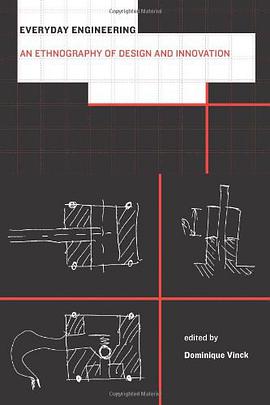
Everyday Engineering was written to help future engineers understand what they are going to be doing in their everyday working lives, so that they can do their work more effectively and with a broader social vision. It will also give sociologists deeper insights into the sociotechnical world of engineering. The book consists of ethnographic studies in which the authors, all trained in both engineering and sociology, go into the field as participant-observers. The sites and types of engineering explored include mechanical design in manufacturing industries, instrument design, software debugging, environmental management within companies, and the implementation of a system for separating household waste. The book is organized in three parts. The first part introduces the complexity of technical practices. The second part enters the social and cultural worlds of designers to grasp their practices and motivations. The third part examines the role of writing practices and graphical representation. The epilogue uses the case studies to raise a series of questions about how objects can be taken into account in sociological analyses of human organizations.
作者简介
目录信息
Introduction......Page 10
I Ordinary Technical Tasks and Their Complexity......Page 20
1 Socio-Technical Complexity: Redesigning a Shielding Wall......Page 22
2 The Nature and the Stakes of a Tool: The Genesis of a Design Aid Tool for Mechanical Engineering......Page 38
3 Social Complexity and the Role of the Object: Installing Household Waste Containers......Page 62
II The Social Worlds and Cultures of Design......Page 86
4 The Structural Engineer in the Design Office: A World, Its Objects, and Its Work Practices......Page 88
5 Contrasting Design Cultures: Designing Dies for Drawing Aluminum......Page 102
6 A Prototype Culture: Designing a Paint Atomizer......Page 128
III Technical Writing Practices......Page 144
7 Writing Procedures: The Role of Quality Assurance Formats......Page 146
8 The Role of Graphical Representations in Inter-Professional Cooperation......Page 168
9 Rough Drafts: Revealing and Mediating Design......Page 186
Epilogue: Approaches to the Ethnography of Technologies......Page 212
Notes......Page 236
Bibliography......Page 248
D......Page 254
O......Page 255
W......Page 256
· · · · · · (收起)