
具体描述
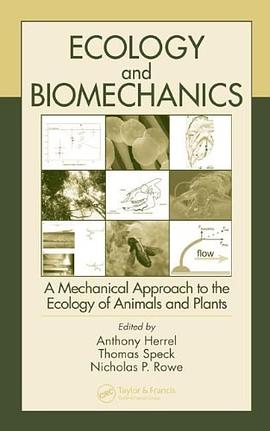
We live in a well-engineered universe. This engineering is present in every system and organism in existence, including in the actions and interactions of plants and animals. In fact, one could say that the function and movement of plants and animals is just as much a part of their makeup as chlorophyll and fiber or bone and blood. Consequently, if we want to understand the ecology of animals and plants especially in an integrated ecosystem, it follows that great insight can be gained by taking an approach that studies function and integration of parts rather than the individual parts themselves."Ecology and Biomechanics: A Mechanical Approach to the Ecology of Animals and Plants" offers a collection of state-of-the-art papers that ingeniously demonstrates how biomechanics can provide novel insights into long standing ecological and evolutionary questions. The majority of the book's chapters were originally presented at a symposium held at the annual meeting of the Society for Experimental Biology in Edinburgh, U.K., in 2004. Combining approaches from various disciplines, this volume covers subjects that encompass theoretical concepts and practical approaches involving research on both plants and animals, as well as interactions between the two.Although most of the examples emphasize distinct organism-environment relationships such as the grazing of ruminants, the book also includes a few examples that span larger temporal and spatial scales, achieving wider application across ecosystems. This can be seen in the chapter Implications of Microbial Motility on the Water Column Ecosystems, which highlights how microbial ecosystems can be understood from the mechanics, morphology, and motile responses of the individual organisms. Designed to serve as a reference for students and researchers, "Ecology and Biomechanics: A Mechanical Approach to the Ecology of Animals and Plants" paves the way for further research by demonstrating what can happen when the approaches from two seemingly disparate subdisciplines within the field of biology are creatively combined.
作者简介
目录信息
读后感
用户评价
这本书的结构安排堪称大师手笔,它没有采取传统的按部就班的讲解模式,反而更像是一部层层递进的悬疑小说。每一章节的过渡都衔接得天衣无缝,仿佛你刚刚被一个问题困住,翻页之后,答案便带着更宏大的背景知识翩然而至。我最喜欢它处理“复杂系统”问题的方式——它不是简单地罗列各个子系统,而是着重描绘它们之间错综复杂的反馈回路。比如,关于水流在湿地生态系统中如何影响微生物群落分布的论述,作者用一种近乎诗意的语言描述了水动力学如何塑造了生命的格局,这让我这个非专业读者也感到热血沸腾。它成功地避免了将科学问题工具化、纯粹化,而是赋予了每一个科学现象以生命和故事感。那种读完一章后,需要停下来,泡杯茶,在脑海中回味半天,才能真正吸收其精髓的感觉,正是优秀学术著作的标志。
这本书的视野广阔得令人咋舌,它完全打破了我过去对学科壁垒的固有认知。原以为这会是一本聚焦于某一个具体领域的专著,结果它却像一个百科全书式的向导,带领我们游览了从宏观气候模式到微观分子运动的整个光谱。其中对“能量耗散”在生命活动中的角色分析,尤其发人深省。作者没有停留在能量守恒的基本定律上,而是深入探讨了生命体如何利用不可逆的熵增过程来维持自身的有序性,这种哲学思辨的深度,在同类题材中是极其罕见的。我感觉这本书更像是一次关于“生存哲学”的探讨,只不过所有的论据都建立在坚实的科学观察之上。它让我开始重新审视效率与冗余、稳定与突变之间的微妙平衡,并思考人类文明在自然系统中所处的相对位置。
说实话,我对市面上很多科普读物都抱持着一种审慎的态度,因为它们常常为了追求流畅性而牺牲了严谨性。然而,这本作品成功地找到了一个近乎完美的平衡点。它的论证过程是无可指摘的,每一个结论都有明确的数据和清晰的逻辑链条支撑,让人信服。但与此同时,作者的文字风格极其富有个人魅力,幽默感恰到好处,时而引用一些鲜为人知的历史典故,时而又用极富画面感的比喻来解释高深的原理。比如,在解释某种材料的韧性时,作者将其比作一位老匠人手中经过无数次锤炼的金属,那种饱经风霜却又坚韧不拔的意象,瞬间就将一个复杂的材料科学概念具象化了。这种既要严谨又要易读的“双重任务”,对于作者而言无疑是巨大的挑战,而他完成得近乎完美。
这本书的真正价值,在于它提供了一种全新的观察世界的方法论。它不仅仅是知识的堆砌,更像是提供了一把万能钥匙,能够开启理解自然界诸多谜题的大门。特别是书中关于“尺度效应”的论述,作者通过对比不同尺度下物理规律的支配作用,揭示了为什么我们不能简单地将实验室中的发现直接推广到野外环境。这种对认知局限性的坦诚探讨,体现了作者的科学良知。我合上书本后,久久不能平静,脑海中充斥的不是记住的术语,而是对事物内在联系的全新认知框架。它迫使我走出舒适区,去质疑那些被视为“理所当然”的现象。这是一本值得反复阅读、每次都能从中挖掘出新东西的宝藏之书,它对于任何一个对世界抱有好奇心的人来说,都是一次不可多得的精神洗礼。
这本书,暂且称它为《绿野仙踪的物理法则》吧,简直是一场视觉和智力的盛宴!我原本以为这会是一本枯燥的教科书,充斥着复杂的公式和难以理解的图表,没想到作者的叙事方式如此引人入胜。开篇就将读者带入了一个栩栩如生的微观世界,仿佛能亲眼看到植物根系如何精确地应对土壤颗粒的阻力,每一片叶子的运动轨迹都像经过精心编排的芭蕾。书中的插图精美得令人惊叹,它们不仅仅是辅助理解的工具,本身就是艺术品。特别是关于仿生学的那一章,作者巧妙地将自然界的结构优化原理与工程学的最新进展结合起来,让我对“形式服从功能”这句话有了全新的、更深刻的理解。我尤其欣赏作者对细节的执着,比如对昆虫翅膀振动频率的描述,那种近乎偏执的精确度,让人感受到作者对自然界运行机制的敬畏。读完这一部分,我感觉自己对周围的一切都多了一层“物理透镜”,看山川河流,都像是看到了背后复杂而和谐的力学平衡。