
具体描述
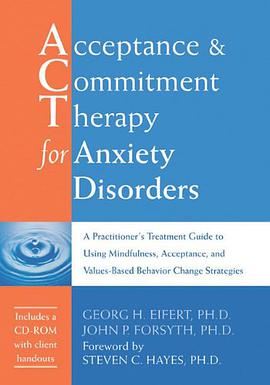
Acceptance and commitment therapy, or ACT (pronounced as a word rather than letters), is an emerging psychotherapeutic technique first developed into a complete system in the book Acceptance and Commitment Therapy by Steven Hayes, Kirk Strosahl, and Kelly Wilson. ACT marks what some call a third wave in behavior therapy. To understand what this means, it helps to know that the first wave refers to traditional behavior therapy, which works to replace harmful behaviors with constructive ones through a learning principle called conditioning. Cognitive therapy, the second wave of behavior therapy, seeks to change problem behaviors by changing the thoughts that cause and perpetuate them. In the third wave, behavior therapists have begun to explore traditionally nonclinical treatment techniques like acceptance, mindfulness, cognitive defusion, dialectics, values, spirituality, and relationship development. These therapies reexamine the causes and diagnoses of psychological problems, the treatment goals of psychotherapy, and even the definition of mental illness itself. ACT earns its place in the third wave by reevaluating the traditional assumptions and goals of psychotherapy. The theoretical literature on which ACT is based questions our basic understanding of mental illness. It argues that the static condition of even mentally healthy individuals is one of suffering and struggle, so our grounds for calling one behavior 'normal' and another 'disordered' are murky at best. Instead of focusing on diagnosis and symptom etiology as a foundation for treatment-a traditional approach that implies, at least on some level, that there is something 'wrong' with the client-ACT therapists begin treatment by encouraging the client to accept without judgment the circumstances of his or her life as they are. Then therapists guide clients through a process of identifying a set of core values. The focus of therapy thereafter is making short and long term commitments to act in ways that affirm and further this set of values. Generally, the issue of diagnosing and treating a specific mental illness is set aside; in therapy, healing comes as a result of living a value-driven life rather than controlling or eradicating a particular set of symptoms. Emerging therapies like ACT are absolutely the most current clinical techniques available to therapists. They are quickly becoming the focus of major clinical conferences, publications, and research. More importantly, these therapies represent an exciting advance in the treatment of mental illness and, therefore, a real opportunity to alleviate suffering and improve people's lives. Not surprisingly, many therapists are eager to include ACT in their practices. ACT is well supported by theoretical publications and clinical research; what it has lacked, until the publication of this book, is a practical guide showing therapists exactly how to put these powerful new techniques to work for their own clients. Acceptance and Commitment Therapy for Anxiety Disorders adapts the principles of ACT into practical, step-by-step clinical methods that therapists can easily integrate into their practices. The book focuses on the broad class of anxiety disorders, the most common group of mental illnesses, which includes general anxiety, panic disorder, phobias, obsessive-compulsive disorder, and post-traumatic stress disorder. Written with therapists in mind, this book is easy to navigate, allowing busy professionals to find the information they need when they need it. It includes detailed examples of individual therapy sessions as well as many worksheets and exercises, the very important 'homework' clients do at home to reinforce work they do in the office. The book comes with a CD-ROM that includes electronic versions of all of the worksheets in the book as well as PowerPoint and audio features that make learning and teaching these techniques easy and engagin
作者简介
目录信息
读后感
用户评价
从装帧和整体阅读体验来看,这本书散发着一种**低调而专业的质感**。它不像某些畅销书那样追求花哨的封面或过于鲜艳的排版,而是采用了沉稳的字体和清晰的结构布局,这反而让人感觉更加可靠和权威。在阅读过程中,我几乎没有遇到任何需要反复回溯才能理解的难点,这很大程度上归功于排版设计对信息流的优化。更重要的是,它没有陷入对“病态”的过度聚焦,而是坚定地将目光投向读者的**“潜能与生命力”**。全书的核心信息是建设性的:我们不是要“治愈”一个有缺陷的自己,而是要“学习”一种更具适应性的生存方式。这种强调赋权和未来导向的基调,让阅读体验非常积极向上,即使内容本身涉及痛苦的议题,读者也能感受到一股稳健的前行力量。它是一本让人读完后,不会感到疲惫或被压垮,反而充满平静地准备好去面对下一天挑战的优质读物。
我尤其欣赏作者在案例分析中展现出的**极高的临床敏感度**。书中穿插的那些虚拟案例和真实案例的精炼总结,都非常贴近现实中患者可能遇到的具体困境,绝非教科书式的、非黑即白的简单化处理。例如,书中讨论了“完美主义者如何用高标准来掩盖对失败的恐惧”,并展示了ACT如何帮助他们从“必须做到完美”的枷锁中解放出来,转而追求“尽力而为”的价值导向。这种对**复杂人性细微差别的捕捉**,使得书中的干预策略显得极其灵活和人性化。它避免了僵硬的SOP(标准操作程序),而是强调治疗师(或自我读者)需要根据个体当前的“功能性语境”来灵活调整焦点。对于非专业人士而言,这有助于我们识别自己所处的具体阶段——我们是在“融合”于负面标签中,还是在“去中心化”地观察它们?这种层次分明的分析,让读者能够精确地定位自己的心理卡点,从而更有针对性地运用书中的工具。这本书的深度,在于它既有宏大的理论框架,又有微观操作层面的精准刻画。
如果用一个词来形容阅读这本书的感受,那便是**“重塑认知疆界”**。我过去接触的一些心理自助读物,往往侧重于“如何消除负面想法”或“如何放松身体”,这在当时看来似乎很有道理,但一段时间后,那些老问题又会卷土重来。然而,这部作品真正颠覆了我对“心理健康”的理解。它明确指出,试图彻底“消灭”焦虑是徒劳的,因为焦虑本身是人类经验的一部分。真正的自由,在于我们能否在焦虑的“背景音”下,依然选择那些对我们生命最有意义的行动。书中对“心理僵化”(Psychological Inflexibility)的描述非常犀利,它精准地描绘了我们日常生活中那些不自觉地将注意力导向内在痛苦,从而错失外部世界美好与机遇的时刻。这不仅仅是一本治疗手册,更像是一部**存在主义哲学的通俗读本**,它促使你直面生命中那些不确定性和痛苦的必然性,并从中提炼出行动的勇气。作者的语言充满了力量,但绝不是咄咄逼人的,而是一种沉静而坚定的引导,让人甘愿去探索那些原本令人生畏的内在空间。
这本书的结构安排堪称教科书级别的典范,每一个章节的过渡都设计得极其流畅自然,仿佛是精心编织的一张网,将认知行为疗法(CBT)的经典框架与ACT的最新进展巧妙地缝合在一起。它没有陷入那种刻板的“问题-解决方案”的线性逻辑,而是建立了一个多维度的生态系统,在这个系统中,情绪、行为、价值观和情境是相互影响的整体。特别是它在探讨“承诺性行动”时所展现的深度,令人耳目一新。作者并没有简单地给出“去做你想做的事”这种空泛的口号,而是极其细致地分析了阻碍人们采取有意义行动的内部障碍(如回避、自我批评)以及外部干扰。书中提供了一套完整的**价值澄清工具箱**,这些工具不是那种一次性的问卷,而是需要持续反思和实践的指南。我特别喜欢其中关于“微小胜利积累”的部分,它强调了即便在焦虑高涨时,也能找到并巩固那些与个人核心价值相符的微小行为,这种渐进式的自我赋权,比宏大的目标设定更加务实和可持续。对于那些长期在泥潭中挣扎,感觉自己“永远无法改变”的人来说,这本书提供的无疑是一条扎实、可操作的路径图。
这部作品以一种极其平实的笔触,将复杂深奥的心理学理论,如同涓涓细流般缓缓引入读者的心田,几乎没有生硬的说教或晦涩的术语堆砌,完全是以一种**同行之间坦诚交流的姿态**展开叙述。我印象最深的是它对“接纳”这一核心概念的拆解,作者并非简单地要求我们“接受”痛苦,而是通过一系列精妙的类比和日常生活的实例,展示了“不与内在体验对抗”所释放出来的巨大能量。比如,书中描述了“努力推开一团棉花”的徒劳感,形象地揭示了我们如何因为试图控制焦虑感本身,反而将其越推越紧的心理困境。这种将抽象概念具象化的能力,是本书最值得称道之处。它不像某些理论书籍那样高高在上,而是像一位经验丰富、耐心细致的临床导师,手把手地引导你观察自己的心智运作模式,并在不指责、不评判的氛围中,鼓励读者进行细微的自我调整。读完后,我感觉自己对那些盘桓心头许久的负面情绪,产生了一种前所未有的清晰度和距离感,不再是情绪的奴隶,而是成为了一个冷静的观察者。这种视角上的转变,带来的心理松弛感,是任何速效药都无法比拟的。它真正做到了让阅读过程本身,就成为一种疗愈的体验。