
具体描述
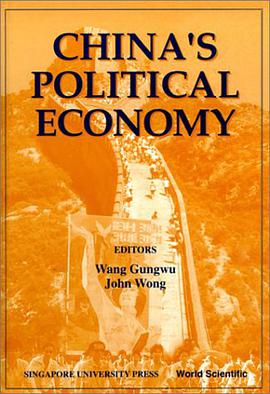
1997 was truly an eventful year for China, with many momentous happenings. In February of that year Deng Xiaoping passed away, thus marking the end of an era, the post-Deng Chinese leadership under Jiang Zeming had to mobilise great efforts to ensure the smooth resumption of sovereignty over Hong Kong on June 30. This was then followed by intensive preparation for the holding of the 15th National Congress of the Chinese Communist Party in September, which set national priorities for China's medium- and long-term development as well as decided on the core team of younger leaders responsible for leading China into the 21st century. China is in the midst of great political, economic and social changes, which will intensify each other on account of their speed and scale. History has never before witnessed such a huge country as China industrialising and transforming itself so rapidly and so extensively. Accordingly, China's success or failure in its domestic development carries serious regional and international implications. There is still a great deal of uncertainty as to how soon in the next century China will become the world's most powerful economy. But what is happening in China today has already impinged on many aspects of life for people in the Asia-Pacific region, either in terms of growing trade and investment opportunities from China or in terms of regional security. This volume is largely based on public lectures and seminars papers by academic visitors and scholars at the East Asian Institute. Each has been written as a self-contained piece by a China expert, but presented primarily with non-specialist readers in mind.
作者简介
Wang Gungwu is the Chairman of the East Asian Institute and University Professor, National University of Singapore. He is also Emeritus Professor of the Australian National University.
His books since 2000 include, in English: The Chinese Overseas: From Earthbound China to the Quest for Autonomy (2000); Don't Leave Home: Migration and the Chinese (2001); Anglo-Chinese Encounters since 1800: War, Trade, Science and Governance (2003); Diasporic Chinese Ventures. Edited by Gregor Benton and Liu Hong (2004); Divided China: Preparing for Reunification, 883-947 (2007).
Those in Chinese include 海外华人研究的大视野与新方向:王赓武教授论文集 Edited by Liu Hong and Huang Jianli (New Directions in Research on the Chinese Overseas, 2002); 王赓武自选集 (Selected Works, 2002); 移民及兴起的中国 (Migrants and China's Rise, 2005); and 离乡别土:境外看中华. (China and Its Cultures: From the Periphery, 2007). He also published in Japanese: 中华文明と中国のゆくえ (Chinese Civilization and China's Road Ahead, 2007).
John Wong is currently the Professorial Fellow of the East Asian Institute (EAI). He was formerly the Research Director of EAI (1997-2009). He was the Director of the Institute of East Asian Political Economy (IEAPE), Singapore (1990-96). Prior to this, he taught Economics at the University of Hong Kong (1966-71) and then the NUS (1971-1990). He also taught briefly at Florida State University as a Fulbright Visiting Professor. He had visiting appointments with Harvard's Fairbank Center, Yale's Economic Growth Center, Oxford's St. Antony College, and Stanford University. In 1996, he held the Chair of ASEAN Studies at the University of Toronto.
He did consultancy work for the Singapore government and many international organizations including UN ESCAP, ADB, UNIDO, and APO. He serves as an editorial board member of many learned journals on Asian studies and economic development.
He has written and edited over 28 books, and published numerous articles and papers in learned journals on the development of China and other East Asian economies, including ASEAN. He obtained his Ph.D. from London in 1966.
目录信息
读后感
用户评价
这本书的叙事节奏把握得非常到位,它不像某些学术著作那样枯燥乏味,反而像一部引人入胜的历史长卷,将过去几十年的经济奇迹娓娓道来。作者对关键历史节点的把握精准无比,比如每一次重大金融风险暴露后的政策应对,都进行了详尽的复盘和深入的剖析,让人仿佛亲历了那些关键的决策时刻。更难能可贵的是,作者在描述宏大叙事的同时,也没有忽视微观个体的命运和选择,穿插其中的企业故事和个人访谈,为冰冷的经济数据增添了鲜活的温度和人性的厚度。我尤其喜欢其中对于特定产业政策效果评估的部分,那种严谨的计量经济学工具与扎实的政策背景知识相结合的方式,让人心服口服。这本书成功地搭建起了一座连接宏观理论与微观实践的桥梁,对于那些希望从历史维度理解当前中国经济挑战的读者来说,无疑是一份宝贵的精神食粮,阅读过程是极其愉悦且充满启发性的。
阅读这本书的过程,更像是一次智力上的探险。作者的笔触极其精准和克制,避免了夸张和煽情,完全是以一种冷静的观察者视角,去剖析那些常常被过度简化的现象。书中对“改革红利”衰减这一主题的探讨尤为深刻,作者没有简单地归咎于外部环境的变化,而是深入挖掘了内部结构性矛盾的积累,尤其是土地财政和地方债务风险的相互作用机制,分析得极其到位,层层递进,令人不寒而栗。我尤其欣赏作者在处理复杂多变的历史进程时所保持的动态视角,经济体制从来不是静止的,书中清晰地展示了权力、资本和劳动三者之间在不同阶段的合力与拉锯。这本书的价值在于,它提供了一套严肃的分析工具,帮助我们透过日常的新闻报道和片面的解读,去构建一个更完整、更具层次感的中国经济运行图景,绝对是严肃研究者书架上不可或缺的一部力作。
坦率地说,这本书的学术野心是巨大的,它试图在一个相对有限的篇幅内,整合政治学、社会学和经济学的多重分析工具,来解释一个长期以来困扰全球学者的核心议题。从这个角度看,作者展现了非凡的整合能力。书中对“国家能力”的界定和测量方法论的探讨,虽然略显理论化,但却为后续所有论证奠定了坚实的基础。我个人认为,作者在构建分析框架时所展现出的那种结构性思维,是区分平庸之作与经典之作的关键所在。特别是关于资源配置效率与政治稳定之间微妙平衡的论述,它超越了单纯的技术性讨论,触及了制度设计的根本性难题。虽然某些章节需要读者具备一定的专业背景才能完全领会其精妙之处,但即便是初次接触该领域的读者,也能从其清晰的论证逻辑中感受到思想的冲击力。这本书无疑是该领域内一座里程碑式的作品,值得反复研读,每次都会有新的体会。
这本书的深度和广度完全超出了我的预期,拿到手的时候,我就被它扎实的理论框架和丰富的案例分析所吸引。作者在梳理宏观经济政策演变脉络时,那种抽丝剥茧的逻辑清晰度,简直让人拍案叫绝。尤其是在探讨市场化改革的深水区时,那种对既得利益集团博弈的细致刻画,让我深刻理解了政策制定的复杂性,远非教科书上那种理想化的描述可以比拟。书中对地方政府间竞争的分析尤其精彩,它不仅仅停留在经济效率的层面,更触及了政治激励的底层逻辑,这种跨学科的视角极大地拓宽了我理解中国经济运行的思维模式。我特别欣赏作者没有陷入非黑即白的简单二元对立,而是努力去揭示制度变迁中的灰色地带和权衡取舍,这使得整本书的论述既具有学术的严谨性,又充满了现实的关怀,读完后,感觉自己对这个复杂系统的运行机制有了更深一层的洞察力,简直是研究当代中国发展问题的必备参考书。
我购买这本书是抱着尝试了解中国经济发展模式异同点的初衷,而这本书的呈现方式,可以说是“出人意料的实用”。它没有沉溺于宏大的意识形态争论,而是聚焦于具体的制度安排和激励机制是如何塑造经济行为的。作者对于金融体系改革的分析,简直是教科书级别的案例研究——如何从一个高度集中的系统,逐步演化出一个既有活力又充满潜在风险的混合体,其中的每一步调整都充满了政治智慧和经济权衡。我特别留意了其中关于产权保护和法治建设对长期投资意愿影响的实证分析,数据翔实,论证有力,提供了许多我先前未曾考虑过的视角。这本书对于政策制定者和商业分析师都具有极高的参考价值,因为它清晰地描绘了制度环境这一“隐形的指挥棒”是如何发挥作用的。读完之后,我感觉我对当前经济政策走向的判断,也多了一层更深层次的“制度肌理”的理解,非常实在的一本书。