
具体描述
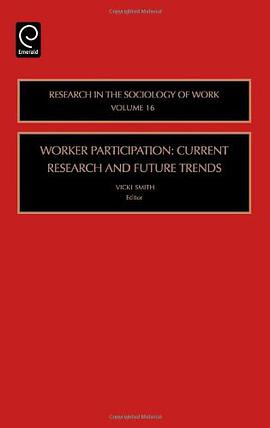
"Worker Participation: Current Research and Future Trends, Volume 16 of Research in the Sociology of Work", offers cutting edge research on the character and implications of workplace participation. Written by some of the leading scholars in the sociology of workplace transformation and alternative organizations, the chapters here examine various outcomes, causes, and consequences related to participation programs and worker democracy today. Topics include ways in which participation schemes are socially constructed and negotiated; the meanings that workers attach to opportunities for involvement in the workplace; practice, participation, and consent in alternative organizations such as cooperatives and collectives; and theoretical treatments that call for new ways of thinking about workplace participation.Methodologically pluralist and concerned less with specific productivity effects of worker participation, this volume highlights the social structural, social constructionist, and meta theoretical dimensions of worker participation and democratic organizations in the twenty-first century. The global, 24/7 economy and the organizational changes it has generated have enormous implications for the organization, experience and use of time in (and out of) the workplace. In addition to eroding the boundary between home and work, creating time pressures both within and outside of the workplace, the need for businesses to compete in a 24/7 global economy has re-problematized time in the workplace.Drawing on sociology, labor economics, organizational behavior and social history, the papers in this volume examine either empirically or theoretically, a variety of aspects of time in the workplace. Contributors to this volume examine issues surrounding the distribution of and struggle over work hours and how these vary across a number of factors including race, class, occupation and other structural components of work. They examine temporal structures within organizations including inequities in flexible scheduling, entrainment and work teams, polychronicity, and how changing temporal structures affect professionalism and expertise. They also consider the way in which changing uses and organization of work time, in the context of economic instability and globalization, affect the difficulties of reconciling work and family.At the more micro-level, the papers consider individuals' perceptions and constructions and intersubjective constructions of time. To varying degrees, the authors speak to the policy implications or strategies for managing new times. Taken as a whole, these papers shed light on the way in which globalization and the emergence of a 24/7 economy have altered the ways, times, and meanings of time at work. "Research in the Sociology of Work" is now available online at ScienceDirect full-text online of volumes 10 onwards. This book examines various worker participation models and evaluates the success of their outcomes. It adopts a variety of methods and highlights the different dimensions of worker participation.
作者简介
目录信息
读后感
用户评价
《Worker Participation》这本书,坦白说,我当初是怀着一种非常复杂的心情翻开它的。一方面,我对“工人参与”这个概念本身就有一种天然的好奇和期待,总觉得这背后蕴含着一种更公平、更民主的组织模式;另一方面,我又担心它会落入空泛的理论说教,或者充斥着一些不切实际的理想化愿景。然而,这本书给我的第一印象,却是出乎意料的扎实和接地气。作者在开篇就花了相当大的篇幅,深入浅出地剖析了“参与”的定义,并不仅仅是停留在字面意义上的“让工人说话”,而是进一步探讨了参与的深度、广度以及不同形式,比如信息共享、协商、共同决策,甚至到最后的共同管理。这种严谨的理论铺垫,让我觉得作者并非只是在喊口号,而是真正地想要构建一个逻辑自洽的理论框架。而且,他对历史案例的引用也颇有见地,从早期工团主义的萌芽,到战后欧洲福利国家模式下的实践,再到如今新自由主义浪潮下的挑战,他都以一种历史学家的视角,冷静地梳理了工人参与制度演变的脉络。这让我意识到,理解“工人参与”,绝不能脱离其历史和社会背景。这本书就像一位经验丰富的向导,带领我穿越迷雾,一步步看清这个概念的真容。
在阅读《Worker Participation》的过程中,我发现作者在处理“权力”与“参与”的关系时,展现出了极高的洞察力。他并没有将工人参与简单地视为一种“施舍”或者“权力下放”,而是将其看作一种复杂的权力博弈和协商过程。书中,他详细地分析了不同利益群体在参与过程中的诉求和考量,比如管理者希望保持控制权,工会希望争取更多权益,而工人本身则希望在工作中有更大的自主性和话语权。作者并没有回避这种潜在的冲突,而是强调了通过制度化的参与机制,来寻求各方利益的平衡和最大公约数。他提到了很多关于“协商性管理”的理念,认为成功的工人参与,离不开有效的对话和妥协。特别令我印象深刻的是,他讨论了在不同文化和社会背景下,权力结构对工人参与的影响,这让这本书的分析更加具有全球视野和普适性。他认为,任何想要推动工人参与的努力,都必须深入理解并应对当地根深蒂固的权力动态。这本书就像一面镜子,照出了企业内部复杂而微妙的权力格局,并指明了在其中实现良性互动的路径。
读《Worker Participation》的过程中,最让我印象深刻的是书中关于“实际操作性”的论述。很多关于组织管理类的书籍,往往停留在宏观的理论层面,读起来振奋人心,但一落实到具体工作场景,就显得苍白无力。但这本书不一样,它就像一本操作手册,提供了许多可借鉴的实践方法和工具。作者详细地介绍了各种不同类型的工人参与机制,比如工人监事会、工会代表在董事会中的席位、职工代表大会等,并对这些机制的优缺点、适用范围进行了细致的分析。更重要的是,他不仅仅罗列了这些制度,还深入探讨了实施这些制度所面临的挑战,例如管理层的抵触、信息不对称、工会力量的博弈等等。他对这些挑战的处理方式也给出了非常有价值的建议,比如如何建立有效的沟通渠道、如何进行利益相关者的谈判、如何通过培训提升工人的参与能力等等。我个人尤其欣赏作者对于“信任”在工人参与中的作用的强调,他认为没有互信,任何制度都难以真正落地。这本书让我看到,真正的“工人参与”,需要的不仅仅是制度设计,更需要双方长期而艰难的互建互信过程。
《Worker Participation》这本书,给我最直观的感受是,它提供了一个理解现代企业组织演变的重要视角。在当今快速变化的商业环境中,传统的层级式管理模式,似乎越来越显得力不从心。作者在这本书中,深入探讨了“工人参与”作为一种应对这种挑战的潜在解决方案。他没有将工人参与简单地浪漫化,而是从社会学、经济学和管理学等多个维度,对其进行了全面而深入的剖析。我尤其欣赏他对于“参与文化”的强调,认为制度固然重要,但更重要的是在企业内部培育一种开放、包容、鼓励倾听和尊重的文化氛围。他通过对一些成功的案例进行解构,展示了如何通过点滴的改变,逐渐建立起这种文化,比如定期的员工反馈会议,跨部门的协作项目,以及对员工提出建议的积极回应机制。这本书让我意识到,工人参与并非一蹴而就,而是一个循序渐进、持续优化的过程。它提供了一套系统性的思考框架,帮助我们理解如何在复杂的组织环境中,构建一个更具活力、更具韧性、也更具人性化的工作场所。
《Worker Participation》这本书,给我带来的最深刻的感受,莫过于它对“参与”与“绩效”之间关系的 nuanced 探讨。长期以来,社会上存在着一种普遍的担忧,认为提高工人的参与度,必然会牺牲企业的效率和盈利能力。然而,这本书却有力地挑战了这种二元对立的思维模式。作者通过大量的实证研究和案例分析,清晰地揭示了,适度的、有效的工人参与,不仅不会损害企业绩效,反而有可能在很多方面对其产生积极的促进作用。比如,工人更了解生产一线的情况,他们的参与可以带来更精准的问题发现和解决方案;他们的参与感可以提升工作满意度和忠诚度,从而降低离职率和培训成本;更重要的是,当工人感受到被尊重和被赋权时,他们的创新性和积极性会得到极大的激发,从而为企业带来新的增长点。作者在论述这一点时,引用的数据非常有说服力,他并没有回避参与可能带来的短期挑战,而是着重强调了长期效益和可持续发展。这种基于证据的、辩证的分析,让我对“工人参与”的价值有了更深层次的理解,也让我看到了企业管理与员工福祉之间并非不可调和的矛盾。