
具体描述
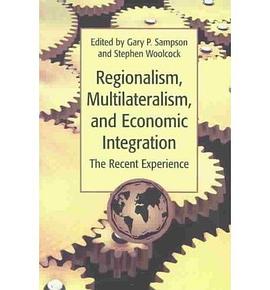
Regionalism, Multilateralism, and Economic Integration: A New Paradigm for Global Prosperity This book delves into the intricate and evolving relationship between regionalism, multilateralism, and economic integration, examining how these interconnected forces shape the global economic landscape and offer pathways towards enhanced prosperity. It argues that a nuanced understanding and strategic application of these concepts are essential for navigating the complexities of the 21st-century world economy. Part I: The Foundations of Regionalism The initial section of the book lays the groundwork by exploring the fundamental principles and historical evolution of regionalism. It begins by defining regionalism not merely as geographical proximity, but as a deliberate process of cooperation and integration among a group of countries within a defined geographical area. This cooperation can manifest in various forms, ranging from loose associations for information exchange and policy coordination to deeply integrated economic communities with shared institutions and common markets. The historical trajectory of regionalism is traced, highlighting key milestones and influential experiments. Early forms of regional cooperation often emerged in response to geopolitical imperatives, such as fostering post-war stability or countering external threats. The book then examines the proliferation of regional arrangements since the late 20th century, driven by a confluence of factors including globalization, the perceived limitations of multilateralism, and the desire to leverage collective strengths for economic development. A significant portion of this section is dedicated to dissecting the diverse motivations behind regional integration. Economic drivers are paramount, encompassing the potential for increased trade through reduced tariffs and non-tariff barriers, enhanced economies of scale, greater investment flows, and the creation of larger, more attractive markets for businesses. Beyond economics, the book explores political motivations, such as strengthening bargaining power in international forums, promoting regional peace and security, and facilitating democratic governance. Social and cultural factors, such as fostering shared identities and facilitating people-to-people exchanges, are also acknowledged as important dimensions of regional integration. Furthermore, the book offers a comprehensive taxonomy of regional integration agreements, moving beyond simple dichotomies. It analyzes the spectrum of arrangements, from free trade areas (FTAs) where members eliminate internal tariffs but maintain independent external trade policies, to customs unions (CUs) which add a common external tariff. The analysis then progresses to common markets (CMs) that allow for the free movement of factors of production (labor and capital) in addition to goods and services, and economic unions (EUs) which involve further harmonization of economic policies and potentially a common currency. Each level of integration is examined for its specific benefits, challenges, and the degree of sovereignty that member states cede. Case studies of prominent regional blocs, such as the European Union, ASEAN, and Mercosur, are used to illustrate these concepts in practice, highlighting their successes, failures, and the evolving nature of their integration. Part II: The Enduring Relevance of Multilateralism The second part of the book pivots to a thorough examination of multilateralism, recognizing its indispensable role in governing global economic relations. Multilateralism, in this context, refers to cooperation and decision-making among three or more states, often through international institutions. The book argues that while regionalism offers unique advantages, it cannot replace the foundational principles and broad reach of the multilateral system. The historical development and evolution of the multilateral order, particularly since the Bretton Woods era, are meticulously chronicled. The establishment and subsequent transformations of key institutions like the World Trade Organization (WTO), the International Monetary Fund (IMF), and the World Bank are analyzed. The book emphasizes the original goals of these institutions: to promote trade liberalization, ensure financial stability, and facilitate development. A core theme is the exploration of the benefits and challenges of multilateralism. The advantages are presented as manifold: the establishment of universal rules and norms that create a predictable and stable global trading environment; the provision of a forum for dispute resolution, preventing unilateral actions and trade wars; the facilitation of global public goods, such as climate change mitigation and pandemic preparedness; and the amplification of the voices of smaller and developing nations in international decision-making. However, the book does not shy away from the inherent difficulties. It critically assesses the challenges of achieving consensus among a large and diverse membership, the potential for powerful states to dominate decision-making, the slow pace of reform, and the perception of declining legitimacy and effectiveness in certain areas. The rise of protectionist sentiments and the strain on existing multilateral frameworks in recent years are examined in detail, prompting a discussion on the future of multilateral governance. The intricate interplay between regionalism and multilateralism is a central focus of this section. The book argues that these two approaches are not mutually exclusive but rather complementary. Regional integration can serve as a "building block" for multilateralism, allowing countries to gain experience in cooperation and develop common positions before engaging on the global stage. Conversely, multilateral rules and agreements can provide a framework and anchor for regional initiatives, ensuring that they are compatible with broader global trade principles and do not lead to a fragmentation of the international system. The book explores scenarios where regional arrangements can experiment with innovative policy approaches that may later be incorporated into multilateral norms. Part III: Economic Integration as the Driving Force The third part of the book delves into the practical mechanisms and consequences of economic integration, underscoring its role as the engine for realizing the potential of both regionalism and multilateralism. This section moves beyond theory to examine the concrete policies and outcomes associated with deeper economic cooperation. The book meticulously analyzes the core instruments of economic integration. Trade liberalization is examined in depth, including the impact of tariff reductions, the elimination of quotas, and the harmonization of standards and regulations. The complexities of non-tariff barriers (NTBs) and the strategies employed by regional and multilateral agreements to address them are a key focus, recognizing their growing importance in contemporary trade relations. Beyond goods trade, the book explores the integration of services, the facilitation of investment flows, and the crucial role of harmonizing competition policies and intellectual property rights. The mobility of labor and capital, as envisioned in common markets and economic unions, is discussed in terms of its potential to boost productivity, foster innovation, and reallocate resources efficiently, while also acknowledging the associated challenges of social adjustment and potential inequalities. The economic implications of regional and multilateral integration are critically assessed. The book presents empirical evidence and theoretical arguments regarding the impact on economic growth, employment, consumer welfare, and income distribution. It explores the concept of "trade creation" (where integration leads to more efficient production and consumption) versus "trade diversion" (where integration leads to the purchase of goods from less efficient partners). Furthermore, the book addresses the institutional architecture required to support economic integration. This includes the establishment of dispute settlement mechanisms, the development of regulatory frameworks, and the coordination of macroeconomic policies. The challenges of enforcing agreements, managing asymmetries among member states, and ensuring equitable burden-sharing are highlighted. Part IV: Navigating the Future: Synergies and Challenges The concluding part of the book synthesizes the preceding discussions and looks towards the future, offering insights into how regionalism, multilateralism, and economic integration can be leveraged to address contemporary global challenges and foster sustainable prosperity. The book advocates for a pragmatic and adaptive approach, recognizing that the optimal balance between regional and multilateral cooperation is context-specific and evolves over time. It argues that in an era of increasing global interdependence, a synergistic relationship between these two modes of governance is not only desirable but necessary. Regional arrangements can act as laboratories for innovation and as building blocks for a stronger multilateral system, while multilateralism provides the essential global rules and stability for regional initiatives to thrive. The challenges facing the global economic order are examined, including rising protectionism, technological disruption, climate change, and increasing inequality. The book explores how enhanced regional and multilateral economic integration can be instrumental in tackling these issues. For instance, coordinated regional approaches to digital trade, environmental standards, and supply chain resilience can complement global efforts. The book emphasizes the importance of inclusivity and sustainability in the pursuit of economic integration. It calls for greater attention to the distributional consequences of integration, ensuring that the benefits are shared broadly and that vulnerable populations are not left behind. The role of economic integration in promoting environmental sustainability and achieving the Sustainable Development Goals (SDGs) is also a significant theme. Finally, the book offers a forward-looking perspective on the evolution of global economic governance. It suggests that the future will likely involve a more complex web of interlinked regional and multilateral arrangements, with a greater emphasis on flexibility, complementarity, and the development of effective mechanisms for addressing transboundary challenges. The ultimate goal, as articulated throughout the book, is to harness the power of cooperation – at both regional and global levels – to create a more prosperous, stable, and equitable world economy for all.