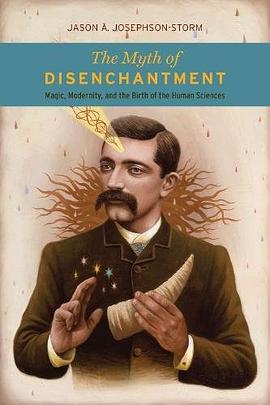

具体描述
A great many theorists have argued that the defining feature of modernity is that people no longer believe in spirits, myths, or magic. Jason Ā. Josephson-Storm argues that as broad cultural history goes, this narrative is wrong, as attempts to suppress magic have failed more often than they have succeeded. Even the human sciences have been more enchanted than is commonly supposed. But that raises the question: How did a magical, spiritualist, mesmerized Europe ever convince itself that it was disenchanted?
Josephson-Storm traces the history of the myth of disenchantment in the births of philosophy, anthropology, sociology, folklore, psychoanalysis, and religious studies. Ironically, the myth of mythless modernity formed at the very time that Britain, France, and Germany were in the midst of occult and spiritualist revivals. Indeed, Josephson-Storm argues, these disciplines’ founding figures were not only aware of, but profoundly enmeshed in, the occult milieu; and it was specifically in response to this burgeoning culture of spirits and magic that they produced notions of a disenchanted world.
By providing a novel history of the human sciences and their connection to esotericism, The Myth of Disenchantment dispatches with most widely held accounts of modernity and its break from the premodern past.
作者简介
Jason Ā. Josephson-Storm is associate professor in and chair of the Department of Religion at Williams College. He is the author of The Invention of Religion in Japan, also published by the University of Chicago Press.
目录信息
A Note on Texts and Translations
Introduction
A Philosophical Archaeology of the Disenchantment of the World
Reflexive Religious Studies: The Entangled Formation of Religion, Science, and Magic
Overview of the Work: Europe Is Not Europe
1 Enchanted (Post) Modernity
Weird America
Haunted Europe
Conclusion: New Age (Post) Modernists?
Part 1: God’s Shadow
2 Revenge of the Magicians
Francis Bacon and the Science of Magic
The Philosophes and the Science of Good and Evil Spirits
Conclusion: The Myth of Enlightenment
3 The Myth of Absence
Nihilism, Revolution, and the Death of God: F. H. Jacobi and G. W. F. Hegel
The Eclipse of the Gods: Friedrich Schiller
The Romantic Spiral: Friedrich Hölderlin
A Myth in Search of History: Jacob Burckhardt
Conclusion: The Myth of the Modern Loss of Myth
4 The Shadow of God
Spirits of a Vanishing God
The Haunted Anthropologist: E. B. Tylor
The Magician and the Philologist: Éliphas Lévi and Max Müller
Theosophical Disenchantment: Helena Blavatsky
Conclusion: Specters of the Transcendent
5 The Decline of Magic: J. G. Frazer
The Cultural Ruins of Paganism
The Golden Bough before Disenchantment
The Departure of the Fairies
The Dreams of Magic
The Lost Theory: Despiritualizing the Universe
Conclusion: A Devil’s Advocate
6 The Revival of Magick: Aleister Crowley
The Great Beast: A Biographical Sketch
The God-Eater and the Golden Bough
Disenchanted Magic
Conclusion: From The Golden Bough to the Golden Dawn
Part 2: The Horrors of Metaphysics
7 The Black Tide: Mysticism, Rationality, and the German Occult Revival
Degeneration and Mysticism: Max Nordau
Kant the Necromancer: Carl du Prel and Arthur Schopenhauer
Hidden Depths: Sigmund Freud
Conclusion: The Cosmic Night
8 Dialectic of Darkness: The Magical Foundations of Critical Theory
The Cosmic Circle
Magical Philosophy and Disenchantment: Ludwig Klages
The Esoteric Constellations of Critical Theory: Walter Benjamin
Conclusion: The Magic of Theory
9 The Ghosts of Metaphysics: Logical Positivism and Disenchantment
Philosophical Technocracy: Theodor Adorno and Max Horkheimer
Revolutionary Antimetaphysics: Positivist Disenchantment and Re-enchantment; Rudolf Carnap and Otto Neurath
Positivists in Paranormal Vienna: Rudolf Carnap and Hans Hahn
Conclusion: The Magic of Disenchantment
10 The World of Enchantment; or, Max Weber at the End of History
The Disenchantment of the World
Weber the Mystic and the Return from the God Eclipse
Conclusion: Disenchantment Disenchanted
Conclusion: The Myth of Modernity
The Myths of (Post) Modernity
The Myth of Disenchantment as Regulative Ideal
Against the Tide of Disenchantment
Notes
Index
· · · · · · (收起)
读后感
用户评价
这本书的阅读体验,与其说是知识的吸收,不如说是一场与作者之间持续的、充满张力的对话。作者的论点层层递进,构建起一个宏大而精密的思想迷宫,但令人赞叹的是,他总能提供出极其精准的、如同手术刀般锋利的小案例来切开那些庞杂的理论迷雾。我特别关注到作者对某些传统哲学观点的颠覆性解读,那种打破砂锅问到底的勇气,以及在看似无人问津的角落里挖掘出惊人史料的功力,实在令人肃然起敬。在咖啡馆里翻阅的那些日子,我发现自己对周围环境的感知都变得不一样了,那些日常生活中看似随机的现象,似乎都折射出了作者在书中探讨的某种底层逻辑的幽微之处。我甚至开始怀疑,我们所感知的“真实”,是否不过是一系列被集体接受的、精心编排的叙事罢了。这本书要求读者全神贯注,任何一丝分心都可能导致错过关键的转折点,但正是这种高门槛的要求,才造就了它无与伦比的阅读价值。
坦白说,这本书的行文风格对于非专业读者来说,无疑是一次不小的考验。它不像那些流畅得一泻千里的畅销书,反而更像是一座需要耐心攀登的知识山脉,时常有陡峭的岩壁和迷失方向的风险。我不得不承认,有些章节我需要借助外部资料来辅助理解,但一旦跨越了那些理解上的障碍,随之而来的豁然开朗感是极其震撼的。作者对概念的界定极为审慎,每一个术语的引入都伴随着长篇的铺垫和论证,这体现了一种对知识负责的态度。其中关于“价值消解”的章节,简直是一次对现代社会心理的精准扫描,那种无力感和清醒感交织的情绪,让我久久不能平静。我甚至在想,或许这本书本身就是对那种盲目乐观主义的一种优雅而坚定的反驳。它不是给你答案,而是让你学会如何更深入、更具批判性地提出问题。
这本书的封面设计简直是一场视觉的盛宴,那种古典与现代交织的质感,仿佛在无声地诉说着某种古老的秘密,却又用极其锋利的线条勾勒出现代的困惑。拿到手里的时候,厚实的纸张和精美的装帧就让人心生敬畏,这绝不是一本可以随意翻阅的消遣读物,它需要一种仪式感。我花了整整一个下午的时间,只是沉浸在那些引人入胜的章节标题中,每一个词语的排列组合都像是一把精心校准的音叉,触动了我内心深处对“确定性”的渴望与怀疑。作者的叙事腔调带着一种近乎学究式的严谨,但又穿插着诗人般的灵动,尤其是在描述那些历史转折点的宏大叙事时,笔力遒劲,让人不由自主地被拽入时间的洪流。我尤其欣赏其中对“意义”构建过程的细腻解剖,那种抽丝剥茧般的论证结构,让人在阅读的每一步都不得不停下来,重新审视自己习以为常的认知框架。读完第一部分,我感觉自己像是完成了一次精神上的高强度训练,那种酣畅淋漓的智力挑战,远超我预期的阅读体验。
我通常不喜欢太过于理论化的书籍,但这本书成功地将高深的哲学思辨,融入到了一种引人入胜的编年史叙事之中。作者的语言是那种充满张力的“古典白描”,他用精确的词汇描绘出思想的幽灵是如何在历史的舞台上游走的。最让我感到惊喜的是,它并没有一味地渲染悲观或虚无,而是在揭示了世界“不确定性”的本质之后,暗含了一种对个体主体性重建的强烈呼唤。读到结尾时,那种感觉就像是经历了一场暴风雨的洗礼,虽然筋疲力尽,但空气却异常清新。这本书强迫你直面那些最令人不安的问题,但同时也暗示了,真正的自由,或许就存在于承认这种根本性的不确定性之中。这绝不是一本适合睡前阅读的书,它更像是一份邀请函,邀请你进入一个更复杂、但也更真实的认知疆域,并且,我欣然接受了这份邀请。
这本书的魅力,很大程度上源于它对“历史的偶然性”的深刻洞察。它没有落入那种宏大叙事窠臼,反而将笔触聚焦于那些被主流历史叙事所忽略的微小裂缝和断裂点,从中挖掘出惊人的启示。阅读过程中,我脑海中不断浮现出那些被遗忘的先驱者和边缘思想家,作者巧妙地将他们串联起来,形成了一张错综复杂的思想网络图谱。这种叙事手法,既保留了学术的深度,又充满了文学的张力。特别是书中关于“知识的权力边界”的论述,简直是为当代信息爆炸时代量身定制的警钟。我发现自己对许多新闻报道和官方论调的解读方式都发生了微妙的转变,多了一层审视的眼光,少了一份轻信的冲动。这本书带给我的,是一种内在的“反审查机制”的构建,这种收获是任何单纯的事实罗列都无法比拟的。
同事特别不喜欢他,然鹅我得用这书分析战锤。战锤太奇妙了……学战锤的修真40k也很奇妙
同事特别不喜欢他,然鹅我得用这书分析战锤。战锤太奇妙了……学战锤的修真40k也很奇妙
同事特别不喜欢他,然鹅我得用这书分析战锤。战锤太奇妙了……学战锤的修真40k也很奇妙
同事特别不喜欢他,然鹅我得用这书分析战锤。战锤太奇妙了……学战锤的修真40k也很奇妙
同事特别不喜欢他,然鹅我得用这书分析战锤。战锤太奇妙了……学战锤的修真40k也很奇妙