
具体描述
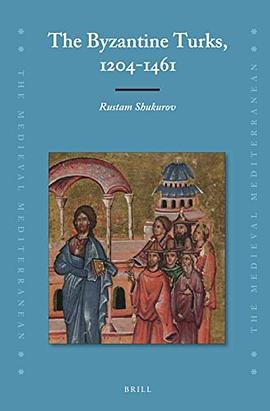
In The Byzantine Turks, 1204–1461 Rustam Shukurov offers an account of the Turkic minority in Late Byzantium including the Nicaean, Palaiologan, and Grand Komnenian empires. The demography of the Byzantine Turks and the legal and cultural aspects of their entrance into Greek society are discussed in detail. Greek and Turkish bilingualism of Byzantine Turks and Tourkophonia among Greeks were distinctive features of Byzantine society of the time. Basing his arguments upon linguistic, social, and cultural evidence found in a wide range of Greek, Latin, and Oriental sources, Rustam Shukurov convincingly demonstrates how Oriental influences on Byzantine life led to crucial transformations in Byzantine mentality, culture, and political life. The study is supplemented with an etymological lexicon of Oriental names and words in Byzantine Greek.
作者简介
Rustam Shukurov, D.Sc. in History (2012), is Professor of Byzantine studies at Moscow State University. He has published monographs, translations, and many articles on the Byzantine, Iranian and Turkic worlds, including The Grand Komnenoi and the Orient (1204–1461) (Moscow, 2001).
目录信息
Acknowledgements xi
List of Figures and Tables xii
Introduction 1
1 The Byzantine Classification of the Turks 11
1 On Byzantine Epistemology 11
2 The Locative Criterion and the Theory of Climates 17
3 Two-Part Classification: Genera and Species 26
4 Generic Categories 27
5 The Species 33
6 The Concept Πέρσαι 37
7 The Defects of the Method 42
8 The Linguistic Criterion 44
9 The Languages of the Turks 48
10 Turks and Religious Identity 53
11 Marriages with Non-Christians 55
12 The Validity of Baptism 59
2 Byzantine Onomastics: Problems of Method 65
1 The Onomastic Database 65
2 The West Byzantine Lands in the Database 68
3 The Byzantine Pontos 70
4 On Byzantine Patterns of Naming 72
5 A Linguistic Problem 74
6 The Problem of Generations 77
7 Credibility of Anthroponymical Data 78
8 “Scythian” and “Persian” Names 84
3 The “Persians” and the “Scythians” 86
1 Historical Background 86
2 The “Scythians” 90
3 The “Persians” 94
4 The Byzantine “Persians” in 1204–1262 96
5 The “Persian” Resettlement of 1262–1263 98
6 Kaykāwus’ Family in Byzantium 105
7 Kaykāwus’ People 120
8 “Persian” Immigrations until the Beginning of the Fourteenth
Century 131
9 The Turkic Immigrants in the First Half of the Fourteenth
Century 134
10 The Last Byzantine Turks? 147
10.1 Text 148
10.2 Translation 150
10.3 Commentary 152
4 The Byzantine Turks in the Balkans 157
1 Byzantine Macedonia 159
2 The Lower Strymon and Serres 161
3 Kalamaria in Western Chalkidike 164
4 Eastern Chalkidike 166
5 Berroia and Lake Giannitsa 168
6 The Vardar Valley, Skopje, the Strumica 170
7 Thessalonike and Other Localities 174
8 Ethnic and Social Structure 174
9 Constantinople and Some Other Regions 177
10 A Note on Chronology 179
11 The Problem of Merchants 181
5 The Noble Lineages 183
1 Constructing a “Family” 184
2 The Gazes Families (I and II) 184
3 The Melik/Melikes/Melek Family 187
4 The Soultanos Family (I) 190
5 The Soultanos Family (II) 194
6 The Apelmene Family 196
7 The Masgidas Families (I and II) 197
8 The Iagoupes Family 200
9 The Anataulas Family 209
6 Assimilation Tools 216
1 The Motivation of the Turks 216
2 An Opposite Example 220
3 Christianization 223
4 More on Inclusion and Exclusion 231
5 Proprietors and Pronoiars 234
6 Imperial Service 239
7 Slaves, Servants, and Hostages 244
8 Cultural Adaptation 249
9 Turkic Minority? 251
7 Asians in the Byzantine Pontos 255
1 Oriental Names of the Pontos 255
2 Nations and Tribes 259
3 Social Standing 268
4 The Pontic Nomads 281
5 Christians and Crypto-Muslims 290
6 Penetration of Asians into Trebizond 297
Appendix I: The Wives of Alexios II Grand Komnenos 303
Appendix II: The Marriages of the Grand Komnenoi with Muslims 305
8 “Turkophonia” in Byzantium 306
1 Byzantine Diglossia 306
2 Oriental Borrowings 308
3 Textiles 312
4 Clothes and Household Items 315
5 Spices, Delicacies, Medications 324
6 Birds and Animals 326
7 Trading Terminology 327
8 Imperial Court and Military Terminology 332
9 The Positive Image of the East 339
10 Expanding the Horizon 343
11 Diglossia and Place-Names 349
12 Diglossia and the Redoubling of the World 354
13 Evidence of Modern Greek 358
14 Byzantine Turkophonia 359
15 Latent Turkification 380
16 Cultural Interchange and a Lethal Outcome 381
9 Etymological Glossary 388
1 Proper Names 388
2 Appellatives 404
Epilogue 413
1 The Turkic Minority 413
2 Regional Features 414
3 Cultural Transformation 418
Bibliography 421
Index of Greek and Slavonic Names and Terms 474
General Index 486
· · · · · · (收起)
读后感
用户评价
这部作品的叙事节奏把握得非常到位,它不是那种平铺直叙、缺乏起伏的教科书式陈述。作者巧妙地将宏大的地缘政治变动与微观的个人命运交织在一起,营造出一种史诗般的悲剧感。当他描绘到13世纪后半叶,拉丁人和希腊人之间日益加剧的文化隔阂与猜疑时,那种历史的宿命感便油然而生。我尤其欣赏作者在描述关键历史人物心理状态时的细腻笔触。比如,对于某些性格复杂、充满矛盾的君主,作者并无简单的褒贬,而是试图站在他们所处的时代背景下,去理解他们的每一个艰难抉择,那种对人性的深刻洞察,让历史人物不再是冰冷的名词,而是有血有肉、在巨大历史洪流中挣扎的个体。这种兼具学术深度与文学感染力的笔法,使得阅读体验非常沉浸,仿佛置身于那个战乱频仍、信仰交织的拜占庭末期世界。
我不得不说,作者在梳理和解读原始史料方面的功力令人叹为观止,他似乎拥有某种魔力,能够将那些散落在各国档案库中、晦涩难懂的拉丁文、希腊文文献,提炼出连非专业读者都能轻松消化的叙事脉络。阅读过程中,我常常被那种抽丝剥茧般的严谨逻辑所折服。例如,在论及尼西亚帝国如何从巴赛列乌斯一系的残余势力中重塑帝国合法性时,作者并没有简单地堆砌头衔和继承关系,而是深入剖析了教会、军事贵族与地方豪强之间的微妙权力制衡,通过对比不同史家的记载差异,构建了一个极其立体且富有张力的政治图景。这种处理方式,极大地避免了传统历史著作常见的僵硬和枯燥,使得那些发生在君士坦丁堡周边小国之间的权力倾轧,如同观看一场高智商的棋局对弈,充满了悬念和智谋的较量,让人欲罢不能。
这本书的价值远超其所涵盖的特定时间段。它成功地构建了一种“历史的温度感”。阅读过程中,我深切感受到那种被时代浪潮裹挟的无力感,以及在绝境中依然保持文化尊严的坚韧。作者在描述那些帝国疆土日益萎缩、昔日荣光不再的场景时,那种克制而又充满同情的语调,让人在为逝去的伟大而惋惜的同时,也对人类文明的韧性产生了更深的敬畏。这不仅仅是一部关于军事或政治史的作品,它更像是一部关于“记忆”与“身份认同”的史诗。它提醒我们,即使是看似必然的终结,其过程也充满了无数次微小的抗争、妥协与坚持,而正是这些细节,构成了我们理解历史的全部意义所在。读完之后,我感到思绪万千,对“衰亡”这个概念有了全新的、更具层次感的认识。
从学术研究的角度来看,这部著作无疑为该领域树立了一个新的标杆。它最显著的贡献在于其对“拜占庭性”这一概念在土耳其人崛起背景下的复杂演变进行了深入的剖析。作者并没有将拜占庭的衰亡简单归咎于外部压力,而是着重探讨了其内部结构性矛盾的激化,特别是财政体系的瓦解和军事力量的地域化倾向。他引入了大量的经济史和社会结构分析工具,用以解释为何尽管有着悠久的历史传统和强大的精神信仰,这个帝国却在关键时刻显得如此脆弱和分散。这种多维度、跨学科的分析框架,极大地拓宽了我们理解中世纪晚期政治衰退的视野,对于从事相关专业研究的学者来说,其中引用的许多论点和史料支撑,都具有极高的参考价值和启发意义。
这本书的装帧设计简直是一场视觉盛宴。硬壳封面采用了深邃的石墨灰,中央烫印着泛着微光的古铜色标题,字体选择了一种既古典又带有现代清晰感的衬线体,让人在第一时间就能感受到历史的厚重感。纸张的质感极其出色,那种微微带有纹理的米白色纸张,不仅提升了阅读的舒适度,更让每一页的翻动都仿佛在与过去的时光进行着细腻的对话。尤其是书中穿插的那些地图和插图,印刷色彩的还原度极高,那些描绘君士坦丁堡的攻防战的版画,细节丰富到令人惊叹,连城墙上的砖石纹理似乎都能触摸到。装帧者对细节的把控达到了近乎偏执的程度,例如书脊上细致的皮革纹理压印,以及内封页上那句引用的拜占庭箴言,都显示出出版方对这部历史巨著应有的尊重。它不仅仅是一本书,更像是一件值得收藏的艺术品,仅仅是将它置于书架之上,那种历史的氛围感就已经扑面而来,让人忍不住想立刻沉浸其中,去探寻那段波澜壮阔的历史篇章。