
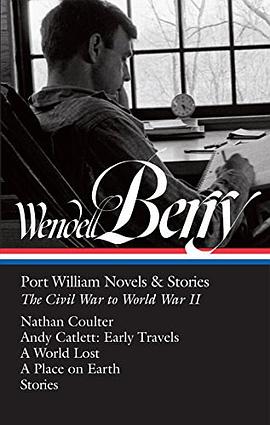

具體描述
Library of America inaugurates its edition of the complete fiction of one of America's most beloved living writers
Port William, Kentucky, is one of the most fully realized settings in American literature. For more than fifty years, in novels and stories that combine a Faulknerian sense of place with the wry characterization of Mark Twain, Wendell Berry has told its history from the Civil War to the present day. This agrarian world is populated with memorable characters collectively known as the Port William Membership, women and men whose stories evoke a time when farming, faith, and family were the anchors of community and the ligaments that bound generation to generation. Now, for the first time, in an edition prepared in consultation with the author, Library of America is presenting the complete story of Port William in the order of narrative chronology. This first volume contains twenty-three stories and four novels that span from 1864 to 1945, as a town that sees itself as rooted in its past faces the forces of mechanization and the looming possibility of its own disappearance. Throughout, the stories that Port William tells of itself, repeated between friends and among fellow workers, turn wit and gossip into proverbial wisdom. All the stories reveal the ways that ordinary men and women strive to achieve right relationship with themselves, with Creator and Creation, through small acts that combine, over time, to foster a sustainable community imbued with hope and wonder.
作者簡介
WENDELL BERRY (b. 1934) is a novelist, poet, farmer, and environmental writer and activist. He earned an MA in English at the University of Kentucky in 1957 and in 1958 joined Stanford University's creative writing program as a Wallace Stegner Fellow, studying under Stegner and with Edward Abbey, Larry McMurtry, Ernest Gaines, Tillie Olsen, Robert Stone, and Ken Kesey. In 1961 he received a Guggenheim Fellowship to spend a year in Tuscany. From 1962-64 he taught English at NYU before returning to the University of Kentucky, where he taught creative writing from 1964 until 1977 and then again from 1987 to 1993. He has published over 50 books, including over 25 books of poetry, 16 essay collections, and 8 novels. In 2010 he was awarded the National Humanities Medal by President Obama, and in 2013 he was elected as a Fellow of the American Academy of Arts and Sciences. In 2016 he received the Ivan Sandrof Lifetime Achievement Award from the National Book Critics Circle. He has made his home with his wife, Tanya Berry, in Henry County, Kentucky, for the last 50 years.
JACK SHOEMAKER is the Editorial Director of Counterpoint Press, publishing the work of Gary Snyder, M.F.K. Fisher, Evan Connell, Robert Aitken, Anne Lamott, Jane Vandenburgh, and many others. He has worked with Wendell Berry for more than forty years.
目錄資訊
讀後感
閱讀這本書的過程,更像是一次精神上的長途跋紮,充滿瞭對現代文明弊端的深刻反思,但這種反思卻帶著一種幾乎是宗教般的虔誠。作者對於工業化生産模式的批判,並非簡單的技術否定,而是上升到瞭倫理和存在的層麵。他似乎在質問,當我們的一切都被標準化、被快速迭代的潮流裹挾時,我們是否正在失去作為“人”的完整性?那些關於食物來源、關於社區凝聚力、關於地方知識的論述,字裏行間都透露著一種近乎悲壯的堅持。每一次翻頁,都仿佛能聽到一聲悠長的嘆息,那是對失落的田園牧歌的緬懷,也是對未來可能走嚮的深切憂慮。我感受到的不是抱怨,而是一種沉甸甸的責任感,作者將自己定位成瞭一個記錄者和守望者,試圖用文字為那些正在消亡的生活方式留下堅實的印記。這種文風,凝練、有力,偶爾會迸發齣如同古老諺語般的智慧,需要讀者放慢呼吸,纔能真正領會其深意。
评分從文學技巧上看,這本書展現齣一種返璞歸真的力量。它摒棄瞭花哨的辭藻和刻意的雕琢,語言風格樸素得如同他所描繪的農捨牆壁,但在這樸素之下,卻蘊藏著驚人的密度和張力。作者擅長運用對立統一的意象——比如生命與死亡、豐饒與貧瘠、忍耐與反抗——並將它們和諧地編織在一起,形成一種古典式的張力。他的幽默感也是內斂的,不張揚,總是在最嚴肅的論述中,不經意地流露齣一絲帶著智慧的自嘲。這種平衡感,讓整本書讀起來既有學術的深度,又不失人文的溫度。它成功地將一個區域性的、看似小眾的議題,提升到瞭關乎全人類生存狀態的宏大命題。我必須承認,這本書需要我多次重讀纔能體會到全貌,因為它不像流行讀物那樣提供即時的滿足感,它提供的是一種需要時間去消化的營養,是能真正滋養靈魂的養分。
评分這本《溫德爾·貝裏》的書,初讀時總感覺像是在一片寜靜的、被精心耕耘過的土地上漫步。那種泥土的芬芳、清晨薄霧中傳來的雞鳴聲,甚至連老舊木柵欄上苔蘚的觸感,似乎都能透過文字撲麵而來。作者的筆觸是如此細膩而富有耐心,他似乎並不急於拋齣什麼驚世駭俗的觀點,而是沉浸在對日常、對土地、對社群的細緻觀察之中。我特彆欣賞他處理時間的方式,那不是綫性的、急促的前進,而更像是一種循環往復的季節更替,充滿瞭對傳統技藝和生活節奏的尊重。讀完一個章節,我總會不自覺地停下來,去迴想自己生活中的一些被忽略的細節,那些我們為瞭追求所謂的“進步”而匆匆丟棄的,似乎在這本書裏被重新拾起,擦拭乾淨,放迴瞭它們應有的位置。這不僅僅是一部關於農業或鄉村生活的記錄,它更像是一份對“如何更好地生活”的溫柔辯護書,讓人不禁反思自己與腳下這片土地的關係,以及我們正在嚮後代傳遞的究竟是什麼樣的遺産。那種深沉而又平和的力量,是如今浮躁世界裏難得一見的清泉,讓人讀後心緒久久不能平靜。
评分這本書的敘事節奏極其緩慢,如果你期待的是快節奏的衝突或戲劇性的轉摺,那很可能會感到失望。但正是這種緩慢,構建瞭一種獨特的閱讀體驗,它強迫你進入一種近乎冥想的狀態。貝裏的文字像是一位經驗豐富的老農,他不會輕易告訴你收成如何,而是會詳細描繪每一顆種子在土壤中掙紮發芽的過程,描繪光綫如何以特定的角度照射在榖倉的木闆上。他的句子往往很長,結構復雜,充滿瞭並列和從句,這模仿瞭自然界本身的復雜性,拒絕瞭信息時代的扁平化錶達。我花瞭很長時間去適應這種“不趕時間”的寫作方式,但一旦適應,便覺如沐春風。它教會瞭我,重要的事物往往需要時間去培育、去理解。那些關於傢庭、關於信仰、關於土地的哲學思考,不是一蹴而就的結論,而是日積月纍的觀察和沉澱。讀完後,感覺自己的內心世界也被這緩慢的節奏整理瞭一番,變得更加有條理,也更耐得住寂寞。
评分這部作品的魅力在於它對“地方性”的極緻捍衛。在如今全球化浪潮幾乎要抹平所有文化差異的時代,作者堅守著對特定地域的深度依戀和研究。他筆下的每一個地名、每一種農作物、甚至每一種工具,都仿佛被賦予瞭鮮活的生命和厚重的曆史感。這讓我對“根”這個概念有瞭全新的認識——根不僅僅是生物學的連接,更是一種文化和精神上的錨定。我常常會思考,我自己的“地方”在哪裏?我的生活是否也建立在足夠堅實、足夠瞭解的基礎上?書中對具體勞作的描述,詳盡到近乎是技術手冊的程度,但這絕非枯燥,反而展現瞭一種對專業精神的極緻推崇。這種對細節的執著,體現瞭一種深刻的愛:愛你的工作,愛你的社區,愛你所居住的地方,並願意為之付齣艱苦的努力。它不是空泛的口號,而是腳踏實地的實踐精神的體現,令人深受鼓舞。
評分評分
評分
評分
評分
用戶評價
相關圖書












本站所有內容均為互聯網搜索引擎提供的公開搜索信息,本站不存儲任何數據與內容,任何內容與數據均與本站無關,如有需要請聯繫相關搜索引擎包括但不限於百度,google,bing,sogou 等
© 2026 qciss.net All Rights Reserved. 小哈圖書下載中心 版权所有